The dark web is a hidden part of the internet often associated with illegal activity, scams, and malware—but it also hosts legal content used by people who value anonymity. Still, navigating it without proper tools can be risky, as users may unknowingly encounter harmful sites or cyber threats.
That’s why dark web search engines are essential in 2026. These specialized tools help users safely discover .onion websites through the Tor network while prioritizing privacy and filtering out dangerous or illegal content. They also provide access to threat intelligence, hacker discussions, and leaked data without exposing users to unnecessary risks.
In this guide, we explain what dark web search engines are, why they matter more than ever, and the best options to use for safer dark web browsing.
Quick List of the Most-used Darknet Search Engines
Here’s a quick list of the top-rated dark web search engines that people rely on today to access onion sites. Some emphasize privacy and anonymity, and others emphasize filtering out illegal and harmful content. The list features the significant features that make each dark web search engine worthy, considering:
- OnionFind: Best search engine for the dark net that offers a non-censored experience without logging any of the users’ personal data.
- DuckDuckGo: A popular clearnet search engine with onion version that offers access to the dark web safely and anonymously.
- OnionWiki: Features one of the best user-friendly interfaces as well as a huge, current index.
- Ahmia: An open-source dark web search engine with robust content filtering systems to help users avoid illegal materials.
- OnionLinks: Top dark web search engine with a broader index of .onion sites.
- VormWeb: An easy-to-use dark web search engine that offers exceptional articles and news on the happenings on the dark web.
- Haystack: A powerhouse for deep searches and ideal for researchers.
- Torch: It’s an exceptional browser for advanced activities with a vast index of .onion sites.
- DarknetSearch: It emphasizes privacy and automation that users can work with seamlessly, without the need for technical skills.
- TorDex: One of the best dark web search engines with a nice user-friendly interface, as well as an extensive index.
What are Dark Web Search Engines?
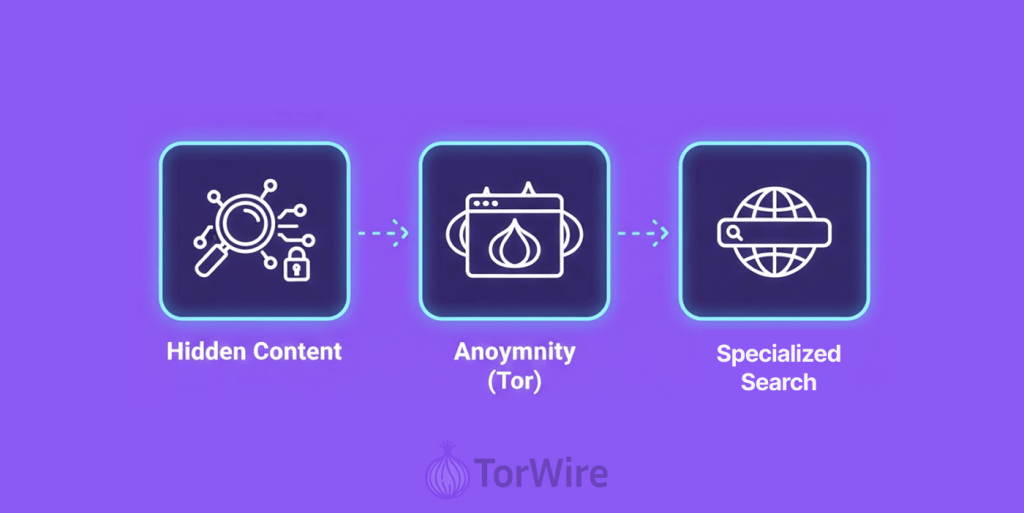
These are specialized search tools that you can use to access the hidden internet. Ideally, they help users to access the .onion sites that aren’t displayed on the surface web, and which the regular search engines such as Google can’t see.
By design, the sites on the dark web live on the Tor network or simply other similar anonymous networks, and they need the Tor Browser to access – they aren’t indexed by Google. Perhaps the dark web is like a sealed-off library, and these search engines are like a custom catalog that helps you to find the books you need in this secret library.
Google’s web crawlers follow links across the internet, but when it comes to the dark web search engines, they use Tor-based crawlers to find hidden sites. However, the entire process is relatively slower as well as less comprehensive, given that there are several transient onion sites, or sometimes they’re not well interlinked.
Why Safe Dark Web Searching Matters in 2026

Safe dark web searching is crucial in 2026 due to several reasons. First, privacy threats are on the increase each passing day, given that users are using uncovered networks. Therefore, it’s important that users shift to safe dark web searching to help keep their privacy and safety.
Secondly, safe dark web searching matters more in 2026 due to the fact that security threats from evil entities are now amplified to a point that unprotected browsing is like taking a huge risk with your life. Data leaks keep on rising, and if you’re a business, you’ll want to find the leak fast.
Finally, the use of dark web tools like onion search engines as well as dark web browsers is slowly but steadily rising, and hence requires the implementation of serious security measures to help users avoid exposure to attacks or harmful content.
Nevertheless, accessing the dark web must always be done legally and carefully. For instance, using a safe dark web search engine can help save you from accidentally stumbling on an illegal link. Besides, it’s better to search in a well-lit environment than to grope in the dark. That way, you’re less likely to stumble on something nasty.
So here’s the thing, safe dark web searching is important as it helps the good guys to peek into bad guys’ territory without stepping on their traps.
The Detailed List of Best Dark Web Search Engines Today

Let’s explore the top-rated hidden services search engines of 2026 more comprehensively:
1. OnionFind
- Direct link: onionfind.com
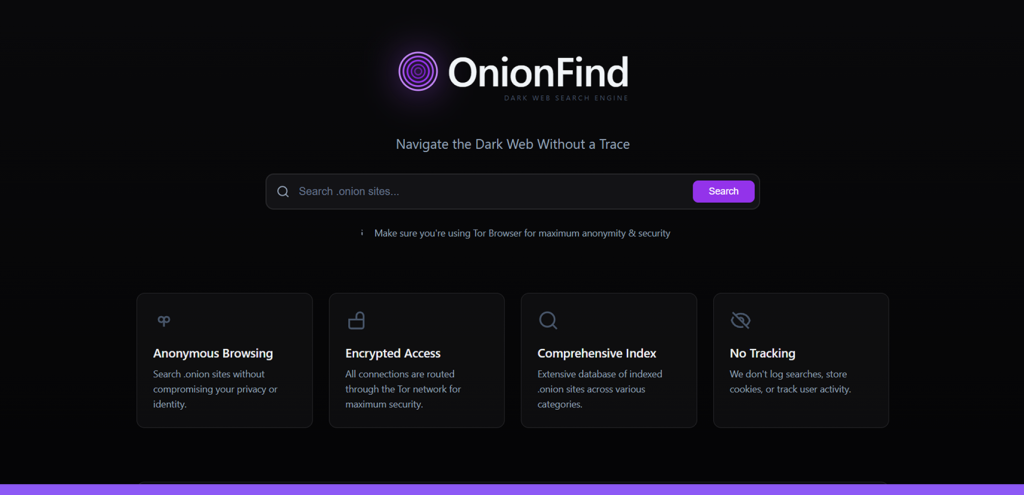
Are you looking to navigate the dark web without a trace? OnionFind offers dependable security and anonymity as it’s built on Tor technology itself. It offers users the freedom to easily search .onion sites without the fear of compromising their privacy or identity.
All its connections are routed via the Tor network, which means that it offers maximum security. Simply put, OnionFind offers encrypted access. Also, this search engine features an extensive database of indexed .onion sites across a variety of categories. Interestingly, there’s no tracking; no logging of searches, storing cookies, or tracking user activities.
Pros
- Provides anonymous browsing
- Encrypted access
- Features a comprehensive index
Cons
- Doesn’t have the most extensive index
2. DuckDuckGo
- Direct link: duckduckgo.com
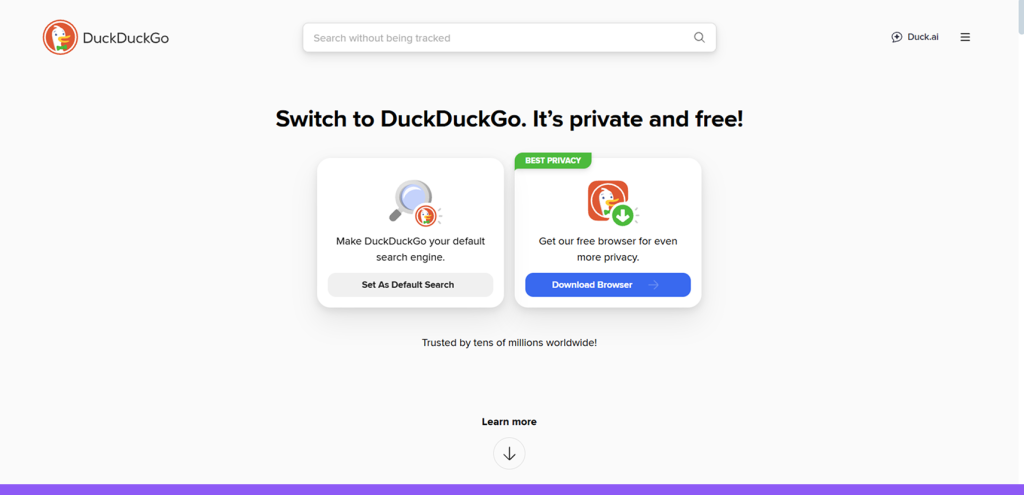
When you want a privacy-focused dark web search engine, DuckDuckGo should be the choice you need. It’s an exceptional tool on the surface web, and has a .onion counterpart, which is excellent for dark web browsing.
The search engine operates via Tor and offers a non-censored experience without logging a user’s personal data. Perhaps, if you’re looking for unbiased search results, this is the search engine to consider.
It doesn’t index .onion sites, and mostly returns the surface web results. Ideally, you can think of it as Google searching, but done over Tor without Google monitoring. Besides, the search engine offers a clear interface and peace of mind, given that your searches aren’t recorded.
Pros
- Easy to access
- Anonymous browsing features
- No ID profiling or tracking
Cons
- Doesn’t have significant threat intelligence material
3. OnionWiki
- Direct link: onionwiki.com
One thing about Onion Wiki is that it doesn’t function like a traditional search engine, but it’s one of the best search engines to explore the dark web safely. It’s a community-edited directory and offers several links to a plethora of .onion sites.
The search engine offers a structured as well as indexed list of the sites, making it easier to navigate. In fact, it’s the best option for beginners who don’t know what they should be searching for. Interestingly, all the links are vetted and then updated by the members of the community.
Pros
- Historical significance
- Easy to navigate
- Offers an indexed and structured list of sites
Cons
- Limited index since it’s merely an onion services directory
4. Ahmia

- Direct link: ahmia.fi
Ahmia is undeniably top of the list thanks to its robust filtering systems that help users avoid illegal content and harmful sites from the search results. Besides, its open-source nature allows the security teams to easily analyze the underlying code and then contribute to the platform development.
In fact, Ahmia has a strong policy against abusive content and blocks things such as child exploitation content. Therefore, it means that with the Ahmia search engine, you’re not likely to click on something illegal accidentally.
Also, it doesn’t track user queries or IP addresses. It’s accessible through both the surface web and Tor, and offers a clean interface as well as Tor network insights.
Pros
- Blocks illegal content
- Features an easy and clean user interface
- Open-source software that allows transparency
Cons
- Might exclude relevant threat intelligence on the filtered sites
5. OnionLinks
- Direct link: onionlinks.com
OnionLinks is one of the oldest in the game, and it has remained relevant for several years thanks to what it offers to users. Perhaps, it’s one of the biggest .onion link indexes that you can think of, reportedly indexing more than a million pages.
In fact, it’s a preferred option for veteran users who want to find those elusive as well as hard-to-find sites. Apparently, it doesn’t filter the search results, which means that you’re likely to see the dark web’s rawest version.
Pros
- No logging or tracking
- Extensive index
- Easy to use
Cons
- Unreliable and unstable sites
6. VormWeb

- Direct link: vormweb.de
VormWeb is more than just a search engine, as it has other features that you’ll find useful in your online navigation journey. First, it has been designed to offer users a clean and convenient interface to ensure that they have an excellent dark web search experience.
Additionally, it has a blog as well as a news section that features topics related to online privacy and the deep web in general. Therefore, you can follow the news and blogs to become resourceful as much as the dark web is concerned.
When it comes to beginners, VormWeb is a dream search engine to use as it’s very easy to use. Moreover, it offers a potential for a wide variety of filters to narrow or focus results. Also, it has an extensive number of vendors, markets, and forums.
Pros
- Open-source dark web search engine
- Offers focused and targeted results
- Can be resourceful
Cons
- High risk for users
7. Haystack
- Direct link: haystacksearch.org
Haystack claims to be one of the biggest indexes in the market. Interestingly, it runs on a free version that lets users search basic keywords. Its premium version has advanced features like being able to do complex queries, access historical snapshots, and use filters.
When it comes to safety, it doesn’t filter out illegal material by default, but it flags out some results that are potentially risky. Besides, it values user privacy and hence doesn’t have tracking or personalized ads.
Haystack is more than a search engine; it’s a community forum, a directory of links, and a chat service in one place. Therefore, it not only offers a place for information but also a platform to network with fellow users. The search engine is powerful and ideal for users who need advanced search capabilities on the dark web.
Pros
- Helps to bypass censorship
- Exceptional filtering features
- Extensive indexing
Cons
- Slow speeds
8. Torch
- Direct link: torchsearch.org
While several search engines have come and disappeared, Torch has remained firm and relevant for several years. It features an extensive index of onion sites and delivers search results almost instantly.
The best part is the fact that it has a minimal interface that emphasizes raw functionality, and even beginners can easily navigate. Also, its open indexing approach makes sure that you access both the mainstream as well as the obscure areas of the dark web.
Moreover, Torch has a Bitcoin mixer that adds extra transaction privacy. Ideally, the search engine’s philosophy is merely to offer wide access and let you beware. Therefore, you need a lot of caution when you use Torch, as one wrong click could expose you to disturbing content or malware.
Pros
- Results load quickly, meaning fast navigation
- Simple interface that makes search easy and fast
- Offers the most consistent indexes
Cons
- Inherently unsafe
9. DarknetSearch
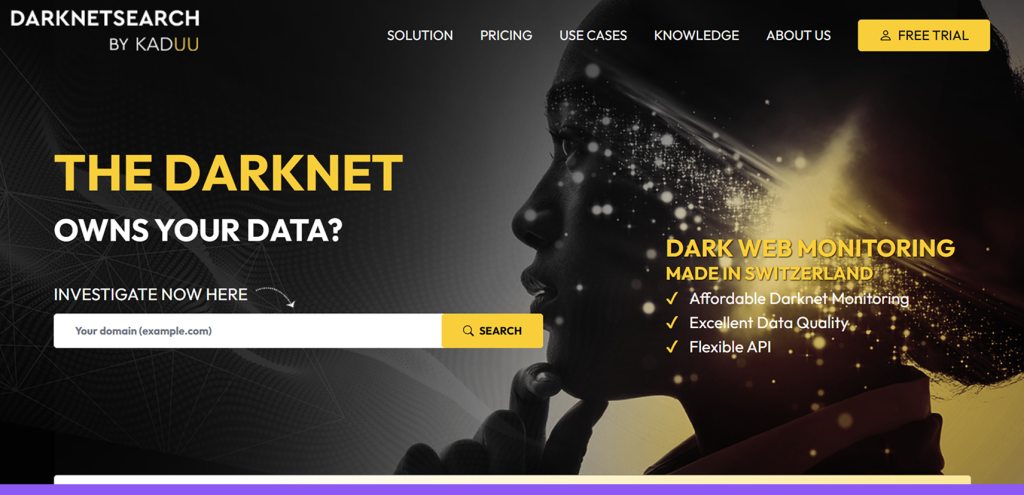
- Direct link: darknetsearch.com
DarknetSearch focuses on privacy and automation, and it allows access to the dark web via a web interface as well as a free API. Ideally, this search engine depends on automated crawling to maintain coverage. Also, it has community reporting that helps to flag illegal content.
It’s a free and anonymous search engine and maintains a basic and clean search engine format. Besides, it’s fast and simple to use. Although it doesn’t have all the features of other sites, when it comes to finding the .onion sites, it’s quicker and better compared to the other tools. In terms of privacy, DarknetSearch states that they don’t store user queries and that you can search anonymously.
Pros
- Easy to automate dark web monitoring
- Strong privacy
- Real-time alerts
Cons
- Requires expertise
10. TorDex

- Direct link: tordex.com
TorDex ranks among the best dark web search engines thanks to its huge and constantly updated index. Besides, it’s one of the best options around in 2026 with a modern and clean interface.
The tool is uncensored and emphasizes a pure search experience, which makes it a top option for users looking to search the hidden sites entirely uncovered. Moreover, the search engine doesn’t record or log user queries.
Pros
- Constantly updated index
- Clean and easy-to-use interface
- Doesn’t log user queries
Cons
- Low-quality search results
Features of a Reliable Dark Web Search Tool

There are numerous dark web search engines that you can consider, but not all of them can offer you the experience you need to explore this hidden part of the internet safely. To ensure that you choose the best dark web search engine, here are some of the top features that define a top dark web search engine:
- Index size and coverage: A good dark web search engine is one that aggregates data from a variety of sources across the dark web for workable threat intelligence. Besides, larger indexes mean that you’re likely to discover relevant threats. However, it’s also important to note that quality coverage matters more than just raw quantity.
- Uptime and reliability: Usually, the security teams require consistent access to the dark web intelligence to ensure continuous monitoring. Therefore, a search engine must maintain a stable infrastructure to help deliver results reliably, more so during the critical investigations where downtime can create blind spots.
- Scoring and prioritization: With flexible scoring systems, they easily rank threats based on relevance, severity, and confidence levels. That way, it helps analysts to focus their investigation efforts on the critical exposures that affect organizations.
- Reputation and validation: It’s paramount to understand the reliability of intelligence sources to prevent a waste of investigation time. Therefore, the source engines that track the source credibility as well as validate findings are ideal as they reduce false positives and improve the threat detection accuracy.
The Role of Dark Web Search Engines Today
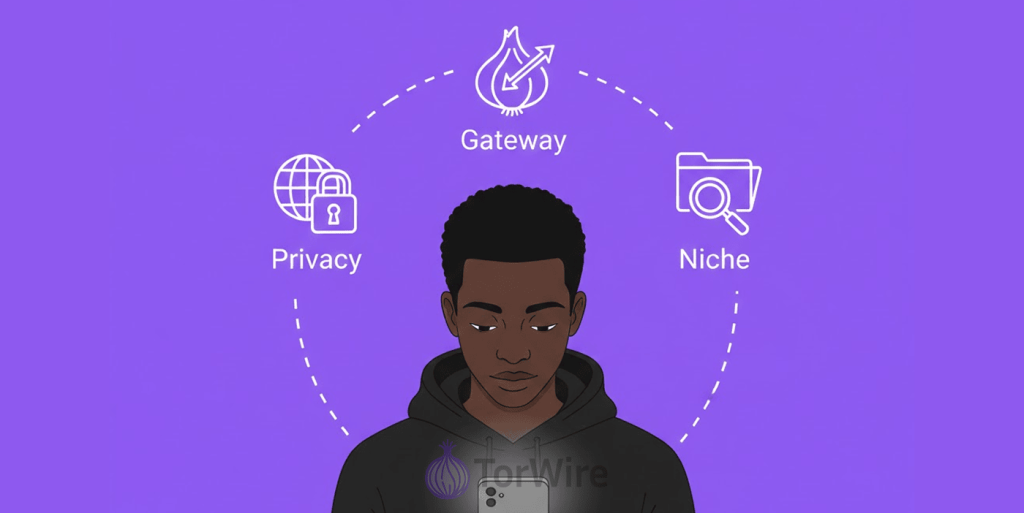
Perhaps search engines are ways used to locate .onion sites, but as things progress, it’s easy to say that by 2026, search engines could be more than pathways to the .onion sites. In fact, they’ve slowly but steadily become the most crucial entry point into the dark web for individuals who want to explore this hidden part of the internet. Ideally, these search engines are useful where algorithms and indexing used by the surface web aren’t valid.
Here’s the role of search engines:
Privacy Protection
Search engines that are gateways into the darknet always ensure that they keep users anonymous and always protect their privacy. In fact, they don’t track their users, and they don’t log queries that users search on the engines.
Therefore, it’s a crucial feature in the current digital era where people are trying very hard to use the digital trail of other people for selfish gains without their permission. With these dark web search engines, you can safely search sensitive issues and topics without fear that someone might be tracking or even watching you.
Gateway to access
Unlike the surface web, the dark web can only be accessed by specialized tools. These search engines play a significant role in accessing the dark web safely and securely.
Niche Focus
Some of the search engines focus on a particular use case. For instance, Kilos and Recon search engines index transaction histories, vendor profiles, etc. Also, they allow users to easily use complicated filters to help support investigations into a particular topic.
Such search engines clearly have high legal as well as ethical ramifications, but it’s indicative of how specialized the dark web environment has become.
Risk Guidance
The dark web is a risky place, where phishing attempts, scams, and every bad material abound. Unfortunately, the search engines don’t have a direct objective to reduce those risks; instead, they are a source of navigation. Therefore, it means that they can help you navigate the dark web and reduce the risks by filtering harmful websites.
Education and Information
Some search engines bring additional value as they offer blogs, news, and even updates on the trends in online privacy. Such educational elements are helpful as they dispel the myths that surround the dark web usage. Ideally, their usage reinforces safe browsing.
Nevertheless, in 2026, the dark web search engines not only enable users to access the hidden sites, but they also do so while enabling a nicely-controlled, anonymous, and community-based exploration.
Risks When Using Dark Web Search Engines

Dark web search engines are undoubtedly the best and safest way to find the hidden sites, but they come with risks, too. Therefore, to ensure that you remain safe at all times, here are some of the risks you should know when you use dark web search engines:
- Disturbing and illegal content: Generally, the larger part of the dark web isn’t illegal, and search engines can eventually offer you links to websites that contain highly disturbing or illegal content.
- Malware and phishing: Some .onion site developers have designed them in such a way that they tempt users to download malware. Sometimes, search engines might eventually lead you to such sites before you’re aware of what you’re doing.
- Government surveillance: There’s no denying that Tor offers an exceptional deal of anonymity, but also, some government agencies actively scrutinize the dark web. There are serious consequences if you’re caught engaging in such illegal activities.
- Scams: The dark web features all sorts of scams, such as phishing sites and fake marketplaces that are set up to steal a user’s personal data.
- Dead links: You should be aware that the dark web is an unstable and ever-changing network, which means that, usually, sites simply disappear even without warning. Therefore, you’ll come across several sites that don’t work (dead links), which are very annoying.
Perhaps, when you know the risks and dangers when you use the dark web search engines, and you follow the safety tips already highlighted in the article, you’ll lower your risks, and you can use these search engines without fear.
How to Access the Dark Web Safely

The dark web is undoubtedly a dream place for most users to explore. However, it can be perilous when you don’t know the gateway to this hidden portion of the internet. For instance, imagine if you enter a .onion address in the normal browsers we use. Of course, the site won’t open, but what if it were to open? That could be a huge mistake, as it will alert your ISP to what you’re doing online.
Therefore, if you’re curious about the dark web, here are some of the top measures you need to take to help you access the dark web safely:
- Use the Tor browser and always keep it updated: You should always ensure that you only access the dark web links via the Tor browser, given that it’s pre-configured to provide anonymity. That’s the only route into the .onion sites. Besides, ensure that it’s always up-to-date.
- Use a VPN: Perhaps a VPN is the first tool that helps to hide your online activities. It encrypts your internet traffic and hides your real IP address from prying eyes and your ISP. Therefore, before you think about moving forward, you need to ensure that you connect to a secure and trusted VPN. Also, you should avoid using free VPNs as much as possible, as they could expose you or even do more harm.
- Stick to reputable sites: For starters, it’s important that you only stick to those sites that are well known; you can use directories like The Hidden Wiki or DarkWebLinks to find all the reputable sites. Also, when you use search engines, it’s nice to prefer the results that you are aware of or those mentioned on several trustworthy sources. Therefore, it is also crucial to verify addresses via several references if possible.
- Never share personal information: Perhaps it’s an obvious thing, but you need to be aware that even the search questions can be revealing. Therefore, ensure that you avoid searching for personal things such as names, addresses, and any other personal data on the deep web. Moreover, never log into your personal accounts through Tor. In fact, you should treat each interaction like someone is watching. There’s no denying that Tor is encrypted, but the websites you visit could be run by scammers.
- Disable plugins and scripts: Ensure that you keep your Tor Browser’s security on Safest, to disable JavaScript on websites by default. Usually, most exploits in this underground part of the internet are hidden in malicious scripts. Therefore, you should only enable scripting when it’s necessary, and on a trusted website, and even then, you need to be cautious.
- Operate within legal limits: Ideally, surfing the dark web alone isn’t illegal; however, downloading or accessing illegal content is illegal. All you need to do is explore, but within the legal boundaries, never cross the line with things like hacking services or buying drugs. Perhaps if you come across some illicit material, you need to close that chapter and don’t interact. Remember that law enforcement monitors some dark web areas, and hence, you don’t want to get entangled in some kind of investigation only because you clicked on the wrong link.
- Never use your credit card: Here’s the thing – it’s very dangerous to make payments in the dark using your bank account or simply your credit card. Usually, payments on the dark web are via cryptocurrencies like Bitcoin and Monero.
FAQs
This is a tool that helps users easily find content on the hidden services, sites of the dark web that aren’t indexed by traditional mainstream search engines such as Google and Bing.
Ideally, they index the hidden services via specialized crawlers as well as onion search engine protocols that are designed for networks operating outside the normal web.
Using them is legal, but accessing illegal material on the dark web isn’t, even when you’re browsing via a free dark web browser.
Apparently, safety relies on the behavior of the user; accessing legal sites via trusted dark web browsers is fine, but the dark web is a risky place in general if you’re not cautious.
No. Google cannot take you to the dark web. The dark web uses special .onion addresses that require the Tor Browser, and Google’s bots don’t crawl. Ideally, Google only shows the surface web search results.