The dark web has evolved into one of the most influential forces shaping today’s cybersecurity landscape. What was once considered a hidden corner of the internet is now a thriving underground marketplace where cybercriminals trade stolen credentials, malware, ransomware services, and sensitive personal data worth billions of dollars each year.
Despite representing only a small portion of the internet, the dark web attracts millions of users and facilitates a significant share of global cybercrime activity. From large-scale data breaches and ransomware attacks to identity theft and illicit marketplaces, its impact extends far beyond the hidden networks where these transactions occur.
To help you understand the scale of this growing threat, we’ve compiled the latest dark web statistics for 2026. These figures highlight key trends, emerging cybercrime tactics, user activity patterns, and the increasing role the dark web plays in the global digital ecosystem.
State of the Dark Web Online in 2026: Key Dark Web Statistics You Should Know
While probably we all know that the dark web is a shady part of the internet that is prohibited for normal users, it is also important to know how it can damage you and your privacy. Below are some interesting facts you should know:
- Daily visits to the dark web just shot past 3 million. In March 2025, there was a considerable increase in the number of daily Tor users from approximately 2 million to over 3 million in just 3 weeks. This is a very large increase in the amount of activity on the dark web in a very short amount of time.
- Almost all of the activities carried out on the dark web are illegal. According to reports, in 2020, about 57% of all dark web sites were tied to criminal stuff, everything from drug sales to cybercrime forums.
- Due to the vast number of attacks, hackers possess a large supply of stolen data, which they use in online scams. According to some numbers, there are about 15 billion stolen credentials (both usernames and passwords). In 2022, this number increased by 82%.
- Due to cyberattacks, people lost around $12.5 billion in 2023 (in the US alone). There were approximately 880,418 victim complaints associated with online scams in 2022 (which is an increase of 22% from the previous year). This is an unbelievable amount of money that has been lost to online scam activity.
- Ransomware attacks significantly increased in 2023. A total of over 5,070 ransomware attacks were reported in that year. This is the largest increase in the history of reported ransomware attacks.
- If you think your credit card info is safe, think again. On the dark web, cybercriminals can buy credit card details with a $5,000 balance for just $110.
- Email data isn’t any safer anymore. About 80% of email addresses and related info have leaked onto the dark web, putting millions at risk for phishing attacks.
- The U.S. has the most dark web users, making up 18.12% of all Tor traffic. Germany comes next with 13.58%. These two countries are at the center of dark web activity.
- The dark web intelligence market is booming. By 2032, it’s expected to hit $2.92 billion, growing at 21.8% every year as cybercrime ramps up.
- Some industries are getting hit especially hard. Healthcare saw cyberattacks jump 74% in 2022, and education wasn’t far behind with a 43% increase in the same year.
The Size and Growth of the Dark Web
The dark web isn’t as big as one would expect. However, its small size doesn’t in any way obscure its influence. The dark web makes up just a tiny portion (0.01% to 0.06% or 1/100th) of the whole internet. The deep web, on the other hand, is so vast, taking up almost the entire internet, about 90% to be precise. That’s like 10X more than the size of the dark web.
But do not let those figures fool you into thinking that there isn’t much money being spent on the dark web. In 2023, the dark web intelligence market was valued at $520.3 billion, but by 2032, many experts predict that the dark web intelligence market will shoot up to $2.92 billion (an increase of nearly 22% annually).
The spending in this area continues to increase because businesses are looking for better ways to monitor activity on the dark web. Currently, at least 30,000 active hidden sites exist on the dark web. In terms of raw data, these sites are monsters, about 5,000 times bigger than the regular web.
In March 2025, users on the dark web shot up fast. The data says the average number of users rose from 2 million to over 3 million every day using Tor. That’s a 50% jump, all in just a few weeks. And when it comes to money, crypto rules. In 2022, the dark web saw about $25 billion in cryptocurrency transactions, almost double what was recorded in 2020.
Dark Web Statistics By Country
The dark web is free to use for everyone no matter where you are. However, you can’t access it like how you access normal (surface) web; you need a special web browser like Tor.
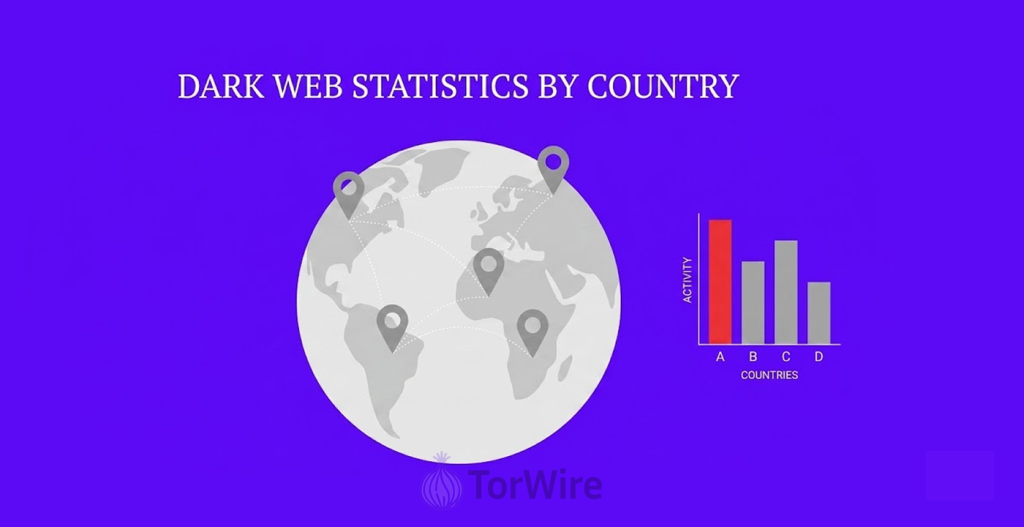
Different countries have different ratios when it comes to people accessing the dark web. So, in case you’re wondering which country has the most dark web users, the United States, for example, comes at the top with 387,456 daily Tor users, that’s 18.12% of the global traffic.
Germany follows closely in second place with 296,712 (13.58%) users. Together, these two countries make up a whopping 68% of all activity on the dark web.
The rest of the countries with equally large Tor daily usage include Finland with 5%, India with 4.64%, the Netherlands with 3.14%, Indonesia (2.92%), the UK with 2.78%, France (2.59%), the Republic of Korea commands 2.44%, and Spain accounts for 2.31% of Tor users.
Dark web stats for 2026 paint a pretty wild picture, especially when you look at the numbers by country. Italy has more than 76,000 Tor users daily. That’s around 20% of all dark web traffic in Europe, just from one country.
Back in 2023, more than half of Italians online got hit with alerts saying their data had been breached. In that, nearly 78% of those warnings were tied to leaks on the dark web.
The BRICS countries (Brazil, China, South Africa, Egypt, Ethiopia, India, Indonesia, Iran, Russia, Saudi Arabia, and the United Arab Emirates) lie on a mediocre scale. About 28% of people in those countries know about the dark web.
And Russian-language sites? They take up a huge chunk of some dark web monitoring lists, over 36%, with more than 300 million pages indexed in Russian.
When it comes to language, English dominates the dark web. Around 83% of sites use it, which isn’t really surprising. Cybercrime is global, and English-speaking countries lead the charge in online activity.
Now, let’s explore each country’s interaction with the dark web and users in that country:
The United States
Besides being the country that has the highest number of people using dark web daily, the US remains the top target for cyberattacks worldwide. It has the highest number of organizations and companies targeted by cybercriminals globally.
In 2021, the United States accounted for 46% of all global attacks. Also, in the first half of 2022, estimates show that at least 53.35 million citizens in the US were victims of cybercrime.
Based on projections, the cost of cybercrime in the US is projected to be more than $639 billion in 2026. A 2022 survey stated that 8 out of 100 adults in the US have never before in their life heard of the dark web, and 23% of adults have heard of the dark web, but they don’t exactly know what it is.
Germany
Based on data collected in Germany accounts for 30% of all Tor traffic worldwide and it boasts about 7.16% of dark web users.
As of late 2025, more than 2 million people in Germany were estimated to have used Tor on a daily basis. Also, in 2023, Germany actually surpassed the US in the highest number of daily Tor users during certain periods.
A 2025 research indicates that Germany is a major target for illicit activity on the dark web, with nearly 75% of dark web posts targeting German victims alone.
German authorities seized the Hydra darknet market (a darknet marketplace to buy and sell malicious tools), which had over 19,000 vendors and 17 million registered members, eliminating a very active online criminal hub.
United Kingdom
The UK has the highest mean number of Tor users daily at 2.78%. A recent survey found that 72% of adults in the UK wouldn’t know how to respond if their personal information is found circulating on the dark web.
Only about 46% of UK citizens within the age bracket of 25 to 24 know the steps to take if their data is on the dark web.
A 2023 survey stated that 1 out of 7 Brits doesn’t know about the dark web. In another survey, about 80% of Brits have heard of the dark web. However, only 31% of the citizens are familiar with this term and how to access it.
Around 16% of Brits are more likely to check oil and water in their boilers and cars than they are to check if their data has been exposed online.
Another survey carried out in 2025, a little over 4 out of 10 (43%) UK businesses and 3 out of 10 (30%) charities reported that they experienced some kind of cyber attack in recent times. On average, 28,000 corporate credentials that leaked online were through stealer logs.
According to Socura’s analysis of stolen credentials in the UK, poor hygiene remains the major cause of password leaks, with 59% of FTSE 100 companies having at least one employee using just ‘password’ as their password.
Over 700 UK government passwords, including emails linked to official domains, were exposed on the dark web.
Russia
In 2023, Russian-language darknet markets made up 95% of illicit drug purchases with cryptocurrency on the dark web.
Ransomware groups linked to Russia accounted for about 69% of all crypto ransomware proceeds in 2023, surpassing $500 million.
The dark web is dominated by Russian-language content, making up approx 11% of .onion domains and more than 36% of DARKINT (dark intelligence) that security firms collect.
General Dark Web Statistics
- In 2025, 1,000 premium malware installs were available for purchase on the dark web for prices ranging from $1,800 to $4,500, depending on how good the malware is at hitting targets successfully and the target region. Malwares that have 90% and above success rate sell for higher prices (often up to $4,500 for every 1,000 installs). Those of medium quality with around 70% success rate are sold for lesser prices between $1,500 and $1,600. The prices have increased a little since 2022, showing how competitive the market for malware is.
- Phishing is still the most used trick that criminals use to steal financial data. In just the second quarter of 2025, there were over 1.13 million phishing attacks, with banks and other financial institutions accounting for about 18% of the targets. AI-generated phishing kits and fake domains that appear super realistic are now everywhere, so the attacks are becoming harder to detect. Most of these scams (about 57%) still come through email.
- The tech sector has the highest number of leaked credentials online. In June 2025, researchers found nearly 16 billion login credentials making rounds on dark web forums and infostealer logs. Major tech firms like Google, Apple, and Meta make up a larger proportion of the dumps due to the massive breaches and malware campaigns targeted at these companies over the years.
- Over 35,000 weapons are listed on the dark web, including guns, ammunition, explosives, name them. According to the data, the U.S alone accounts for 60% of weapon sales on the dark web. Also, Europe comes in second place at 25%, and then Russia is the third largest with about 7%. It’s been so since 2022; nothing much has changed in terms of the numbers.
- The dark web is vast in terms of data. Just the 60 biggest sites add up to more than 750 terabytes. That’s a mountain of stolen info, illegal marketplaces, and who knows what else. No wonder it’s nearly impossible for law enforcement to keep up.
- 7 out of 10 dark web requests are people trying to connect with criminals for shady purposes. We’re talking about hiring hackers, buying stolen info, and setting up illegal deals; the dark web is like a networking site for crime.
- Some things never change, like weak passwords. “Qwerty” and “123456” keep turning up in huge credential dumps, even after all the warnings. If you’re still using those, change it instantly. Unique passwords and a password manager are one step forward to getting maximum privacy online.
- Though the numbers vary a bit, we can’t argue that the dark web is indeed growing pretty fast. According to a report, the market is expected to hit $1 trillion by 2030, with annual growth of more than 22%. Another source thinks the dark web intelligence business will reach almost $3 billion by 2032. Either way, that’s a lot of growth.
- If you’re looking for something on the dark net, you probably start with Hidden Wiki. It’s been the main search engine for .onion sites since 2022. New mirrors or fake Hidden Wiki keep popping up even though law enforcement has been shutting them down.
- Credit card leaks just keep climbing. With 4 million leaks recorded in 2025, the stats rose more than 100% in the past few years. One recent report found 2.3 million bank card credentials for sale in a single campaign.
- When it comes to high-value digital goods on cybercriminal marketplaces, verified crypto accounts and compromised financial accounts remain among the most expensive listings. In 2026, fully verified cryptocurrency exchange accounts can sell for $1,000 to over $5,000, depending on account limits, verification level, transaction history, and linked assets. Stolen online banking credentials with large balances or active business accounts are also highly profitable, often selling for hundreds or even thousands of dollars. Meanwhile, verified e-wallets and payment platform accounts continue to attract strong demand on the dark web because they allow criminals to move funds quickly, anonymously, and across international borders.
- Collecting intelligence from the dark web isn’t easy, especially in the U.S. Among the most difficult information to obtain is strategic intelligence, which focuses on understanding the long-term goals, motivations, and capabilities of cybercriminal groups. Operational intelligence comes next, concentrating on planned attacks, emerging campaigns, and active threat operations targeting businesses or individuals. Tactical intelligence is the most immediate layer, helping security teams identify real-time indicators of compromise, suspicious activity, and early warning signs before an attack escalates.
- On the criminal side, the numbers are alarming. Around 65% of active cybercriminals rely on dark web resources for attacks, purchasing everything from stolen credentials to malware kits and attack services. With the rise of “cybercrime-as-a-service,” even low-skilled actors can launch sophisticated attacks.
- Email exposure is equally concerning; large-scale breach data suggests a significant portion of email addresses (often paired with passwords) now circulate on the dark web. Cybercriminals leverage this data for phishing, credential stuffing, and account takeover attacks, making compromised emails a primary entry point for broader breaches.
- Now, the question is who’s actually using the dark web? Men outnumber women by a huge margin. According to a Cornell University survey in 2019, about 85% of users are male, and just 9% are female. Most users are between 36 and 45 years old, with fewer folks in the other age brackets.
- As for threat intelligence, nearly 80% of people worldwide lean on commercial threat intelligence feeds as their main source. These feeds aggregate data from dark web monitoring, malware analysis, and security research, helping teams stay ahead of emerging threats and better protect their networks.
The Dark Web and Illegal Activity
Dark Web Markets operate similarly to sites like Amazon and eBay. However, instead of providing users with the means to earn extra $500-$750/day, most dark web markets contain places for buying things like hacked email accounts and drugs.
According to one estimate, researchers began tracking approximately 8,400 dark web markets back in 2019; daily, these markets provide the venue to facilitate countless shady deals involving everything from credit card numbers to full auto weapons.
So, what kind of things are up for sale there?
- Cryptocurrency accounts are a big one. Verified Bitcoin accounts pop up all the time, mostly for money laundering. They make it easy for criminals to move cash around without attracting too much attention.
- Stolen credit card info is everywhere. You can buy huge batches of credit cards for cheap, like $110 for a card with a $5,000 limit. That’s a steal for criminals, literally.
- Then there are employee logins. Full packages with company names, emails, passwords, phone numbers, you name it. These let hackers break into corporate systems and steal even more.
- Zoom accounts got popular fast once everyone started working from home. Meeting IDs, emails, passwords, and even host keys can be found for sale.
- Fake passports and IDs are another hot item. People pay thousands for convincing forgeries, which they use for everything from ID theft to fraud.
- And of course, drugs. The dark web remains a large source of drug-related purchases. During 2022, drug-related sales on the dark web increased approximately 15% (totaling an estimated $1.7 billion).
Some notorious dark web markets (e.g., Silk Road, Alpha Bay, Hydra) were closed down. However, most of these sites re-emerge after being shut down, hence, new dark web markets such as InTheBox, Genesis Market, 2Easy, surfaced as of 2024 and are still waxing strong.
Dark Web Weapon and Arms Trafficking Statistics
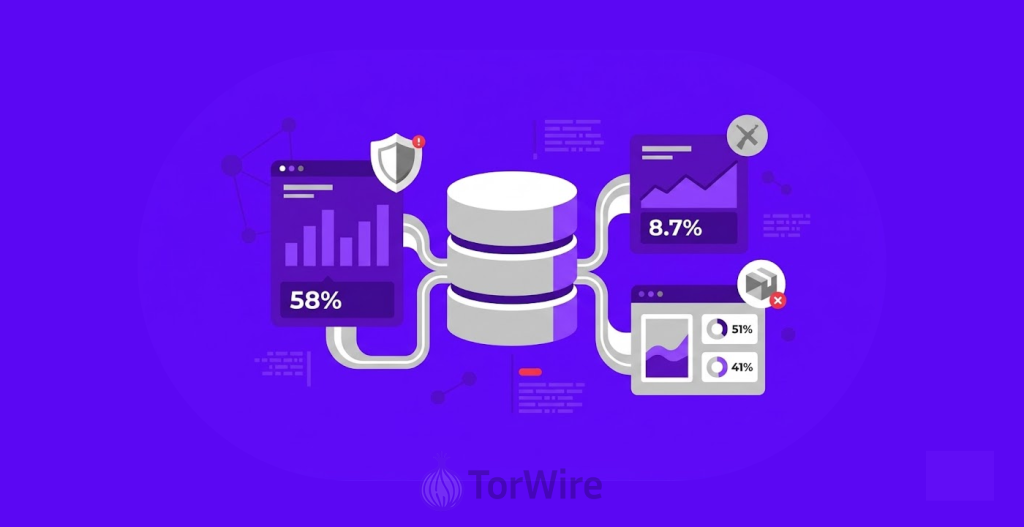
The dark web has become a hotbed for the illegal weapons trade. In 2022, a report revealed that more than 35,000 weapon listings were on these hidden marketplaces, everything from guns and ammo to explosives and other dangerous stuff.
The U.S. leads the pack, making up 60% of the weapons sold on the dark web. Europe comes in next at 25%, and Russia trails with 7%. These numbers really highlight how geography shapes the arms trade online.
Most of these weapon listings (about 58%) come straight from the U.S. That’s not too surprising if you think about America’s more relaxed gun laws. Criminals use that easier access to funnel weapons to buyers all over the world.
While only 0.3% of all the content available on the dark web consists of weapon-related items, there are still a large number of weapon-related listings (thousands) that pose a serious risk to the community. Law enforcement agencies are monitoring these additional markets closely and are doing all they can to shut them down.
Drug Trade on the Dark Web
The drug trade runs the show on the dark web. Around 20% of all drug sales worldwide happen on these markets, so it’s a major channel for trafficking. In January 2022, drug listings on dark web sites shot past 23,300.
Drugs only make up about 4% of all dark web content, which sounds small at first. But those listings rake in serious money. And there’s no shortage of options, such as narcotics, prescription pills, controlled meds, synthetic stuff, and the list goes on.
Dealers use a variety of tactics to avoid detection, including vacuum-sealed packaging, fake return addresses, encrypted messaging apps, and cryptocurrency payments to maintain anonymity.
Despite repeated law enforcement crackdowns, the dark web drug trade remains resilient. When one marketplace or dealer is taken down, others quickly emerge, creating an ongoing challenge for authorities.
Dark Web Shop for Pets and Unusual Items
Among the stranger offerings found on the dark web are listings for fascinating animals and prohibited pets. While the dark web is most commonly associated with drugs, weapons, and stolen data, some marketplaces have also been linked to the illegal trade of rare wildlife and restricted animals, highlighting the wide range of illicit goods available in these hidden online spaces.
While this activity represents only a small fraction of overall dark web activity, it does occur. Listings occasionally feature endangered species, fascinating reptiles, and other restricted animals. Given that wildlife trafficking generates billions of dollars annually, the dark web provides traffickers with another channel to connect with potential buyers while attempting to evade detection.
Most marketplaces involved in illicit trade focus on high-demand goods such as stolen credentials, hacking tools, counterfeit documents, drugs, and other illegal products. While the illegal pet trade remains a relatively small segment, its presence highlights the broad range of activities that have emerged within these underground marketplaces.
Cybercrime and Hacking Statistics
The dark web is a home for cybercriminals. It’s where hackers gather, carry out their business, get info and even buy and sell hacking tools. About 60% of dark web marketplaces are specialized in cybercrime-related activities; they peddle hacking tools, stolen data, and ready-to-use malware for bad actors to buy.
If we talk about numbers, Access to Cybercrime-as-a-Service offerings has grown almost fivefold since 2016. Anyone with little to no hacking skills can literally launch sophisticated attacks with the readily available tools on the dark web. You can literally buy a ransomware package like ordering a pizza.
Cybercrime-as-a-service (CaaS) Stats
Let’s get real for a second, the CaaS market has become a subscription service. With just a few hundred dollars, anyone can buy professional hacking tools; there is no need to learn coding or anything of the sort.
This whole ecosystem pulls in over $1.6 billion a year. CaaS turns cyberattacks into a commodity, so even people with zero tech skills can jump in. Imagine the “Netflix of cybercrime,” only it’s illegal and a whole lot more dangerous.
Small and medium-sized businesses are the primary targets, the majority (60%) of all cyberattacks in 2024 were targeted at SMBs. Why? Smaller companies just don’t have the same security muscle, so criminals target them on purpose. They know it’s easy money.
Phishing Dominates the Attack Landscape
With more than 90% of successful attacks, phishing sits at the top for cyberattacks. Roughly 75% of these attacks kick off with a sneaky, legit-looking email. Scammers pretend to be your bank, your boss, or services like Amazon or Netflix.
And you know what? It works. According to data, around 88% of phishing attacks end up stealing someone’s credentials, handing attackers the keys to everything.
The dark web makes phishing stupidly easy with Phishing-as-a-Service (PhaaS). These platforms hand over ready-made kits, web hosting, slick email templates (some even throw in customer support).
Common Cybercrime Services on the Dark Web
The menu of attack services is massive. Here’s what criminals can buy:
- Ransomware-as-a-Service (RaaS): Developers create ransomware and let “affiliates” handle the dirty work. Developers deal with the tech, and affiliates go find victims. They often share the profits (typically 30/70 or 40/60 between the affiliates). In North America, ransomware accounted for 30% of all attacks, Europe 26%, and Asia only 11%.
- Phishing-as-a-Service (PhaaS): It provides everything necessary to run a successful phishing campaign, from hosting to templates, fake login pages and even a list of potential victims. Some services will even run the whole thing for you. Approximately 90% of cyber attacks are created using phishing tools like PhaaS.
- DDoS-as-a-Service: Do you want your competition’s website offline? That’s what DDoS services do. Data shows that these services launch 1,700 DDoS attacks on average per day, and these types of attacks make up 23% of critical infrastructure incidents between 2024 and 2025. For basic attacks, the price of a DDoS-as-a-service kit can be as low as $50, and thousands of dollars for more sophisticated attacks.
- Access-as-a-Service: Some threat actors specialize in breaching networks and then selling that access to others, effectively acting as brokers for compromised systems. Between 2024 and 2025, the sale of servers and network access played a role in approximately 20% of cyberattacks in Asia, 12% in Europe, and 9% in North America.
Regional Attack Patterns – Different Places, Different Problems
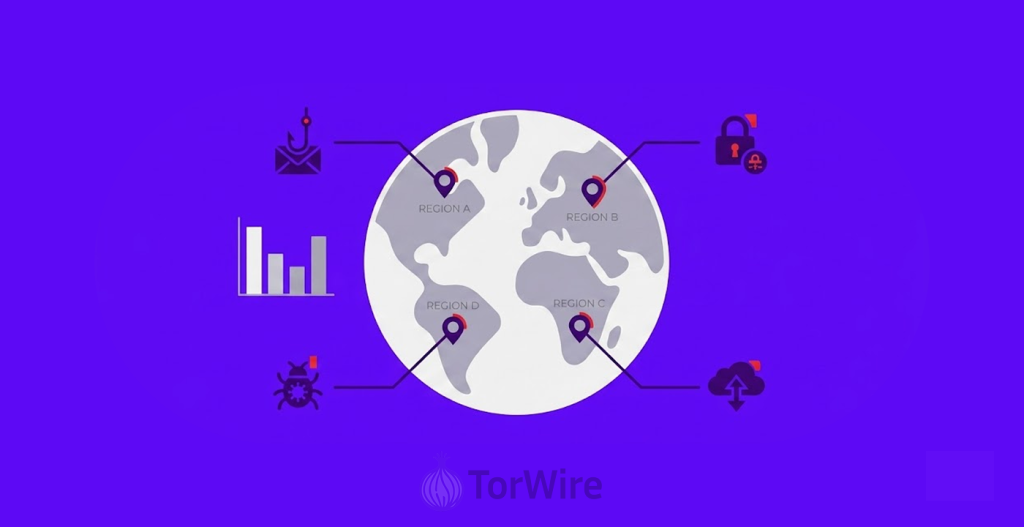
Cybercriminals switch up their tactics depending on where they’re aiming. In North America, ransomware tops the list (30%), with Business Email Compromise at 12% and server access at 9%. The heavy use of digital tools here makes ransomware especially tempting and dangerous.
Europe’s got similar ransomware numbers (26%), but server access attacks are more common (12%). Data theft comes in third at 10%. Thanks to strict regulations like GDPR, stolen European data is worth even more.
Asia has a different story. Server access attacks lead there (20%), then ransomware (11%), and data theft (10%). Huge manufacturing and tech industries make breaking into servers a goldmine for industrial spies.
Different Threats in Different Sectors
Hackers don’t use standardized approaches when selecting their tools for attacks. Instead, they determine which tools best suit their potential victims.
Critical infrastructure (think the power grid and water treatment facilities) has certain kinds of threats it deals with. According to data, 55 percent of all attacks are made through directly attacking either systems or networks. Then, 23% of attacks are directly through DDoS-like attacks meant to cripple operations, while 1 in 5 (19%) were carried out simply using a stolen password to gain access. Thus, vital systems remain our number one target always for hackers.
Businesses also deal with a unique problem. Email compromise makes up 19% of attacks, with Business Email Compromise (BEC) fraud at 15%; these scams trick employees into sending money to criminals. Identity fraud rounds out the big threats at 11%.
The Credential Crisis
By October 2023, researchers had identified more than 15 billion stolen credentials circulating online, largely sourced from years of data breaches affecting organizations across virtually every industry. These compromised usernames and passwords fuel attacks such as credential stuffing, where criminals use leaked login details to gain unauthorized access to other accounts, taking advantage of password reuse.
Dark web marketplaces continue to trade millions of stolen credentials (from streaming services and social media accounts to online banking logins) making hacked accounts one of the most commonly bought and sold forms of cybercrime data.
Detecting Breaches Takes Too Long
This is probably the worst nightmare. On average, it takes 197 days for a company to even notice they’ve been breached. That’s over six months, enough time for the hack to rummage through every file, and take whatever they need, and by the time it’s detected, another 69 days to do damage control and contain the breach.
This basically hands the hackers ample time to steal enough of your data, plant hidden backdoors, and just do whatever they like.
Money lost to Cybercrime
Cybercrime is now a business. Just about anyone can launch a DDoS attack or spread some malware because the tools are up for rent on the dark web. For about the price of a used laptop (~$1,800), you can buy access to 1,000 already-infected computers. It turns complex cyberattacks into a point-and-click operation for any aspiring criminal.
According to IBM’s 2025 cost of data breach report, the average cost of data breach globally was around $4.44 million, a 9% reduction from the $4.88 recorded the previous year. But this figure is not the same for every industry; it varies.
Financial Fraud and Stolen Data
As we have mentioned above, the dark web is a hot-spot for scammers. If you search through any of the underground markets, you’re likely going to find that at least 30% of all listed ads are intended for fraudulent activity.
Stolen personal information alone makes up $1.5 billion per year in revenue, and honestly, this is a small price to pay when you compare it to what will happen when people start to use that information.
In the year 2024, there were more than $12.5 billion dollars reported lost by Americans due to these frauds. That number increased 25 percent YoY (Year-to-Year). Over 30 percent of Americans have already fallen victim to a scam. If you have not, you are probably just waiting to have your turn.
Increase in Investment Scams
Why do investment scams keep booming? In 2025, scammers online got away with over $5.7 billion from these scams. They are always disguised as something appealing, promises of extremely high returns on cryptocurrency, ‘unbelievably good’ real estate deals, or whatever the next big thing might be. What you can always rely on, however, is an empty bank account.
Imposter scams were a carnival in 2024, with an estimated cost to consumers of nearly $3 billion. This trend includes fake calls from grandkids in trouble or phony calls from an IRS agent about back taxes or a tech support rep you didn’t contact.
These statistics are not just random ones, as 38 percent of reported scams in the year resulted in some real, tragic financial loss.
Older Adults Lose More to Scams
There‘s one pattern that’s been observed: young adults have a higher percentage of being scammed than older adults. However, individuals over the age of 70 are losing significantly more than the younger age groups.
Scammers also see an easy target with a high account balance and individuals who may lack proficiency with computers.
Additionally, this trend is not just confined to the United States. The digital explosion in India is also experiencing a steady increase in the number of reports of financial cybercrimes, which account for over 75 percent of all cybercrimes reported in India.
The Breach that Affected Just About Everyone
Do you remember the 2024 National Public data breach? It was a complete disaster; nonstate actors leaked 2.9 billion records, including social security numbers, addresses, everything. That’s more records than there are people in the U.S., meaning most of us probably had our data exposed many times.
Attackers aren’t joking around. Payment card skimming is up 77% and will probably keep increasing. For banks, the real pain’s in the cleanup; every dollar stolen ends up costing banks four times more in investigative, repairs and rebuilding shattered trust.
They are Buying Your Identity
If we see reality, your identity is a bestseller on the dark web, more than half (over 65%) of illegal activity there revolves around stolen identity. Your name and other personal information are likely to be found in a dozen shady databases on the dark web right now.
What’s more? One in ten new accounts is opened by a fraudster using stolen identity. In the past two years, 37% of all individuals had their identity stolen and used to open accounts. The question is not “if” your personal info is out there, but how many times it’s been sold.
The Weak Spots in Fintech and the Confusion Surrounding Cryptocurrencies
While fintech companies are responsible for 27% of all data breaches, almost half of those breaches originated with a third-party vendor. That cool cloud service that your fintech company uses can turn into the weakest link in their chain and, consequently, affect you, the customer.
Cryptocurrency has become a major target for cybercriminals due to its speed, global reach, and the difficulty of reversing transactions. Common schemes include exchange breaches, wallet thefts, phishing campaigns, and investment scams such as rug pulls.
In 2024 alone, losses linked to crypto-related hacks and fraud exceeded $2.2 billion. For criminals, digital assets remain attractive because transactions can be moved quickly across borders and are often harder to recover than traditional bank transfers once funds have been stolen.
The chilling fact? Stolen credit cards are dirt cheap and easy to obtain; scammers can buy vast amounts of stolen credit cards and drive prices down by using many cards quickly. Criminals use stolen credit cards to purchase counterfeit cash in massive amounts.
The scale of this is mind-numbing; listings for stolen credit cards went past 192 million (an increase of 6%). Each card has a limit of about $8,700 on average and is sold for close to nothing, so there is big potential to do terrible damage.
Recent Developments in Dark Web Enforcement
Criminal activity on the dark web is no longer going unnoticed, as law enforcement agencies around the world have stepped up their effort recently. Major marketplaces, such as Hydra Market taken down, hundreds of arrests, and victims who finally got a way out.
Operation RapTor
Take Europol’s Operation RapTor, for example. Law enforcement from 10 countries teamed up to bust one of the biggest dark web operations ever in May 2025. They nabbed 270 people, including 130 in the US and 42 in Germany. They also stole about $200 million in cash and crypto, plus two tons of drugs.
So how did they succeed in executing this operation? They pieced together clues from earlier dark web busts, marketplaces like Nemesis and Tor2Door. These weren’t amateurs. Many suspects made thousands of sales, hiding behind encrypted chats and cryptocurrencies. Still, authorities managed to track them down.
According to Europol’s European Cybercrime Centre Director, Edvardas Šileris, the results of Operation RapTor demonstrate that law enforcement can successfully investigate criminal activity on the dark web and identify offenders despite attempts to conceal their identities.
The operation followed a similar approach to Operation SpecTor, a major international crackdown conducted in September 2023 that resulted in 288 arrests, the seizure of more than $53 million in cash and cryptocurrencies, large quantities of illegal drugs, and 117 firearms.
Oh, and get this, operation RapTor kicked off right around the same time as Endgame. That one’s not some video game final boss, it’s actually a whole program aimed at wrecking the tech that powers ransomware. Wild couple of days for law enforcement that was.
Collectively, these two operations have resulted in operational losses in excess of €21 million with the ability to impact the infrastructure used to facilitate cybercriminals.
Operation Grayskull
Furthermore, the FBI/DOJ are simultaneously executing Operation Grayskull, which has been ongoing since September of 2022. Their target? Child sexual abuse material websites buried deep in the dark web. They shut down four of the worst sites out there and secured convictions for 18 offenders (collectively sentenced to over 300 years behind bars).
The criminals were responsible for running the sites for sharing these materials, implementing the rules and hiring staff, as well as training others on how to evade law enforcement. The sites themselves were horrifying, with sections focused on infants, violence, and torture.
The FBI arrested 19 people in the US and worked with teams in seven countries to catch even more. What’s chilling is that many of these offenders had no criminal history, they were just regular people: neighbors, coworkers, even family members.
Operation Grayskull is one of the biggest blows ever dealt to online child exploitation networks.
Interpol’s Victim Identification Task Force
In September 2025, the Victim Identification Taskforce gathered at Europol’s HQ in The Hague to begin their work. For two weeks, experts from more than 20 nations analyzed over 300 pieces of photo and video evidence of child sexual abuse.
They identified a total of 51 children that were victims of abuse, age from toddlers to teenagers and from various countries and ethnicities. The team sent 213 leads to national authorities to keep the investigations moving.
This identification of victims is an important part of the fight against online child predators (and harassment). These analysts dig through some of the world’s darkest material, searching for clues to help rescue kids who have nowhere else to turn.
Back in 2024, the 14th VIDTF ID’d four victims in May. Europol gave 70 data sets’ ID info to cops. This teamwork combines resources from Interpol, Europol, and police forces globally.
Crackdowns on Major Darknet Marketplaces
There have been a lot of efforts in the past couple of years to curtail crimes carried out on sites on the dark web. Law enforcement has busted a number of large darknet markets that processed billions of dollars of illegal transactions.
Nemesis Market (March 2024)
German authorities, working with U.S. and Lithuanian authorities, have taken down the servers of Nemesis Market after an extensive 18 month investigation. The website was terminated in the year 2021 and had over 150,000 customers and 1,100 merchants (one-fifth of those merchants were located in Germany).
The marketplace functioned as a location to buy all kinds of illegal materials, such as drugs or stolen computer data, counterfeit identification cards, and any type of cyber crime service (i.e. ransomware, phishing kit, DDoS tools, etc.).
Their drug sales alone accounted for nearly $30 million between 2021 and 2024. The authorities seized approximately €94,000 ($102,000) in crypto at the time the site was taken down.
Immediately following its closure, the U.S. Treasury placed sanctions against Behrouz Parsarad (the individual responsible for creating the site) based in Iran. That was a first, OFAC had never targeted a darknet marketplace operator before. This all happened under Operation RapTor.
German Cops Took Down Kingdom Market (December 2023)
This was a hub for all sorts of illegal stuff, like drug sales, scams, and spreading malware. They had over 42,000 shady listings on there. They arrested one of the administrators located in the U.S., who operated the website, as well as several server locations around the world.
Bohemia Market and Cannabis Market (October 2024)
Dutch Law Enforcement Agencies working with partner nations of Ireland, Great Britain, and the U.S. successfully terminated Bohemia Marketplace. Investigations into the operations of Bohemia began in late 2022.
Bohemia was a large-scale operation with approximately 82,000 advertisements going up on a daily basis with 67,000 transactions taking place per month. In September 2023, transactions hit €12 million. But then, server issues and a rogue developer let the website kill itself at the end of that year. Two suspects were arrested, one in the Netherlands and one in Ireland.
Monopoly Market (2023)
Before it closed, this darknet spot made vendors over $18 million, with the operator bagging about $900,000 in fees. The intel from this bust helped with solving tons of other cases.
Genesis Market (April 2023)
The US Treasury sanctioned Genesis Market, a go-to spot for crooks for buying stolen credentials and accessing hacked accounts. Genesis specialized in selling “digital fingerprints” that let criminals impersonate real people.
Other Major Enforcement Actions
- Hydra Market (April 2022): German police pulled off their biggest dark web bust ever by taking down Hydra (the world’s largest darknet market at the time). Hydra had 17 million members and 19,000 sellers. In 2020 alone, it moved about $1.34 billion in illegal deals. When police shut down its servers, they also seized Bitcoin wallets holding about $25 million. This hit the Russian-language dark web trade hard.
- Law enforcement had come a long way since Operation Onymous (2014), when they shut down Silk Road 2.0, showing how effective law enforcement could be.
- Operation Bayonet (2017) targeted two of the dark web’s largest marketplaces, AlphaBay & Hansa Market. They used the knowledge gained through this operation to carry out additional actions on many different online marketplaces.
The battle between law enforcement and cybercriminals is ongoing. While authorities continue to make significant progress in disrupting illegal marketplaces, new platforms frequently emerge to replace those that are shut down. At the same time, cybercriminals constantly adapt their tactics, making the fight against online crime a continuous challenge.
Law enforcement agencies have recently observed a shift toward single-vendor stores operated by individual sellers rather than large dark web marketplaces. These smaller operations can be harder to detect and avoid the fees associated with marketplace platforms. However, their scale is often limited compared to larger marketplaces that aggregate products and services from numerous vendors.
So the battle just keeps rolling. As law enforcement continues to adapt new tactics, so do the criminals. However, the recent successful takedowns show that the dark web isn’t as untouchable as some of us think. With collaboration and teamwork, intel sharing, and persistence, this fight against dark web crime can be won.
Deep-Dive on Dark Web Attacks
Criminals on the dark web are no longer just banking on some simple tricks alone. They’re upping their game with new strategies, and if you know what’s up with these new techniques, you’re halfway already with keeping yourself and your business safe. Some of the cyberattacks individuals and businesses face nowadays include:
Malware Attacks
Malware is basically software built to mess with your computer or steal your personal info. Hackers on the dark web love using all kinds of it, such as keyloggers, ransomware, trojan horses, you name it.
A keylogger is a sneaky program that tracks everything you’re typing in with your keyboard, and with it, hackers can steal your passwords or credit card numbers without you knowing.
Ransomware is a different beast. It locks up files, the hacker demands ransom, and won’t grant the owner access unless they pay up. Trojan horses are malware disguised as legit apps, but once they’re in, they mess stuff up.
And the dark web’s basically a malware market. Prices jump depending on how advanced the attack is or who it targets. Some sellers even throw in customer support and updates, seriously, it’s like shopping for software, just evil.
DDoS Attacks
Distributed Denial of Service (DDoS) overwhelms a network or website, making the real users of the site or network unable to access it. Hackers command botnets (armies of infected computers) to flood a site with junk traffic.
The goal? To crash it, and the result for any business is brutal: lost sales, angry customers, and sometimes, these are just distractions for a more sinister break-in elsewhere.
Social Engineering
Even the toughest firewall in the world can be broken if someone simply gives away the password. That’s why hackers have switched up their games from using malware to social engineering tricks.
They feed on our curiosity and innate trust; you see that ‘urgent’ email from your bank with a link asking you to “verify your account”? It could be a phishing email. Or the overly helpful “tech support” call to offer you free security? That’s actually malware they’re trying to get you to download.
Credential-Based Attacks
What happens when a phishing scam works or a data breach exposes millions of people’s passwords? The result is often a front door wide open for attackers to freely walk in (we call it credential-based attacks).
Hackers don’t have to waste time hacking your system anymore. They simply log in with your info, like it’s their account, without triggering any alarms because they have a valid digital ID that gets them past security.
Once they get inside your system, they start to steal data, plant backdoors, and literally move around your system undetected for months. And before you smell anything fishy, it’s already far too late.
Industries Most Hit by Dark Web Attacks
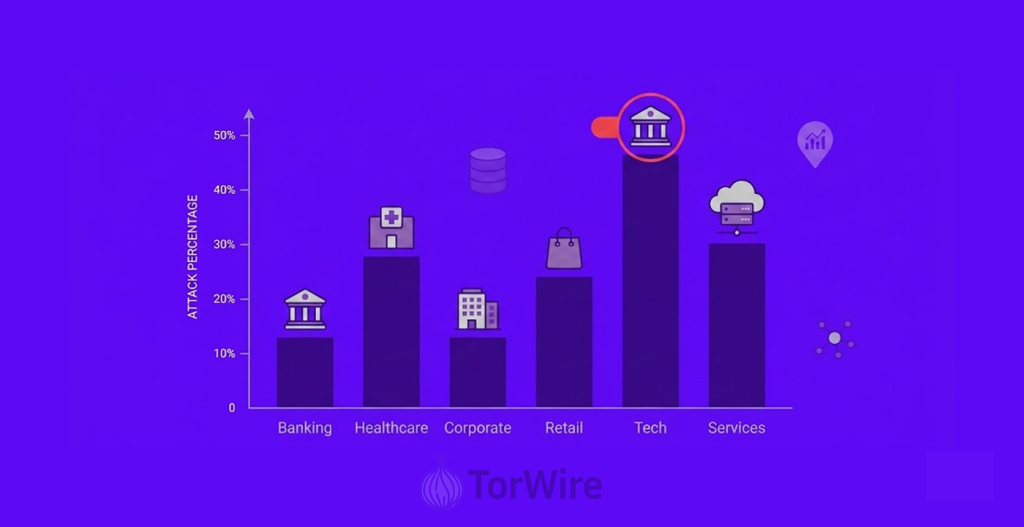
While every sector is at risk, some face a full-blown digital war. If you have your data in one education institute or another, a healthcare organization, finance, or retail, consider it already a prime target on the dark web.
Education
Schools are the top target. In Q2 of 2025, about 600 cyberattacks per day, and more than 4,380 confirmed, which tallies with a year-over-year increase of 75% according to Check Point Research’s report.
You may ask: why schools? The US’s CISA answers found “target rich, cyber poor,” meaning they’re a treasure trove of sensitive data, such as student SSNs, health records, and financial aid details, but often lack the budget and expertise to defend it.
The consequence is dire: ransomware payouts averaging more than half a million dollars and over 80% of US schools reporting a major cyber incident. It’s a system crisis.
Healthcare
Healthcare isn’t far behind. It, in fact, saw the sharpest spike, an 86% YoY increase in attacks. The reason is pure dark web economics, complete medical record: everything from your name, address, Social Security numbers, insurance and medical history, is the ultimate identity theft package, a goldmine for fraudsters.
Finance
This one’s the perpetual target. Banks, insurers, and investment companies are targeted for the oldest reason in the book, that’s where you keep the money, guard. They’re fortified, yes, but the siege never lets up.
Retailers?
Every transaction is a potential payday. Retailers process piles of payment info each day, and one single successful breach can leak millions of credit card details onto dark web markets overnight. For cybercriminals, this is like hitting a jackpot with another person’s coins.
Bottom line? Hackers on the dark web don’t go on break; they go after all sorts of targets with different strategies, so we must keep watch at all times.
Dark Web Trend Outlook 2026
The dark web is evolving at a fast pace. This means new threats are being rolled out overnight, so to beat attackers at their game, you’d need to stay abreast of the new trends.
Cybercrime Motivations have Changed
Back in the days, when phones and computers were still new and everyone was trying to explore possibilities, people used to hack into systems for the thrill of it. Hacking was mainly for the fun of it and to earn bragging rights, not about money.
Fast forward to the 2000s, the motivation began to change as companies like Microsoft began compensating ethical hackers for finding security holes before the bad actors did. And that’s where it all went south. Suddenly, there was now a legitimate side to hacking.
In the 2010s, ransomware came, ushering in a lucrative way to make money for hackers by just holding data hostage. By 2019, big corporations became the main targets, and ransom demands increased from thousands to millions of dollars.
These days, hackers don’t just rely on clever tricks; AI and machine learning are making things easier and faster. Every day, they’re coming up with new ways to break into company’s systems and steal valuable data. It’s now a game of whack-a-mole, security experts close one hole, hackers find another, and it just keeps going.
Use of AI and Machine Learning as the New Weapons
Cybercriminals are increasingly using AI to automate and enhance their operations. Tasks such as target selection, vulnerability discovery, phishing customization, and attack optimization can now be performed more efficiently with AI-powered tools.
These capabilities allow attackers to adapt quickly to defensive measures, test multiple attack paths at scale, and identify the most promising targets. Machine learning can also help prioritize victims based on factors such as potential financial gain, making cyberattacks faster, more targeted, and more difficult to detect.
Defenders aren’t standing still, though. They also employ AI to detect when something’s fishy and shut down threats pretty quickly. Meaning both the attackers and defenders are almost at arms race for who’s going to outsmart the other.
More Focus on Anonymity and Privacy
As the dark web continues to grow, users need better tools to ensure their privacy and anonymity. People now prefer privacy crypto coins like Monero and Zcash to Bitcoin for dark web transactions because they’re harder to trace.
Similarly, new mixing services and tumbling methods are being used to make it even harder to follow the crypto trails. Every layer of obfuscation puts criminals another step ahead.
Tor isn’t staying the same either. It’s becoming better at routing and encryption. Plus, new privacy technologies are being launched almost on a daily basis. All these are making dark web enforcement harder for the authorities.
Social Engineering Gets Personal
Social engineering isn’t just about phishing emails anymore. Attackers do a lot of homework before launching their attacks on the target. They study victims through their social media, comb through leaked data from breaches, and public records to make sure their attacks hit the right spot, and that feels so real it’s harder to tell what’s fake.
Deepfakes make things worse. Now the bad actors can fake the voice of someone you know, your friends, your family, or your boss. They go as far as to create convincing deepfake videos of people to create false evidence and manipulate you into trusting them.
It’s important that you train your employees to recognize social engineering tricks, as that might be the best way to prevent these attacks. Because anyone can make a mistake and in that single slip up, give attackers the window to come in.
What’s Next for Cybersecurity on the Dark Web
A few trends will shape where things go from here:
- First, expect to see even more AI and machine learning on both sides (defense and attackers alike). Whoever moves faster with this tech will get the upper hand.
- Governments everywhere are putting in place more stringent rules, so companies are going to be saddled with more responsibility to protect user data. Also, there’ll be more hefty fines for those with lax security measures.
- Collaborative defense and sharing information are becoming the norm. Organizations are beginning to work together, sharing threat intel to track down patterns and respond faster. We could see more of this teamwork and better results against cyberattacks in the coming years.
- Focus on the supply chain. Attackers are always on the lookout for weak links, and supply chains seem to have that in abundance these days. It’s not enough to protect your own systems; you have to make sure your partners are up to par, too.
- In the zero-trust framework, the old “trust but verify” mindset is fading. Now, it’s “never trust, always verify.” Every user, every device, everyone has to prove who they are, every time. That’s the new reality.
Protecting Dark Web Sites and Businesses
The only way you can save yourself from the wrath of the dark web is by taking necessary and appropriate security measures; Don’t just sit relying on your luck. To win, you need these essential strategies:
Implementing Dark Web Monitoring is Non-negotiable
Having a dark web monitoring tool is more like having security on guard 24/7 in the shadiest parts of the internet (the dark web). They watch for your company’s data or credentials popping up in hidden forums and black markets. When something does show up, you get an alert, fast.
Speed matters here. Spotting breaches early? That buys you time to switch up passwords ASAP, let your customers know, and lock things down before the damage is done.
Train Your Staff
Get your employees trained to sniff out threats and the basics of cybersecurity. They could be your system’s weak point, but with the right know-how, they can become your first defense.
Show them what’s up: spot phishing attempts and learn smart hacks, like using strong and unique passwords. Everyone messes up, but a trained team messes up less.
Try running fake phishing scams to check who bites and reward those who catch and report shady stuff. This will make them more conscious and aware all the time.
Invest in Solid Security Tools
Don’t cut corners here. Get yourself a strong and reliable lineup, such as secure VPNs, reliable antivirus, firewalls, intrusion detection, and encryption.
If you want to always be on the safer side, multi-factor authentication is a must. Big firms like Google and Microsoft endorse it. If someone gets a password, they still can’t get in without a second proof. Use it everywhere you can.
Have a Game Plan for the Worst
Having an incident response plan is one of the most effective ways to reduce the impact of a cyberattack. Without a clear strategy, attacks can disrupt operations, delay recovery efforts, and create confusion across teams. A well-defined plan ensures that everyone understands their responsibilities, enabling a faster, more coordinated response and helping organizations contain threats before they escalate.
And don’t just leave the plan in one folder to collect dust; test it to see if it actually works. From time to time, test your plan by simulating emergencies and running tabletop exercises to find gaps and patch them up before the real incident shows up. Fix the gaps now, not during a crisis.
Work with Law Enforcement Agencies
As a responsible citizen, it’s your duty to report whenever you are hit by a cyber attack. Law enforcement needs your info to track down the crooks and break up their networks.
Lots of countries have cybercrime units. Get to know them before you need them; it pays off when trouble hits.
Individual Protection and Protection
You don’t have to run a business to be a target. Even individuals get targeted depending on how valuable attackers presume them to be, so take a look at a few tips to protect yourself:
- Use strong, unique passwords for each and every account. Here’s the benefit: if one of your accounts gets leaked, others will still be safe. Let a password manager handle the tough stuff.
- Turn on multi-factor authentication wherever you can. It slams the door on account takeovers.
- Monitor your accounts like a hawk, always. Don’t slack off and leave the safekeeping for your bank alone: scan your bank statements, check credit reports, and be on the lookout for any unusual activity on your account. By doing so, you can catch anyone accessing it without permission before they steal your money or cause harm.
- Password managers aren’t just for businesses. They’ll create strong passwords for you, remember them, and let you know if any get exposed in a breach.
- Consider dark web monitoring for your personal info. If your data shows up out there, you’ll know and can act before someone else does.
- Stay curious. Read a lot of cybersecurity news and be informed about the latest scams because knowing what’s out there is the best way to ensure your safety.
- Guard your personal info like a jealous girlfriend; avoid oversharing your personal life online. The less you put out there, the less there is to steal.
Browse Safely with the Right Security Systems
Being secured on the dark web requires the right tools and habits. Here’s your checklist:
- Stay anonymous: If you must access the dark web, maybe for research or something really important, don’t enter naked without necessary protection. Get a VPN and use the Tor browser, never your main browser (even if you want, you can’t access it with that).
- Be super careful: Avoid random or suspicious links, don’t click, and don’t download random files. Seriously, one wrong click is all it takes for malware to sneak in.
- Get good security software: Always remain current on antivirus updates. Set them to update and scan automatically.
- Backup your information on a regular basis: If you do, you may recover from a ransomware attack or hardware malfunction without a loss of time or revenue. Store one copy of the backup on an external device (such as an external hard drive) and save a second copy of the backup on the cloud.
- Learn to recognize scams: Phishing and social engineering are everywhere, so knowing the basics helps big time in dodging those traps.
Bottom line? The dark web is dangerous for most people; however, there are ways to avoid being an easy target. Stay safe online!
Conclusion
The dark web remains a major cybersecurity challenge, enabling the trade of stolen data, hacking tools, and other illegal goods. While some users access it for privacy, most activity is linked to cybercrime, including ransomware and credential theft.
To reduce risk, organizations should monitor exposed data, use strong passwords, enable multi-factor authentication, train employees, and maintain an incident response plan. As the dark web continues to fuel cyber threats, ongoing vigilance and security awareness remain essential.
FAQs
It’s basically a hidden part of the internet that you can’t access through normal search engines or browsers; you would need a special browser like Tor to access it. This shady part of the internet is used for illicit activities (mostly). However, some (a small portion) of people use it for privacy and anonymity.
No, cybercrime, black market, etc. are examples where illegal activity occurs quite often on the dark web. But it’s not all bad stuff, you’ve got whistleblowers, journalists, activists, etc., using it to dodge spying and censorship.
The only way you can get your hands on this darker part of the internet is through Tor Browser. It’s a special browser that keeps your location and the sites you visit secret by bouncing your connection all over the place. DuckDuckGo is the go-to search engine, but you can locate those hidden .onion sites using dark web browsers such as Torch, or directories such as The Hidden Wiki. In addition to using a Tor browser, many users increase the level of anonymity of their connection by utilizing a VPN or using a different web browser designed for anonymity.
Odds are that your personal info is already making rounds on one random forum online. With over 15 billion stolen passwords floating around, and most emails already leaked, your info’s probably out there on the dark web. Want to check? Get a dark web monitoring tool today, and can get alerted should your info get exposed on the dark web.