-
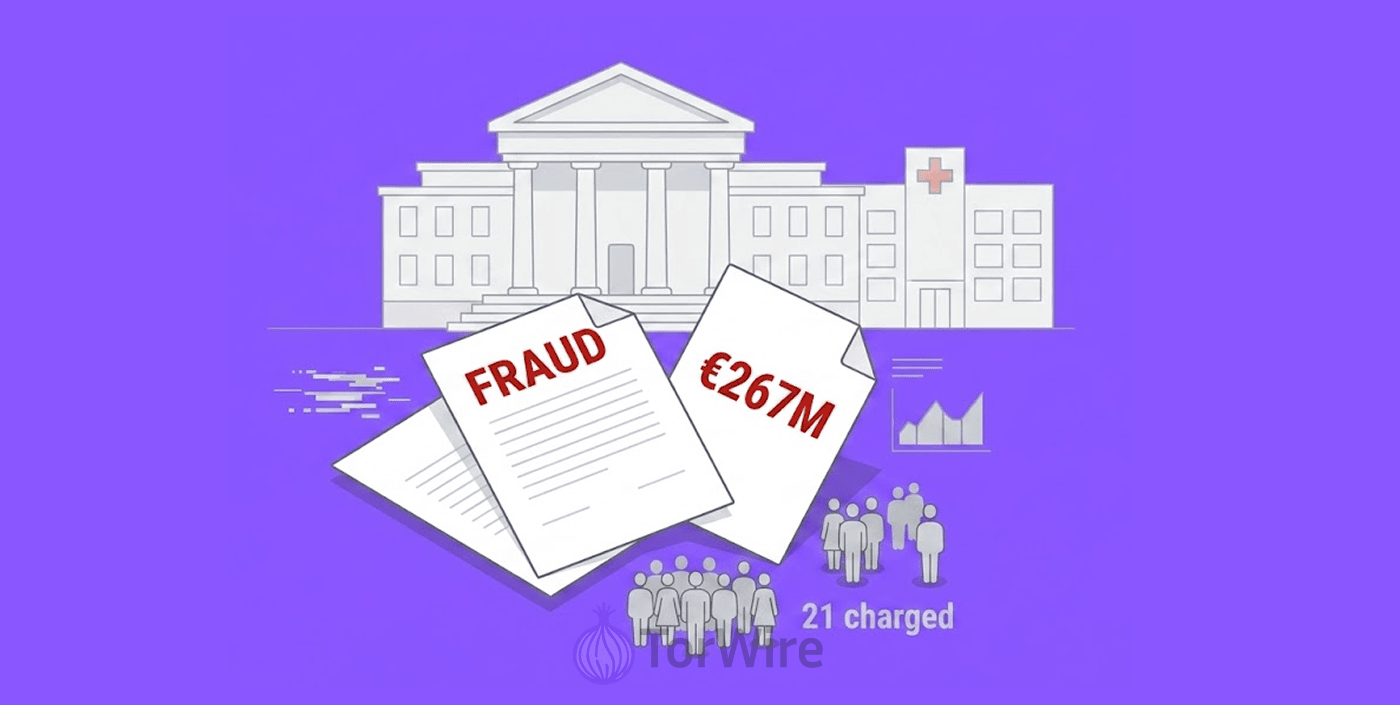
California charged 21 people with defrauding Medi-Cal of $267 million through a scheme that used stolen identities purchased on the dark web to create fake hospice patients.
-
The fraud involved 14 shell hospice firms billing for end-of-life medications & care and daily visits that no one ever provided to the stolen identities.
-
California has revoked over 280 hospice licenses and recovered more than $70 million, the state and federal officials continue investigating hundreds more operators for potential fraud.
California authorities have charged 21 people in a massive hospice fraud scheme that billed the state for end-of-life medication nobody ever received. The scammers bought stolen personal information on the dark web and used those identities to enroll fake patients into Medi-Cal.
The case, which prosecutors named Operation Skip Trace, involved 14 shell hospice companies that submitted roughly $267 million in fraudulent claims. The so-called patients did not need hospice care because many of them did not even live in California.
Dark Web Identity Theft Fueled the Fraud Ring
The fraudsters began their operation by acquiring stolen personal information from dark web marketplaces. The information includes names, dates of birth, social security numbers, and birthplace information of actual individuals residing outside of California.
Once they had the information, they enrolled fictitious identities into Medi-Cal via Covered California (the state of California health insurance marketplace) and listed them as terminally medicated patients who require hospice services.
The availability of stolen credentials on underground markets is staggering. A global cybersecurity breach recently exposed 149 million passwords, fueling identity theft fears worldwide and demonstrating exactly how fraudsters can obtain the personal information needed to perpetrate large-scale schemes like this California hospice fraud, which used dark web-sourced identities to steal millions from state healthcare programs.
The California Department of Health Care Services, DHCS, fraud detection systems flagged the first indication of any wrongdoing, which then referred to the state’s attorney general’s office, resulting in an aggregated investigation into fourteen different hospice companies.
Shell Companies Billed for Care They Never Provided
The defendants purchased hospice companies using straw owners who put the businesses in their names. These straw owners did not actually run the operations but helped hide the real organizers behind the scheme.
The fraudulent hospices then submitted claims for doctor visits, medications, and daily care for each stolen identity. In reality, no hospice locations existed, and no legitimate services ever took place. The fraudsters maintained the billing as long as each stolen identity remained active in the system.
The scheme routed the fraudulently obtained money through a complex network of over 130 shell companies. The defendants hid the funds across various bank accounts, payment applications, and cryptocurrency wallets to avoid detection.
California Officials have Revoked Over 280 Hospice Licenses
Governor Gavin Newsom’s office confirmed that California has revoked more than 280 hospice licenses and currently has hundreds more operators under active investigation. The state also maintains a moratorium that blocks new hospice providers from entering the market.
According to the Medicare and Medicaid Service centers, only Los Angeles County represents approximately $3.5 billion of hospice fraud. The U.S. House Committee on Oversight and Government Reform recently requested documents from Governor Newsom about the oversight of the state in hospice programs which are federally funded.
State officials recovered more than $70 million to date through coordinated efforts with federal law enforcement. The California Department of Justice has filed 119 hospice-related criminal cases under Attorney General Rob Bonta and secured 51 convictions.
Authorities arrested five people after searching ten different locations in Southern California. Law enforcement also seized two handguns and over $757,000 in cash during the operation.
How Identity Theft Has Evolved into Medical Fraud
This scheme reveals how identity theft keeps changing. Criminals no longer limit themselves to emptying bank accounts or applying for credit cards under fake names. They now turn real people into phantom patients inside government healthcare systems that most citizens never think to monitor.
This evolution makes the fraud much harder to catch and stop. Traditional credit monitoring services will not detect someone using your medical benefits. The best protection comes from knowing exactly where your personal information gets used and regularly checking those rarely reviewed systems.
If your data gets exposed in a breach, it may already circulate on dark web marketplaces. Scammers can utilize other people’s information inside Medi-Cal or Medicare billing systems without triggering any credit alert. That means victims may never know someone used their identity for months or even years.
