-
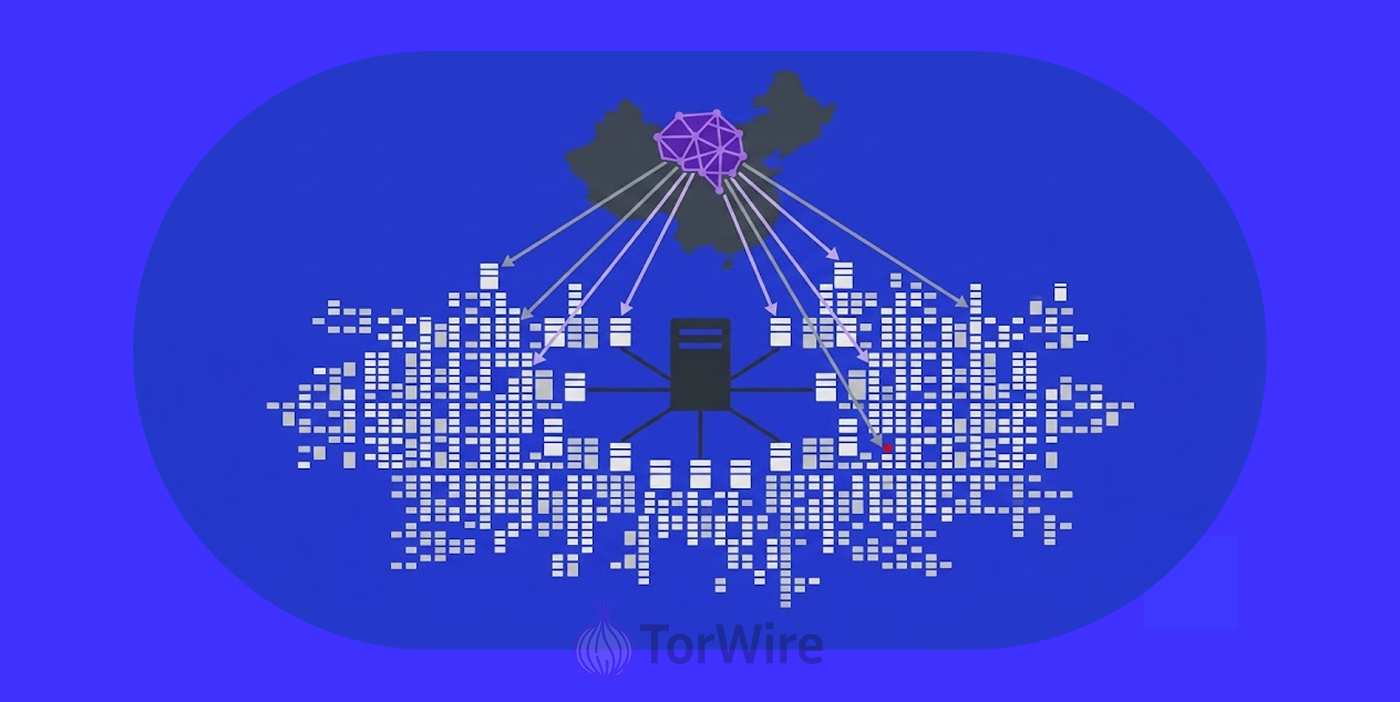
Researchers at Cisco Talos have uncovered a group of hackers who speak Chinese with a target list of 170,000 web server URLs.
-
The group uses AI to make their work faster, AI scans sites, tests exploits, builds payloads, and even automates every other step after a successful break-in.
-
Their malware, SPECTRE, doesn’t just steal credentials, it slips past security systems and hides out on both Windows and Linux machines.
Researchers from Cisco Talos found a Chinese-speaking criminal group ramping up attacks on public Linux and Windows servers with the help of AI. Talos tracks the group as UAT-10147. The group steals data and runs SEO fraud. Its targets include government, schools, media firms, tech companies, and game firms.
Cisco itself has also been a target of a separate extortion claim. In March 2026, the ShinyHunters group issued a “final warning” to the company, demanding a response by April 3 or it would leak over 3 million Salesforce records it claimed to have stolen from Cisco’s systems.
Talos found the activity in early 2026. Researchers saw a hacked machine connect to a malware server. An open folder on that server exposed the group’s tools, malware, scripts, and target list.
The list held about 170,000 web addresses, covering covered systems in Brazil, Bolivia, China, Canada, Vietnam, and other regions. But this list does not mean the group breached all 170,000 systems. It shows the scale of its planned or potential targets.
Joey Chen from Talos noted that the group split the web addresses into 17 files, each containing 10,000 entries. This helped the attackers scan the list in smaller batches. The researchers also noticed that the group uses letter ‘w’ as a shorthand for the Chinese character “萬,” which means 10,000.
The group also uses BadIIS and a separate SEO tool. The SEO tool can show fake pages to search crawlers and send harmful scripts to selected users. Talos found settings aimed at Vietnamese users and the Cốc Cốc browser and search engine.
AI Turns Attacks Into a Repeatable Process
UAT-10147 uses AI for more than code. Talos found AI tools in the group’s attack setup. Researchers found DeepAudit on an attacker server. It can scan source code for flaws. Talos has not seen the group use a DeepAudit finding in an attack. Researchers say it likely scans websites and outside software.
Talos also found PentestGPT on the group’s command server. The group used it to scan web servers and test exploits. AI files also helped the group check paths, test access, deploy malware, and place a web shell.
One guide explained how to check ASP.NET MachineKeys and test whether a stolen key worked. It also covered payload creation, reconnaissance, and persistence. Details from a real intrusion appeared in the material.
Talos says this marks a shift from basic AI coding to semi-automated attacks. The group can refine exploits, fix errors, test results, and record each step.
Old Flaws Still Open the Door
The group relies on known flaws. Talos saw attacks on Zimbra, AjaxPro, Nacos, and Telerik UI. The attackers used Metasploit and some other public tools. Talos linked the attacks to several flaws,-CVE-2022-27925 in Zimbra, CVE-2021-23758 in AjaxPro and CVE-2021-29441 & CVE-2021-29442 in Nacos.
That’s not all. Talos also saw CVE-2019-18935 in Telerik UI. On Windows, the group runs scripts after gaining access. The scripts download malware, raise privileges, and add IIS folders to the Microsoft Defender exclusion list.
The attackers also create local accounts with high privileges. Scheduled tasks keep malware running after a user logs in. Linux attacks follow a similar path. The attacker gain access, installs a web shell, then tries local vulnerabilities, including Dirty Pipe and Baron Samedit. In addition to those, Talos found a couple of other flaws used in the attack. CVE-2022-0995, CVE-2015-5287, CVE-2015-3246, and CVE-2010-3904 are part of the lot.
SPECTRE Provides Deeper System Control
The group’s most advanced malware is SPECTRE, a custom backdoor written in C. Talos found versions for both Windows and Linux. The Windows version has 45 commands. It can take screenshots, log keys, steal credentials, inject code, and raise privileges.
SPECTRE can also abuse flawed MSI and Dell drivers. This gives it deep access to Windows. That access lets SPECTRE remove key Windows security checks. Talos says this can blind Microsoft Defender, CrowdStrike Falcon, and SentinelOne to new processes, threads, and loaded images.
The Linux version has 29 commands. It can run commands, move files, gather data, and send files to the attackers. It also loads a rootkit called Specter. The rootkit hides as acpi_pad.ko and uses a fake hardware-monitor.service to start early at boot. Specter can hide processes and its own module. It can also give the malware root access.
AI May Also Have Helped Build the Malware
Talos found signs that AI helped create parts of Specter. Researchers noted detailed comments, uniform format, and instruction-like text. Talos has medium confidence in this finding. Researchers say the group likely combined AI-assisted development with human work.
The campaign also uses QuasarRAT, Meterpreter, Gh0stCringe, Noodle RAT, web shells, and BadIIS. Talos linked BadIIS and another SEO tool to the group’s efforts to manipulate search results.
Possible Actionable Steps for Defenders
The findings give security teams clear warning signs. First, patch public-facing servers and old software. Focus on IIS, Zimbra, Nacos, AjaxPro, and Telerik systems.
Review odd Microsoft Defender exclusions, new admin accounts, and new scheduled tasks. On Linux, look for strange systemd services and unknown kernel modules. Teams should also check Windows systems for vulnerable MSI and Dell drivers. Watch outbound traffic for unknown command servers and unusual data transfers.
The group still relies on old flaws and known tools. AI helps the group use those tools faster. It can scan targets, test exploits, solve problems, and repeat successful steps with less manual work.
Talos says UAT-10147 shows how crime groups can use AI to scale attacks. That makes patching and server checks more important.
