-
CISA has put CVE-2026-8452 on its Known Exploited Vulnerabilities list, giving federal agencies the deadline of August 29 to apply any required software updates.
-
At first, the bug had a label of a simple denial of service vulnerability, but experts discovered that it is actually a memory overflow exploit for executing malicious code remotely.
-
Threat actors are actively launching prey and spray campaigns to compromise exposed NetScaler appliances and install malicious web shells.
The U.S. Cybersecurity and Infrastructure Security Agency has issued an emergency instruction to all government departments regarding a dangerous security flaw. Federal agencies must apply critical software patches to their network appliances by Saturday.
The mandatory order specifically targets a serious vulnerability found in NetScaler appliances made by Citrix. Threat actors are actively abusing this security gap to breach corporate boundaries and gain remote access.
Discovery and Mechanics of the Memory Overflow Bug
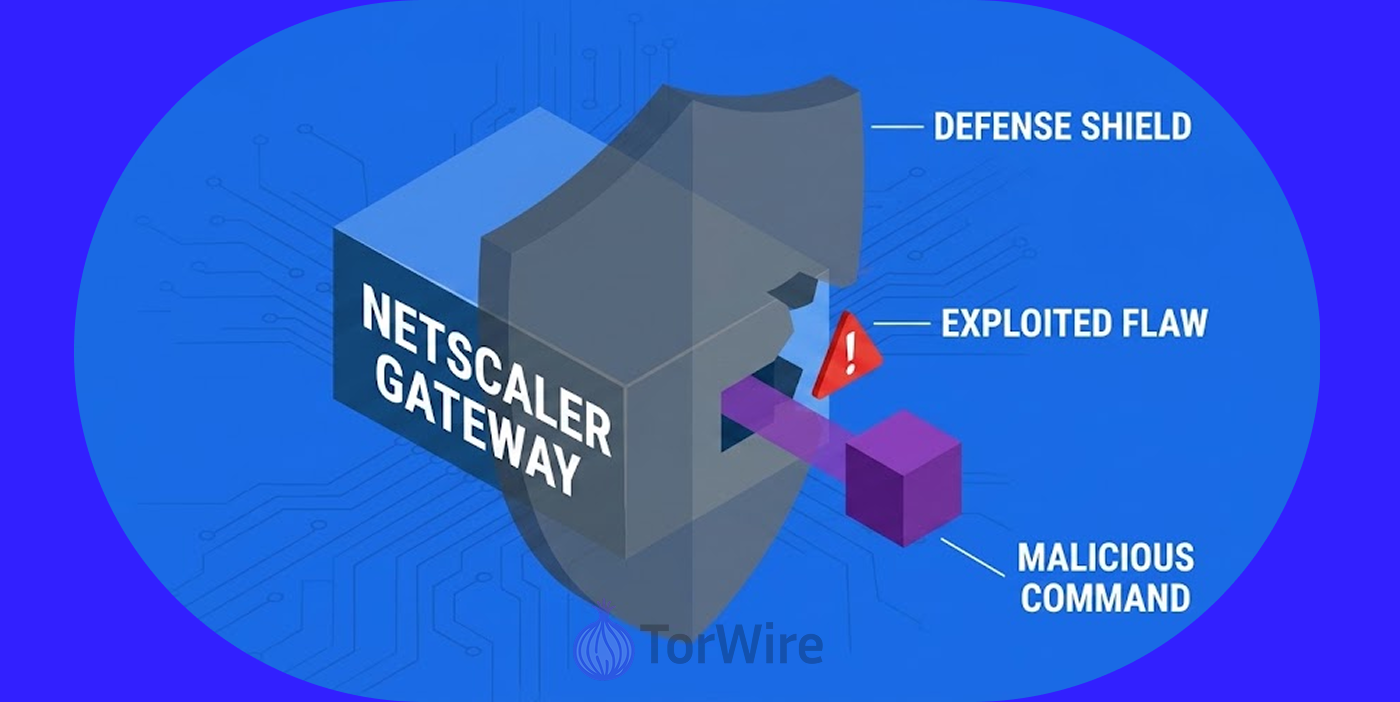
This underlying vulnerability is officially registered in public databases with the reference CVE-2026-8452. This specific issue involves a high-severity memory overflow weakness inside NetScaler ADC and Gateway appliances.
The bug specifically impacts networking systems configured with Gateway VPN or AAA virtual servers, the acronym AAA stands for authentication, authorization, and auditing functions inside corporate IT environments. When active, these virtual gateway systems handle secure user logins and manage external connections into local networks.
Initially, vendor announcements suggested that the flaw could only cause localized system crashes. Citrix originally stated back in June that threat actors could only exploit the flaw to execute denial of service attacks.
However, independent cybersecurity experts at WatchTower conducted deeper technical research on the code in August. Their testing proved that successful exploitation can actually allow remote attackers to gain code execution as root on unpatched instances.
This elevated level of system permission lets unauthorized users run arbitrary commands across vulnerable corporate networks. Furthermore, gaining root control grants malicious actors complete operational dominance over affected hardware.
Active Exploitation and Global Online Exposure
Threat monitoring organizations have identified thousands of exposed appliances connected directly to the public internet. Internet threat watchdog Shadowserver currently tracks over 22,000 NetScaler ADC appliances online.
In addition, the watchdog monitors nearly 1,800 exposed Gateway instances accessible across the globe. Consequently, cybersecurity analysts cannot state how many of these systems remain vulnerable or updated. Some visible instances might also operate as honeypots designed by researchers to trap active cybercriminals.
The federal cybersecurity agency announced on Monday the addition of the CVE-2026-8452 vulnerability to its catalog of Known Exploited Vulnerabilities; this means Binding Operational Directive 26-04 obliges agencies in the federal civilian executive branch to take steps to mitigate the vulnerability of their systems. Federal network managers should ensure they accomplish those software upgrades before the August 29 deadline.
At the same time, researchers have revealed that the bug is a tool in so-called ‘pray and spray’ attacks. Cybercriminals frequently utilize public web shells to compromise targeted systems and remain connected without the consent of the owners.
Broader Patterns in Citrix Appliance Targeting
Citrix has not provided any updates regarding its formal security notice concerning the actual attacks taking advantage of this security issue. Moreover, a week before, the company advised its customers to update their systems against a couple of vulnerabilities of NetScaler.
Microsoft is racing to patch the ShieldBreak zero-day, which enables local SYSTEM-level privilege escalation. A researcher’s proof-of-concept reportedly bypasses protections on fully updated Windows 11 and Server 2025 systems.
Those separate security flaws, tracked as CVE-2026-19490 and CVE-2026-19489, allow unauthenticated remote actors to trigger denial of service conditions or bypass logins. Additionally, system admins had to tackle two other NetScaler bugs named CVE-2026-3055 and CVE-2026-4368 back in March – right before hackers began abusing them.
Federal agencies have listed a total of 23 vulnerabilities on their tracking lists regarding Citrix since November 2021. Hackers hit enterprise systems with 7 of those vulnerabilities.
Enterprises remain the favorite victims for criminal groups due to their access to private networks. Because network edge appliances sit right on the perimeter, unpatched weaknesses expose entire organizations to severe intrusion risks.
Technical Risks of Edge Device Exploitation
Perimeter network appliances present unique security risks for modern enterprise infrastructure. Organizations deploy NetScaler devices at the network edge to manage incoming traffic and authenticate remote employees. Consequently, these systems must remain visible to the public internet to fulfill their primary networking functions.
Threat actors recognize that perimeter hardware rarely runs traditional endpoint security agents or antivirus software. This lack of internal visibility allows cybercriminals to hide malicious activity after gaining initial access through memory flaws.
Additionally, when they exploit the perimeter devices, hackers are able to avoid the standard multi-factor authentication methods. After gaining control of an authentication server, cybercriminals obtain valid user credentials from the memory of the system.
The hackers proceed to use the acquired credentials to connect to internal databases and servers. According to security experts, the dropped web shells during the first perimeter breaches are likely to remain throughout the basic rebooting of the system. So, the company needs to carry out proper investigative action instead of just performing standard updates.
Protective Steps and Defensive Requirements
Organizations relying on affected NetScaler models must install official vendor patches immediately. Systems administrators must review packet engine logs for unexpected process crashes or strange inbound web traffic.
Security teams should also scan active file directories for unknown web shells or unauthorized file modifications. Limiting management access exclusively to internal trusted networks further reduces external exposure.
Federal directives frequently set the baseline standard for non-governmental IT operations worldwide. Commercial entities running Citrix hardware should adopt the federal August 29 patch deadline as an urgent rule.
Delaying security updates gives threat groups ample opportunity to discover exposed gateways using automated scanners. Finally, rapid patch management remains the most reliable defense against automated perimeter attacks.