-
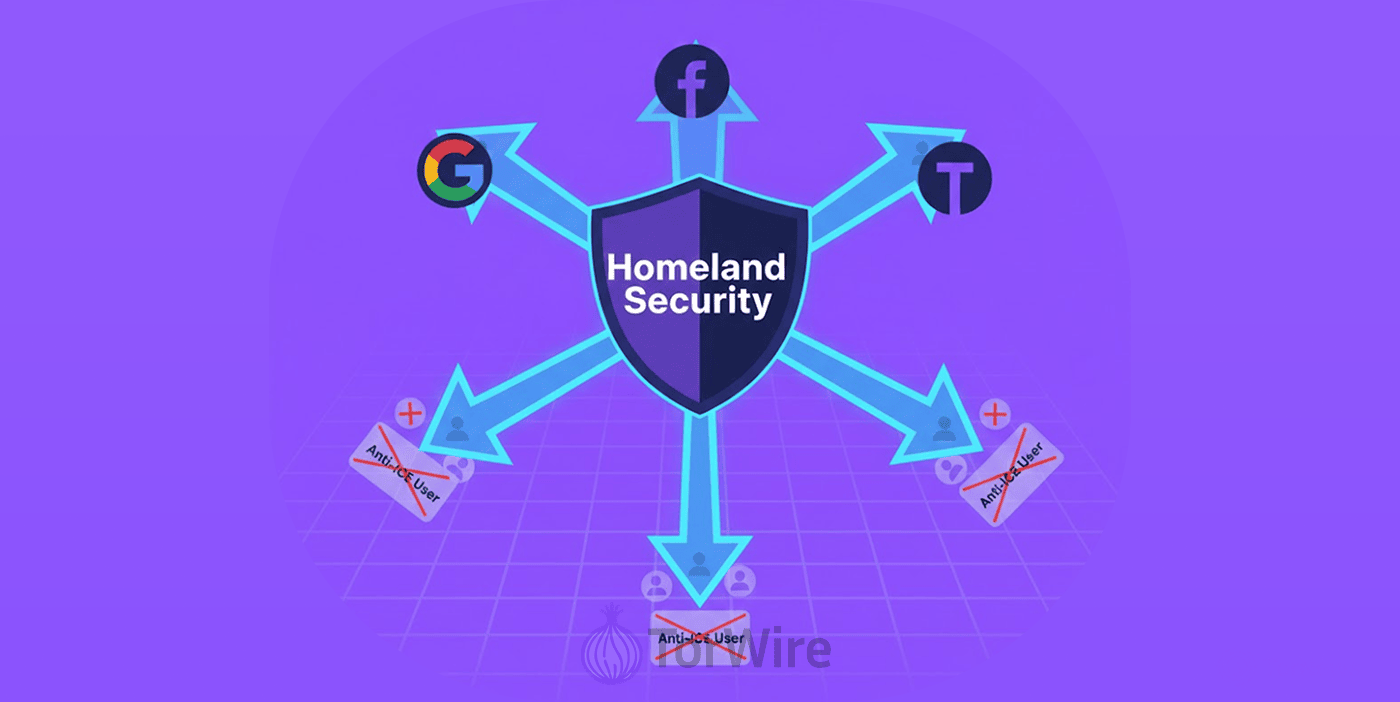
DHS has sent several administrative subpoenas to Google, Reddit, Meta and Discord seeking personal information on users who criticize ICE or track agent locations
-
The subpoenas target anonymous accounts engaged in First Amendment activities, and some companies have already handed over user data
-
Privacy advocates have challenged the DHS in court on their legality multiple times, but they simply withdrew subpoenas instead of facing judicial rulings.
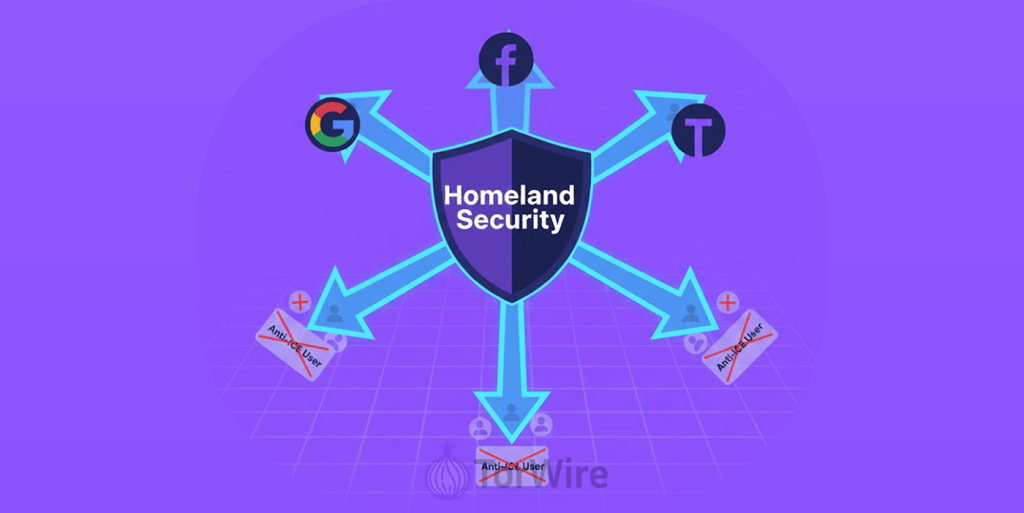
Recently, the Department of Homeland Security has quietly sent hundreds of subpoenas to major tech platforms, Google, Meta, Reddit, and Discord. These legal requests demand that these firms hand over data to identify platform users who criticize ICE (Immigration and Customs Enforcement).
This information came from four government officials and tech employees familiar with the situation who spoke to the New York Times on condition of anonymity.
DHS After Anti-ICE Users on Social Media
Here’s where things get really interesting –These aren’t search warrants that you need a judge’s signature to issue. They’re administrative subpoenas, and DHS has the power to issue them on its own. An attorney, Steve Loney, working with the ACLU of Pennsylvania as a senior supervisor, put it plainly: “The government is taking more liberties than they used to. It’s a whole other level of frequency and lack of accountability.”
Historically, these subpoenas were for serious criminal investigations like child trafficking cases. Tech employees familiar with the process say that it changed last year when DHS dramatically ramped up its use specifically to unmask anonymous social media accounts. The Times appraised two subpoenas that Meta received over the past 6 months, both seeking identifying details of accounts without real names attached that had either criticized ICE or pointed to agent locations.
Government officials confirmed that Google, Meta, and Reddit have complied with at least some of these requests. The companies say they review each demand before complying. And some notify affected users, giving them a 10 to 14-day window to at least fight the subpoena in court.
A Google spokeswoman said they have designed a review process to protect user privacy while meeting their legal obligations when they receive subpoenas. They notify users whose accounts have been subpoenaed, unless there is a legal order prohibiting them from doing so or in an exceptional circumstance. Then they review every legal demand and try to push back against anyone who’s overbroad.
Community Watches How the ICE Situation Unfolds
Many people are already on the lookout to see how it all plays out. In Montgomery County, Pennsylvania, outside Philadelphia, people have formed social media accounts tagged ‘Montco Community Watch’ on Facebook and Instagram. They started posting in June about ICE sightings in both Spanish and English.
And in over six months, they have built about 10,000 followers. People would send tips about agent locations on specific streets or near local landmarks, and the accounts would share alerts to help community members stay informed.
On September 11, DHS sent Meta a subpoena demanding the name, email address, postal code, and other identifying information of whoever ran those accounts. Meta notified the account holders on October 3.
The notification, according to court records, said they have received a legal process from law enforcement asking for info about the user’s Facebook account. It also said that if, after 10 days, Facebook doesn’t receive a copy of court documentation from the user challenging this legal process, they will hand over the information to the requesting agency.
The account owners reached out to the ACLU, which filed a motion on October 16 to quash the government’s request. During a January 14 hearing in federal court, ACLU lawyers argued that DHS was using administrative subpoenas to target speech it doesn’t agree with. Sarah Balkissoon, a Justice Department lawyer representing the government, argued that DHS has the right to look into threats to its own officers or anything challenging their work. Two days later, DHS withdrew the subpoena.
The accounts are still active. On Monday, February 9, they posted an ICE alert for the Eagleville area. On Friday, they shared a video of Norristown Area High School students protesting ICE. They noted that they stand with users affected and are proud that they made their voices heard.
DHS Shows Up At Doorstep After Successfully ID’ing Users
The Montco case isn’t alone. In April 2025, DHS subpoenaed Google trying to locate a Cornell PhD student on a student visa. The student had briefly attended a protest the previous year. Google complied without giving the student any chance to challenge it, breaking its own promise to provide notice.
Then there’s the retiree case from October 2025. This person had simply sent a message through email to DHS asking the agency to use common sense and decency in a high-profile asylum case. DHS responded by sending Google a subpoena for the person’s information. Federal agents later showed up at that retiree’s doorstep. The ACLU is currently challenging that subpoena.
The part that privacy advocates are really worried about is that DHS seems to know these subpoenas won’t hold up in court. Yet they go ahead and issue them. When users have challenged them with help from ACLU affiliates in Northern California and Pennsylvania, DHS withdraws rather than let judges rule on their legality. Loney notes that this strategy puts all the pressure on individuals, the end user, to go to court.
The EFF Fires Back
This week, the Electronic Frontier Foundation decided they’d had enough. They published an open letter to tech companies signed by Mario Trujillo, joined by the ACLU of Northern California, calling on platforms to protect their users from what they call “lawless DHS subpoenas.”
The EFF’s message is straightforward: these subpoenas target First Amendment activity. The government knows they’re unlawful because they keep withdrawing them when challenged. But the problem is that the process of quashing a subpoena is fast and requires one to hire and pay lawyers. Not everyone can afford an attorney on short notice. As it is, nonprofits and pro-bono lawyers already have a lot on their plates.
So the EFF requests that tech companies do these three things:
- Insist on court intervention and an actual court order before complying with any DHS subpoena
- Give users as much notice as possible when they’re targeted
- Resist gag orders that prevent companies from notifying users
They wrote letters and sent them to X, Discord, Google, Amazon, Apple, Reddit, Snap, Meta, Microsoft, & TikTok. The key point they emphasize is that DHS is compelling tech companies illegally to comply with administrative subpoenas without a court order. If a company refuses, the government’s only options are to drop it.
Or they could go to court and convince a judge that the request is lawful. That’s exactly what the EFF wants companies to do—make the government involve a judge instead of obeying in advance.
The Numbers Game
We don’t know exactly how many of these subpoenas DHS has issued because transparency reports don’t break down the numbers by type. But we do know that in just the first half of 2025, Google received 28,622 total subpoenas of all types. Meta received 14,520. Some unknown portion of those came from DHS targeting speech about immigration enforcement.
While the U.S. government aggressively pursues data on its own citizens, cybercriminals are doing the same on a massive scale overseas, as seen in the massive breach that exposed data of nearly 240 million Pakistanis on the dark web, demonstrating that personal information is under siege from all directions, whether from governments or hackers.
When defending its actions, DHS points to its “broad administrative subpoena authority”. It argues in court that the information it seeks is to keep ICE agents safe in the field. But privacy advocates cited a 2017 case between Twitter and the federal government. Twitter sued the federal government to stop an administrative subpoena seeking to unmask an account that criticized Trump’s first administration. They later withdrew the subpoena.
Where Does The DHS and ICE Situation Leave Everyone?
The tech industry is at a crossroads now. The companies have worked hard for years to earn the trust of their users, who rely on them to protect their privacy when they share things online. But now, they’re up against a government that’s getting serious about finding people who criticize it.
ICE has made bold moves to show its seriousness in the new quest to unmask every critic. They have acquired new tools like software for facial recognition, social media tracking, and phone hacking in the past six months.
But while U.S. agencies expand their surveillance capabilities, courts in other nations are holding organizations accountable for failing to protect data in the first place, as demonstrated when an Australian court fined FIIG Securities $2.5 million over cybersecurity failures that left customer information vulnerable to exactly the kind of breaches DHS is now trying to track.
The subpoenas keep coming. Just last September, DHS sent Meta administrative subpoenas seeking to unmask Instagram accounts posting about ICE raids in California. They withdrew those before a judge could rule. But DHS hasn’t stopped issuing them.
For now, the battleground is shifting to how tech companies respond. Will they continue complying with some requests while notifying users? Or will they follow the EFF’s call to force the government to get court orders? The ACLU’s Loney sums up the stakes. DHS is avoiding judicial rulings specifically so they can keep issuing subpoenas without a legal order telling them to stop.
If you run an account that tracks ICE activity or criticizes the agency, here’s what you need to know. Your information could be sought at any time. Some companies will notify you and give you a short window to fight back. Others might not. And fighting back requires finding a lawyer fast in a system where nonprofit legal resources are already overwhelmed.
The Montco Community Watch accounts keep posting their alerts. Google handed over the Cornell student’s information already. And somewhere right now, DHS is likely preparing its next round of subpoenas. The only question is whether the tech companies holding your data will stand with you or hand it over.
