-
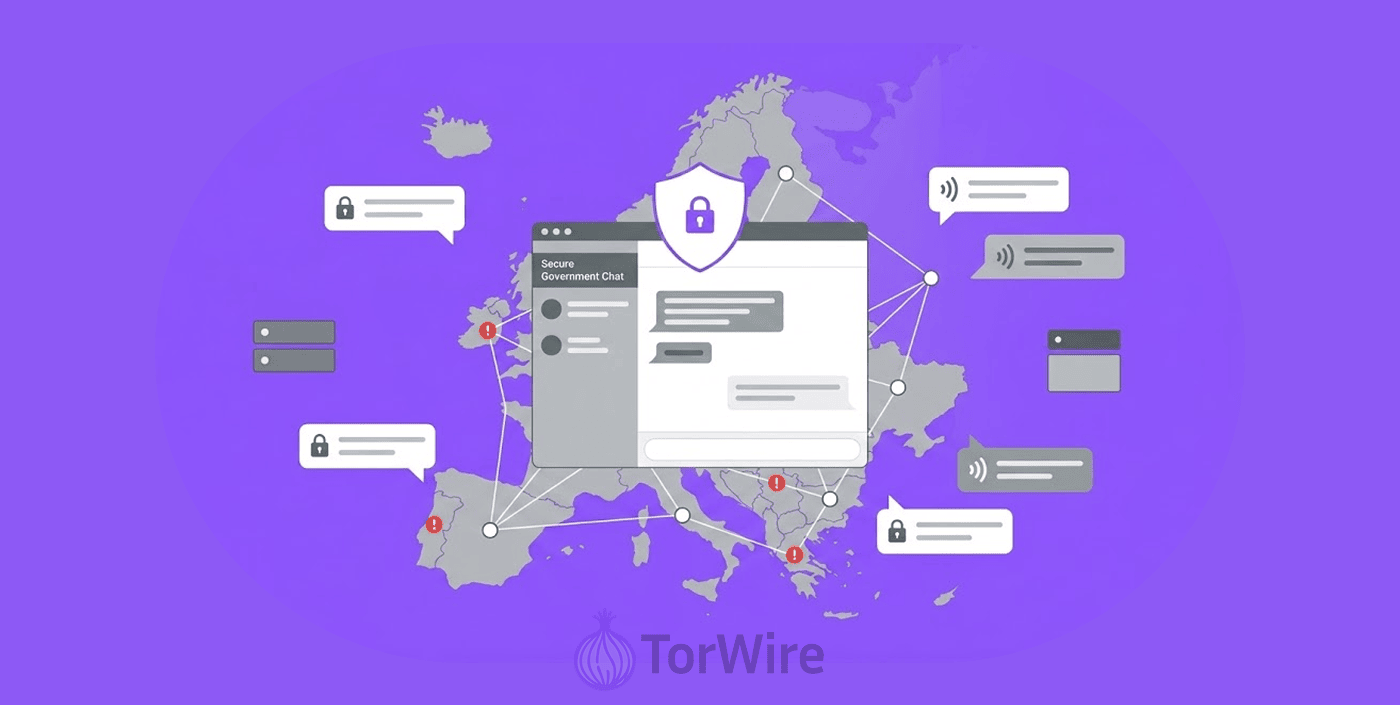
European governments are rolling their own messaging apps in a bid to replace American-based messaging apps WhatsApp and Signal.
-
This move comes after a series of Russian hacking campaigns targeting officials on both WhatsApp and Signal.
-
Trump’s return to office and events like Signalgate have sharply accelerated Europe’s urgency to act.
European governments just don’t trust American tech companies with their private conversations anymore.
They’re planning to build their own messaging apps, so they can keep total control over their data.
WhatsApp and Signal are Out
The rollout of state-provided messaging apps for officials has begun in six European Countries: France, Poland, Germany, Luxembourg, the Netherlands, and Belgium. NATO already has an official messenger. The full transition to a state-provided messenger by the European Commission is expected before the end of the calendar year.
Why now? The Netherlands’ digital minister, Willemijn Aerdts, said it plainly. She said their communication currently happens via platforms they have no control over. “In a world where technology is increasingly being used as a tool of power, that poses a risk.”
Belgium launched its own secure app last month. They called it BEAM. Prime Minister Bart De Wever and other federal government members now use it for sensitive but unclassified communication. It works just like WhatsApp or Signal, but the Belgian government runs it entirely.
Brandon De Waele, who leads Belgian Secure Communications, didn’t mince words. He notes that Europeans are starting to care more about having control over their.
Attackers aren’t really after WhatsApp itself or Signal. The apps already have encryption that keeps messages safe. The issue is different. Governments need access controls. They need to limit who can chat with whom. They need visibility into metadata, the when and where of messages, without exposing the content itself. But the truth is, consumer apps just aren’t built for these kinds of needs.
The tension between privacy tools and government oversight isn’t limited to messaging apps. The US Treasury recently signaled a policy shift on crypto mixers, recognizing their lawful uses while balancing concerns about anonymity and financial crime.
Benjamin Schilz, CEO of Wire, the secure app the German government actually uses, said it best. Using consumer apps for large organizations is a very risky move because it’s not their real use case.
The Threats that Made this Urgent
The move became more crucial after recent events. Many cybersecurity experts warned of impending attacks on government officials by Russian hacking groups using phishing messages via WhatsApp and Signal.
Things became serious enough that the European Commission told some of its top officials to close a Signal group chat. Around the same time, the EU suffered multiple cybersecurity breaches that hit its mobile device management system.
De Waele pointed out that a closed government environment naturally defends against some of these attacks. “With us, because it’s a closed environment with only government employees, you can also avoid that,” he said.
Transparency advocates have raised their own concerns for years. End-to-end encryption and disappearing messages on consumer apps have quietly pushed important government decisions away from public view. European Commission President Ursula von der Leyen faced a no-confidence vote last year, partly because of messages she exchanged with Pfizer’s CEO before a major vaccine deal, which she never disclosed.
Trump and Signalgate Fueled the Breakup
People building these secure government apps have noticed a sharp change in urgency over the past year. Matthew Hodgson, CEO of Element, a company that built tech for multiple European government messaging apps, was direct about it.
A few things really sped up that feeling of urgency. The biggest one was Signalgate, when top Trump administration officials used Signal to share classified military plans. That single incident sent a clear message to Europe: even powerful governments make careless choices on consumer apps.
The U.S. sanctions against the International Criminal Court really got European officials uneasy, too. One prosecutor even found his email suddenly shut off, all thanks to American policy. Later, in October, a big Amazon Web Services outage gave Europe a clear reminder of just how much they depend on U.S. tech systems.
Lindsay Gorman, managing director at the German Marshall Fund, said the push is also just practical. “This trend is about reconciling a difference between how official communications may be supposed to happen, and how they’re in fact happening in practice,” she said.
Governments know their officials are using whatever apps are most familiar and convenient. The goal now is to make the secure option just as easy to use, but fully under European control.
The message from Europe is clear. When it comes to sensitive government communications, American tech platforms are no longer welcome at the table.
