-
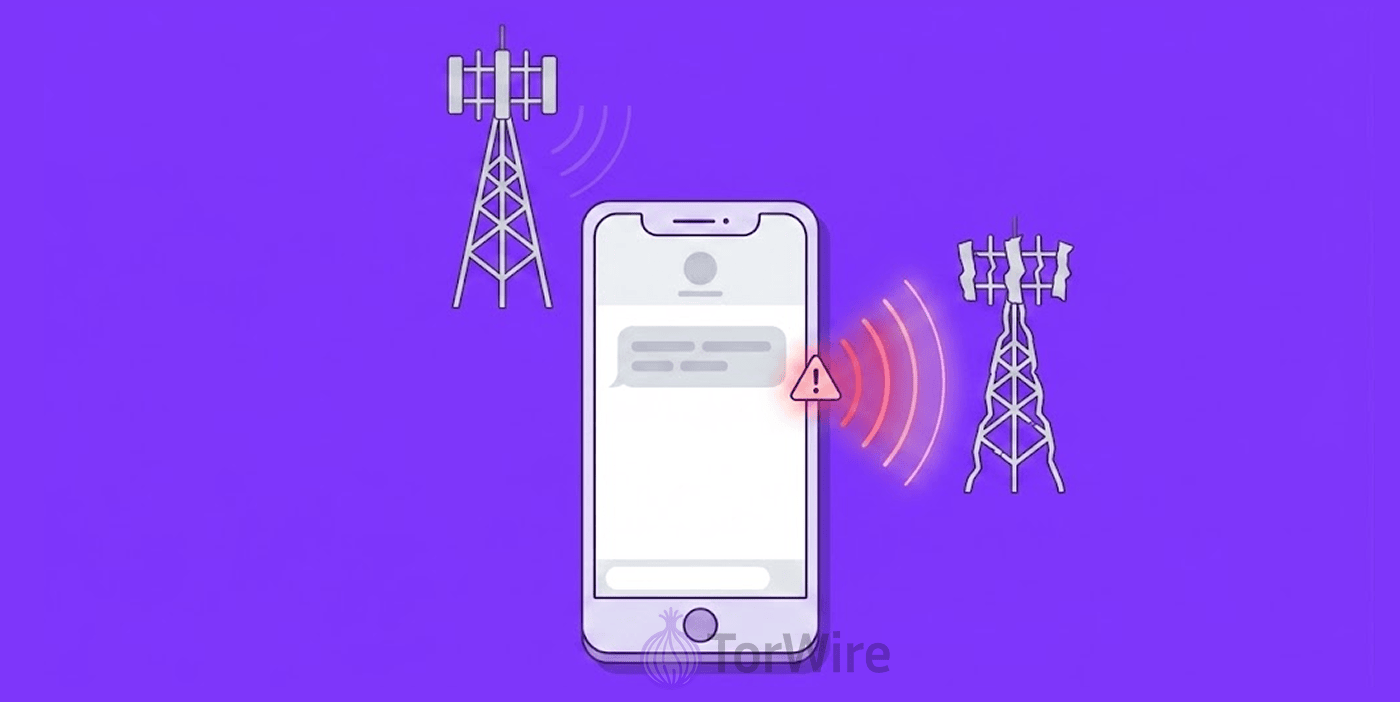
SMS Blasters are hidden in car trunks and impersonate legitimate cell towers to intercept nearby smartphones.
-
The devices bypass all operator-level security filters by redirecting phone signals directly to fake networks.
-
Victims lose access to emergency services while criminals inject fraudulent messages that appear to come from banks and other trusted institutions.
A new wave of mobile phone attacks has emerged on city streets. Criminals now drive around with fake cell towers hidden in their vehicles. These devices hijack your smartphone’s connection without any warning.
The technology is called an SMS Blaster. It works by pretending to be a legitimate cell tower. Your phone automatically connects to it because it broadcasts the strongest signal nearby. Once connected, attackers take complete control of your phone’s network access.
Authorities Arrest SMS Blaster Operations Worldwide
Law enforcement agencies across multiple countries have recently arrested individuals using SMS Blasters concealed in vehicles. These specially configured IMSI Catchers redirect mobile phone signals from nearby smartphones to themselves. Once they capture your connection, they send highly credible SMS messages that impersonate banks, delivery companies, and government institutions.
The consequences mirror traditional SMS spoofing attacks, but with a critical difference. Operators cannot filter these messages because they never pass through legitimate network infrastructure. An additional danger makes this attack even more threatening. Victims cannot make emergency calls while their phones remain connected to the fake network. This situation can escalate beyond financial loss to life-threatening emergencies.
Toronto Police Service arrested three men who had been operating this equipment across the city for several months (at least since November 2025). The department labeled this case Project Lighthouse and confirmed it as the first known instance of such technology being used in Canada. The three suspects now face a combined total of 44 criminal charges.
How SMS Blasters Exploit Mobile Network Design
This attack ruthlessly exploits fundamental mobile network architecture. Mobile phones are designed to automatically connect to the transmitter broadcasting the strongest signal. When an SMS Blaster operates near you (perhaps in a vehicle stopped at the same traffic light), your phone logs into the criminal network without displaying any notification or warning. The attacker then gains several dangerous capabilities.
Criminals can send you SMS messages with fake links (a technique called smishing) while freely manipulating the sender field. Your network operator never detects this activity, unlike attacks that use various internet gateways to falsify SMS headers.
They can disconnect you from your operator’s legitimate network. This blocks your ability to use your smartphone for any purpose, including emergency calls for help.
Phone numbers are a prime target for criminals because they are often linked to financial accounts. A data breach at Integra Credit exposed 134,000 customer phone numbers, demonstrating how even when hackers don’t directly attack your device, stolen phone numbers can be used to launch smishing campaigns, bypass two-factor authentication, and fuel identity theft on a massive scale.
The device can download identifying metadata about you. Criminals can then use this information to track your physical location. However, SMS Blasters typically ignore this capability. Professional IMSI Catchers used by intelligence agencies (who call them “swallows”) focus more on tracking applications.
Attackers can eavesdrop on your phone conversations or intercept unencrypted internet traffic. This requires the device to perform an MITM attack, break encryption protocols (which remains possible for certain older standards), or force connections over unencrypted protocols. However, this also falls more into IMSI Catcher territory rather than SMS Blaster operations, mainly due to equipment costs.
Global Cases Reveal Growing Threat
These attack methods are not new inventions. Over ten years ago, SMS Messaging Gateways appeared on the market and could be purchased through Chinese e-commerce portals. Back then, businesses used them primarily for sending SMS spam and local advertising. Today, criminals have repurposed the same technology from customer acquisition to fund theft. A presentation from Black Hat in 2013 discussed budget IMSI catchers constructed from modified femtocells.
The Toronto incident represents just one case among many. Brazilian authorities in 2024 dismantled a gang that operated from a Jeep equipped with a powerful antenna in the trunk and a laptop in the rear seat. Police discovered the arrested driver received 1,000 reais weekly simply for “driving around” affluent neighborhoods in São Paulo.
The equipment automatically targeted phones within a five-meter radius and transmitted SMS messages impersonating well-known banks. Omani police arrested a Chinese tourist in a similar operation. The woman was mass-distributing phishing links from a rental car using an SMS blaster.
Protection Measures for Smartphone Users
Every smartphone user faces vulnerability to this attack, regardless of device manufacturer or operating system. Although no reports have emerged of such attacks in certain regions yet, caution remains essential. Therefore, users should take specific protective steps.
Disable support for the outdated 2G network on your smartphone. Many inexpensive SMS Blasters depend on a “downgrade attack” to second-generation networks, from which traffic becomes easy to intercept.
Treat every SMS message as completely untrusted, because that reflects its actual security status. Conduct sensitive conversations through E2EE encrypted messengers (such as Signal). Report any suspicious difficulties in connecting to emergency services (like 112) to your telecommunications regulatory authority. Your report might help detect the first such operation in your area.
