-
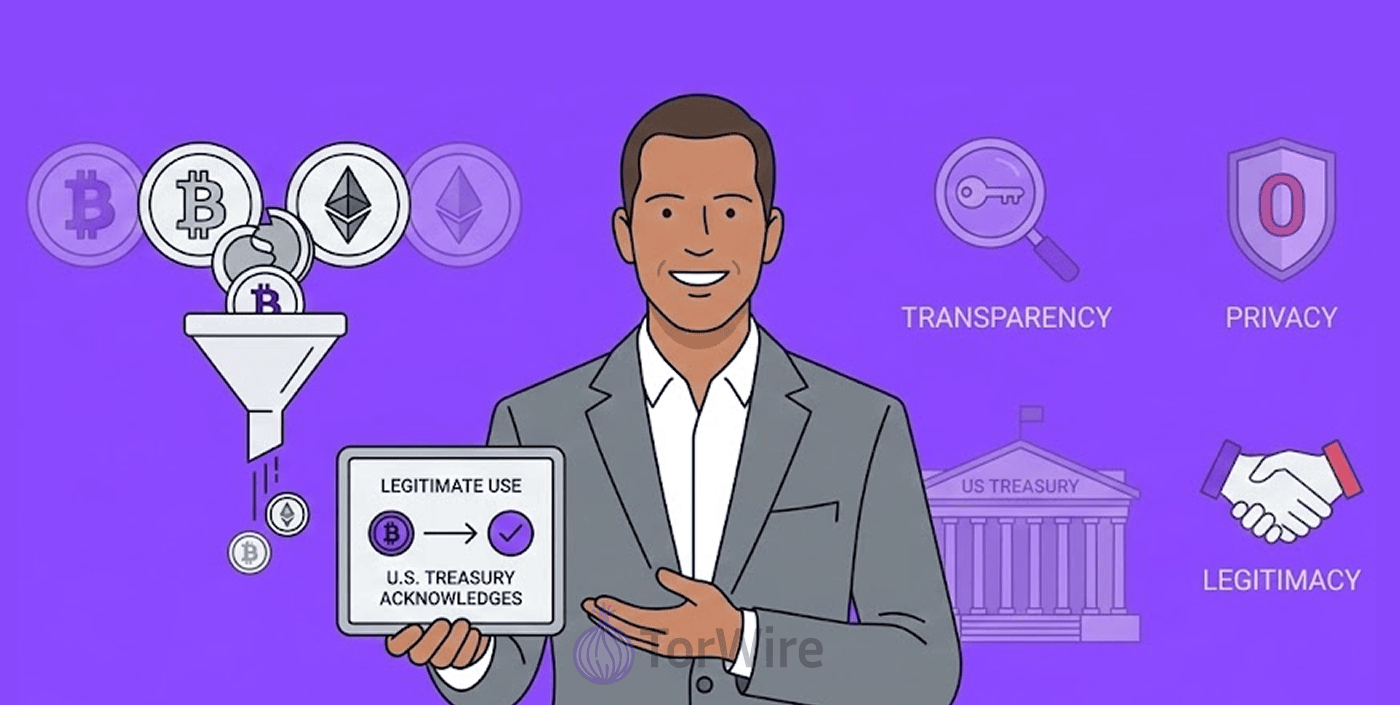
The Treasury Department now recognizes that crypto mixing services can serve lawful privacy purposes on public blockchains.
-
Officials stated that mixers may help protect personal, business, and charitable transactions when paired with proper compliance measures.
-
The shift comes after regulators create balance between privacy rights and enforcement against anti-money laundering within the digital currency space.
The Treasury Department of the United States just made a shocking acknowledgment. For years, criminals have used crypto mixers as tools to commit atrocities.
However, recently, officials now confirmed that there are legitimate applications of these services as well. The shift signals a major change in how Washington views blockchain privacy.
The Treasury released this statement in a congressional report on implementing the Genius Act. The department confirmed that mixing services can serve lawful purposes.
Users can shield personal finances, business deals, and charitable donations from public view on transparent blockchains.
Privacy Tools Meet Compliance Standards
“Consumers increase their use of digital assets for payments. Individuals may want to use mixers to maintain more privacy of their consumer spending habits,” the Treasury noted in the report.
This represents a dramatic pivot. Crypto mixers obscure the origin and destination of digital transactions by pooling users’ funds together. Washington has long viewed these tools with suspicion.
The Foreign Assets Control of the Treasury put Tornado Cash on the list of illegal entities in 2022. Officials said the Ethereum-powered mixer helped the illicit laundering of crypto in billions.
They pointed out connections between the platform and the Lazarus hackers of North Korea. For these reasons, Americans stopped using the tool which caused debates flying all over the crypto sector.
In 2025, the government got Tornado Cash off the sanctions list. As a result, legal predicaments arose and an appellate court questioned the authority of the Treasury concerning open-source smart contracts.
However, prosecutors still pursue Tornado Cash co-founder Roman Storm. They claim he built features into the mixer knowing cybercriminals would exploit them.
The new report doesn’t abandon concerns about criminal finance. Officials highlight how mixers often obscure stolen funds. They emphasize stronger anti-money laundering controls across digital assets. But the document states clearly that privacy technology itself carries no inherent illegality.
Broader Policy Changes on the Horizon
The Treasury pushes for more than just mixer recognition. The report signals several policy shifts ahead.
Officials encourage Congress to clarify which decentralized finance actors fall under anti-money laundering obligations. Current rules leave gray areas about DeFi platforms and their compliance duties. The Treasury wants clear lines drawn.
The department also asks lawmakers to explore digital identity tools. These systems would enable compliance without excessive data collection. Users could verify their identity while maintaining privacy in routine transactions.
The report considers new authorities for financial institutions as well. Officials want the power to temporarily freeze suspicious digital assets. This would give investigators time to examine questionable transactions before funds disappear.
The Treasury’s position reflects growing recognition that blockchain transparency creates unique challenges. Public ledgers expose every transaction to anyone with an internet connection. Businesses worry about competitors tracking their deals. Individuals fear stalkers or thieves monitoring their spending patterns.
Mixers address these concerns by breaking the connection between sender and receiver. The technology pools many users’ funds and redistributes them. This makes individual transactions harder to trace.
According to The Treasury, properly built privacy tools can thrive as long as there is compliance to avoid abuse.
What Comes Next
Without a doubt, this shift brings light to mixing services. However, it may influence the way other agencies approach regulations around crypto assets.
The Securities and Exchange Commission (SEC) and Department of Justice (DOJ) always jump on mixing services with aggressive enforcement. But this shift could prompt similar rethinking. As these debates continue, the reality on the ground is shifting. Telegram has become the new hub for stolen data, reminding us that policy must chase criminals, not just yesterday’s technology. Some mixers support know-your-customer (KYC) and keep logs of transactions, while others are 100% decentralized.
As such, lawmakers could decide whether to form clear compliance policies for privacy-guarding tools; otherwise, they maintain restrictive guidelines. For now, the acknowledgement of the Treasury marks progress. Years of treating all mixers as inherently criminal gave way to recognition that privacy serves legitimate purposes.
