-
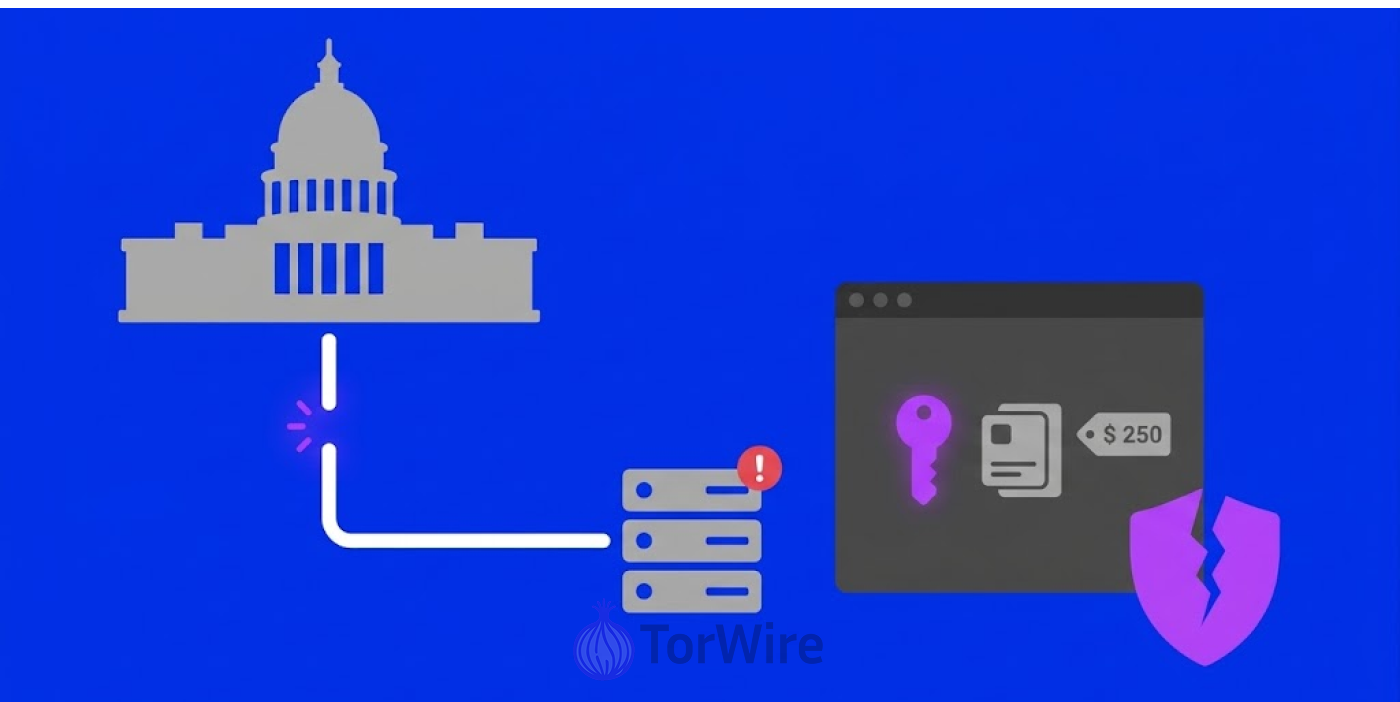
A seller claims to offer access to systems linked to Vietnam’s National Assembly for about $250.
-
The listing says buyers would get remote desktop control, top admin rights, and database access.
-
No proof backs the claim, and no independent report has confirmed the sale.
A hacker has reportedly offered access to systems linked to Vietnam’s National Assembly for about $250. Dark Web Intelligence shared the claim in a post on X. However, no confirmed evidence shows that the country’s lawmakers suffered a network breach tied to the listing.
The ad allegedly offers three kinds of access. These are Remote Desktop Protocol (RDP), Domain Administrator rights, and SQL database access. Together, they would cover remote entry, account control, and stored data. If the seller’s claims were true, a buyer could gain strong control over the organisation’s computer setup.
The post leaves many gaps, though. It does not name the affected systems. It does not say when the seller got access. It also does not explain how the seller got in. Nothing in it shows that the offered rights actually work.
Seller Lists Remote Control, Admin Rights and Database Access
Dark Web Intelligence described an advertisement on an underground forum. The ad offers access to systems linked to Vietnam’s National Assembly. The asking price is about $250.
RDP lets a person connect to a computer and control it from far away. Domain Administrator rights give wide power over accounts, computers, and security settings inside a Windows domain. SQL database access could expose stored information. Depending on the rights involved, it could also let someone change data without permission.
Real high-level rights would give an intruder a lot of room to work. The person could reach internal documents, messages, and databases. Depending on the network setup and its security controls, the access could also help further intrusion, data theft, or ransomware attacks.
In a separate case, a Russian national faced US charges over malware allegedly sent through 255 fake accounts, highlighting another method cybercriminals use to carry out attacks.
These outcomes are only possibilities. The listing does not prove that the seller holds working login details. It also does not show that anyone has stolen information.
The low price says nothing about whether the offer is real. Access ads can involve expired logins, limited rights, or misleading descriptions. Some sellers may also try to attract buyers without owning the promised access.
Vietnam’s National Assembly Ran Cybersecurity Checks in September
The sale claim remains unconfirmed. Still, Vietnam’s National Assembly has shared public details about its cybersecurity work in recent months.
On September 17, 2026, the National Assembly Office reported that it had finished a nine-day cybersecurity exercise. The drill ran from September 9 to September 17. Several government and security organisations took part. The exercise focused on the National Assembly app, which provides information to users via mobile devices.
Separately, a report published on September 18 described an inspection of the institution’s cybersecurity. The National Assembly Office and the Ministry of Public Security carried it out together. According to that report, the team aimed to check cybersecurity protections and find system weaknesses. It also aimed to look into possible losses or leaks of internal documents and state secrets, if any.
These reports show that the institution treats cybersecurity and sensitive information as active concerns. However, neither report says the forum ad is genuine. Neither says the National Assembly’s systems were hacked through the access now on offer.
No Independent Report Confirms the Alleged Sale
As of October 27, 2026, searches of public reporting found no independent, reliable source confirming this listing. The sources reviewed held no technical proof. They also held no verified sample of stolen data. No official statement linked the sale to a successful break-in.
For now, the claim counts as an unverified threat-intelligence report. It is not a confirmed cybersecurity incident. Until proof appears, the seller’s own words are the only support for the claim.
Confirming it would take more evidence. One example is a check of the advertised login details. Another is technical signs that link the access to the institution. A statement from the relevant authorities would also help.
Several key facts stay unknown for now. Nobody knows which systems are affected. Nobody knows what the seller can really do. The possible size of any exposure is also unclear. The $250 offer raises a security concern. However, it does not show that Vietnam’s National Assembly has been breached.