-
Five men who are supposedly Black Axe leaders are now awaiting trials in the U.S. after an extended extradition battle.
-
US prosecutors said the folks ran romance and advance-fee scams out of Cape Town between 2011 and 2021.
-
This case highlights a bigger push worldwide, as police in several countries ramp up efforts to take down Black Axe and similar West African crime networks.
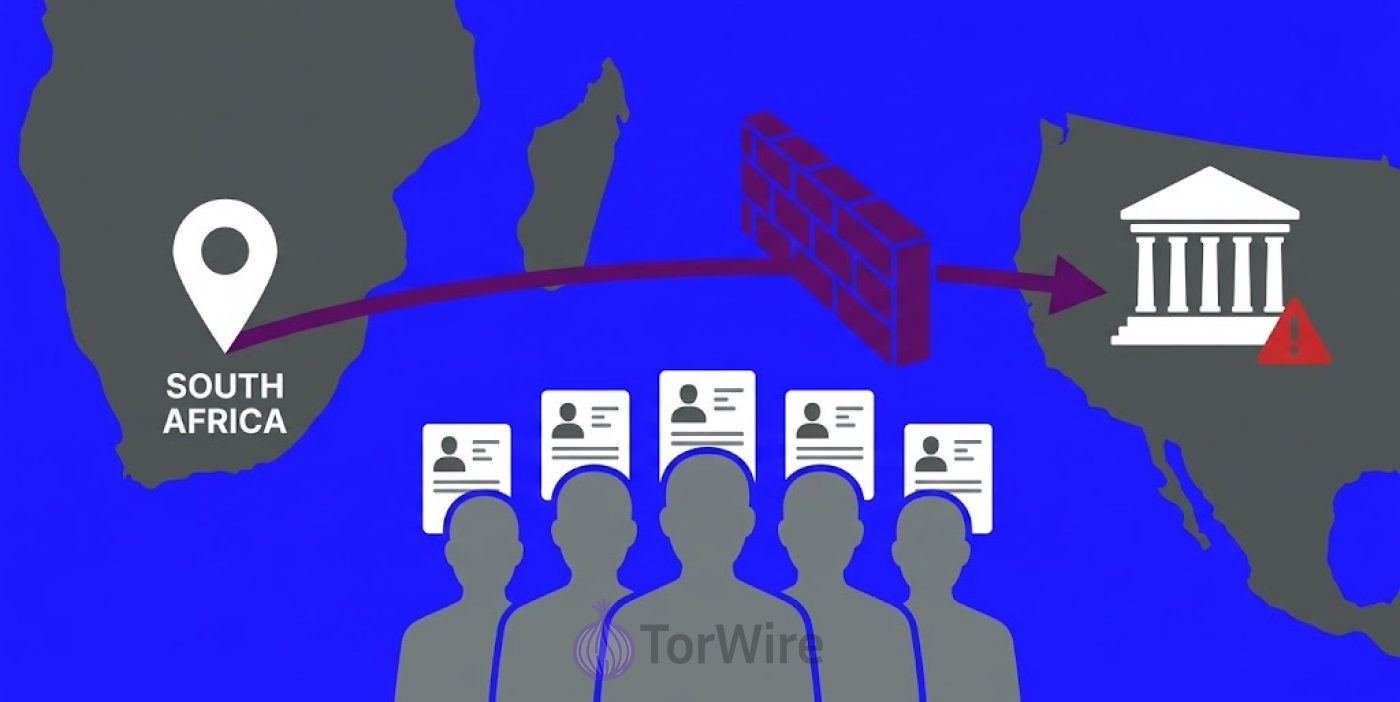
Authorities have extradited five men allegedly identified as leaders of a group called Black Axe from South Africa to the United States. The suspects Franklyn Edosa Osagiede, Perry Osagiede, Collins Owhofasa Otughwor, Osariemen Eric Clement, and Musa Mudashiru now face federal fraud and money laundering charges.
Police nabbed them in South Africa in 2021. That was after a request from US authorities. However, they were only brought into US custody on September 11, 2026.
According to the US Department of Justice, the five were leaders of the Cape Town Zone of the Neo Black Movement of Africa, or Black Axe. They appeared before a federal court in Trenton, New Jersey on September 14.
All face charges under a superseding indictment in the U.S. District Court of New Jersey. Franklyn Osagiede, Perry Osagiede, and Clement also face wire fraud charges. Osagiede, Franklyn Osagiede, and Otughwor face aggravated identity theft charges.
According to prosecutors, their targets were United States residents. They also say the group moved scam money to South Africa.
How the Alleged Scams Operated
Court documents show that the group locate their victims through social media and online dating sites. Members also used internet phone numbers and fake names. The whole scheme often begins with a scammer claiming they’re in love with the victim. They hide behind a fake profile and claim they’re in South Africa for work.
Later, the story would then change. The person might say a problem at a work site left them short of money. Some stories involved a crane or other problems at a construction site.
The victim would then get a request for money or goods. Prosecutors say some victims sent phones, tablets, laptops, money, and other items to South Africa. Many victims thought they were helping a real romantic partner. When someone refused to pay, the alleged scammers sometimes used threats.
One tactic involved threats to share private photos. Prosecutors say the group used such threats to push some victims into sending money.
The indictment also says the group used U.S. bank accounts to move funds. In some cases, members allegedly convinced victims to open U.S. accounts that the group could then use. Prosecutors also accuse the defendants of helping launder money from business email scams.
A Case that Began Years Ago
The case has been ongoing for a while, long before the recent extradition. South African authorities had arrested the defendants in October 2021 during some raids in Cape Town.
The case then went through South Africa’s extradition process. The defendants remained in South Africa while courts dealt with the case. Almost five years have gone by between the time of arrest and their extradition to US soil.
The Justice Department says Perry Osagiede founded the Cape Town Zone and served as its zonal head. Prosecutors say the other four men also held leadership roles in the zone.
The case started with an FBI investigation in cooperation with the Secret Service. They worked alongside South African agencies and INTERPOL. It’s worth noting that these charges remain mere allegations until the court proves otherwise. So the defendants are innocent for now until the trials conclude and a judge finds them guilty.
What Prison Terms could they Face?
If the defendants are found guilty, they’ll face some tough consequences. Wire fraud conspiracy and wire fraud come with up to 20 years in prison each. The money laundering conspiracy charge is just as serious another possible 20 years. And for aggravated identity theft, there’s a mandatory two-year sentence. That term must run after any other prison term.
The Justice Department lists these as maximum terms under federal law. They do not mean the defendants will receive those sentences if convicted.
Part of a Wider Black Axe Crackdown
The extradition follows Operation Jackal IV, a crackdown on West African criminal organizations by police agencies in many different countries. Operation Jackal IV ran from November 2025 through June 2026, involving law enforcement from 23 nations across six continents.
The operation resulted in 58 arrests, according to Interpol’s report. They were also able to identify 263 suspects. Thirty-nine of these arrests were carried out by South African law enforcement agencies.
The operation focused on money laundering and other crimes linked to West African groups. INTERPOL said the networks use romance scams, investment scams, crypto fraud, and business email compromise.
International investigations have also targeted alleged leaders of major ransomware operations. In Germany, authorities identified an alleged REvil ransomware leader as part of a major cybercrime case, showing how law enforcement efforts increasingly focus on the individuals believed to coordinate large-scale criminal networks.
The agency also reported more sextortion cases involving minors during the operation. The new U.S. case is part of this wider fight. It also shows how a fraud case can cross borders and stay active for years. For the five defendants, the next stage will now play out in federal court in New Jersey.