-
A 25-year-old man in Paris allegedly hacked police and court computer systems to launch a scam.
-
He posed as police officers and judges to trick notaries and companies into sending money.
-
Investigators say the damage could reach one million euros after his recent arrest.
A young man in Paris stands accused of a bold and unusual cybercrime. He allegedly broke into computer servers used by the police and the courts. He then used that access to run a long scam against notaries and companies.
According to Le Parisien, as reported by FrenchBreaches, investigators say the damage could reach one million euros. The case has drawn attention because it involves official government systems, not just private companies.
The suspect is 25 years old. He described himself to investigators as a graduate in “computer engineering.” He now faces charges of fraud and money laundering by an organized group. A judge ordered him to be held in pre-trial detention while the case moves forward.
French police say the investigation is still active. Cybercrime units are treating this case as a warning sign for other institutions.
How the Scheme Allegedly Began
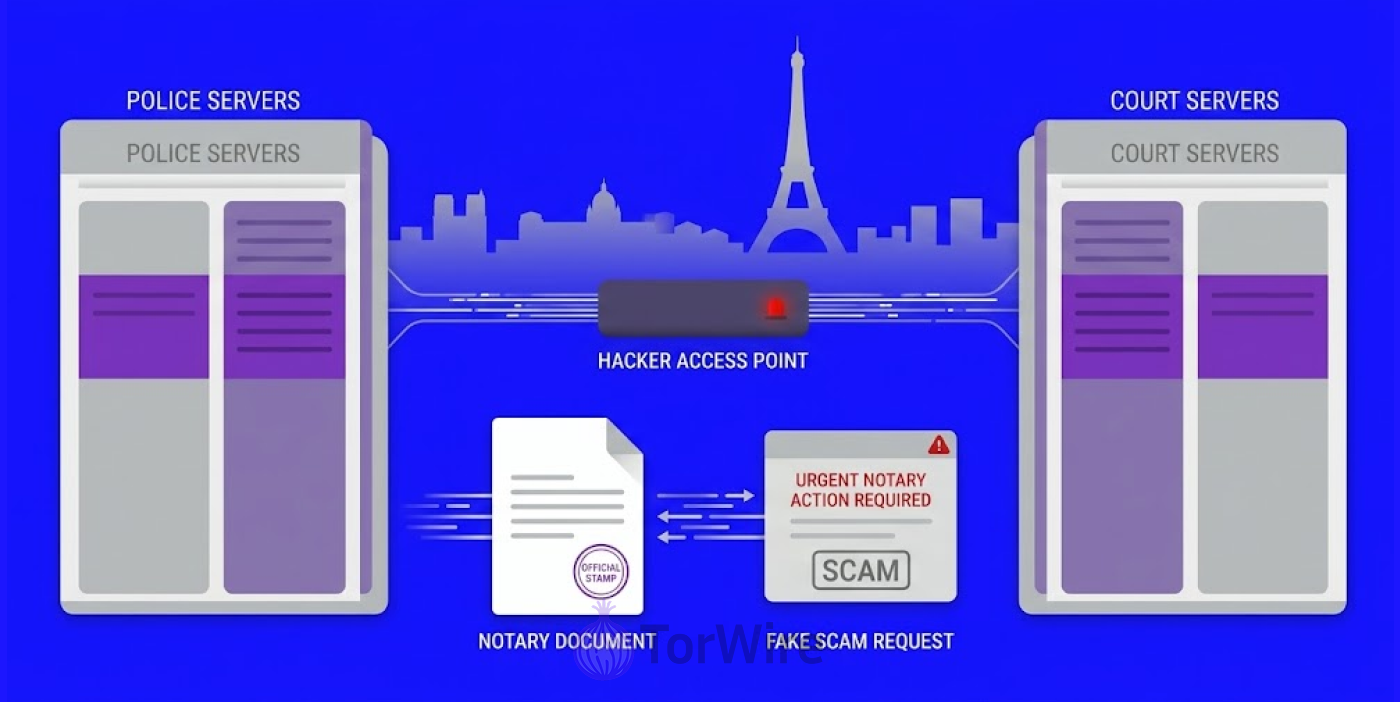
During questioning, the suspect told investigators he found a weak spot in police and court servers. He said he used this weak spot to plan his scams. The flaw allegedly let him access real, unused government email addresses.
Because these addresses belonged to real institutions, they passed normal checks that victims might otherwise apply. That access gave his messages a strong sense of authority. Victims believed they were talking to real police officers or judges, not a stranger.
For close to a year, the man is suspected of posing as several officials. He allegedly impersonated police commissioners, judges, and even bank staff. He used the names of real prosecutors in some cases, which added extra pressure on his targets.
Victims received calls or emails claiming they were under investigation for illegal funds. The messages pushed them to respond quickly and stay in contact with the sender. This pressure gave victims little time to check the story or ask questions.
Notaries and Companies Lose Large Sums
Cybercriminals did not stop at individuals. Between May and July 2025, notary offices, companies, associations, and auction houses received messages from fake officers and judges. The fraudsters allegedly wanted several things from their victims.
They asked for identity documents, bank details, and personal information. In some cases, they pushed victims straight into wiring money to accounts they controlled.
Several notary firms reportedly fell for the trick. In one case, a firm sent more than 88,000 euros to a bank account in Portugal. The firm believed it was moving funds to an official escrow account tied to a real transaction. This shows how convincing the fake messages and calls became, even for trained professionals who handle sensitive transactions daily.
The scam did not rely on emails alone. The group allegedly used virtual phone numbers and fake call centers to answer calls from suspicious victims. These tools made their calls sound official and trustworthy, matching the tone of the emails.
Investigators say the stolen funds moved to accounts abroad, mostly in Portugal and Spain. The team is also linked to a separate scam involving fake bank advisors. In that scheme, fraudulent text messages tricked people into calling back a fake support line and transferring money. Auction rooms and small associations were also named among the groups approached during the same period.
Arrest, Confession, and an Ongoing Investigation
Investigators tracked the phone lines and bank accounts used in the scam. This work slowly led them to the suspect over several months. Officers eventually arrested him at his mother’s home in Paris. He reportedly tried to hide before officers found him inside the property.
During the raid, police seized 4,000 euros in cash. They also took three phones and one computer for further analysis. While in custody, the suspect admitted to the crimes, according to investigators. He reportedly gave police access to his devices and servers without resistance.
He also explained how he found and used the flaw, so authorities could fix it before others exploit it. Officers say this kind of cooperation is helping them close the security gap faster.
The exact total stolen is still under review by investigators. They currently estimate the damage between 150,000 euros and one million euros. The suspect remains in detention as the case continues to develop. Police are now working to find out if he had any accomplices who helped plan or carry out the scam. No other arrests have been announced so far.
Authorities around the world are also pursuing other cybercrime networks. In a separate case, US prosecutors charged a Canadian man accused of operating KimWolf, a DDoS-for-hire network that allegedly helped customers launch attacks against online targets. The case highlights how cybercriminal operations can involve multiple people and services rather than a single attacker.
This case shows how much damage a single security flaw can cause. When criminals gain access to trusted government systems, their scams become far more convincing to everyday victims. Notaries and businesses often assume that official-looking emails and calls are safe, which made this scheme especially effective.
The investigation continues as police work to uncover the full scale of the fraud and identify anyone else involved. For now, the case stands as one of the more striking examples of how a single hacked system can fuel a much larger scam.