-
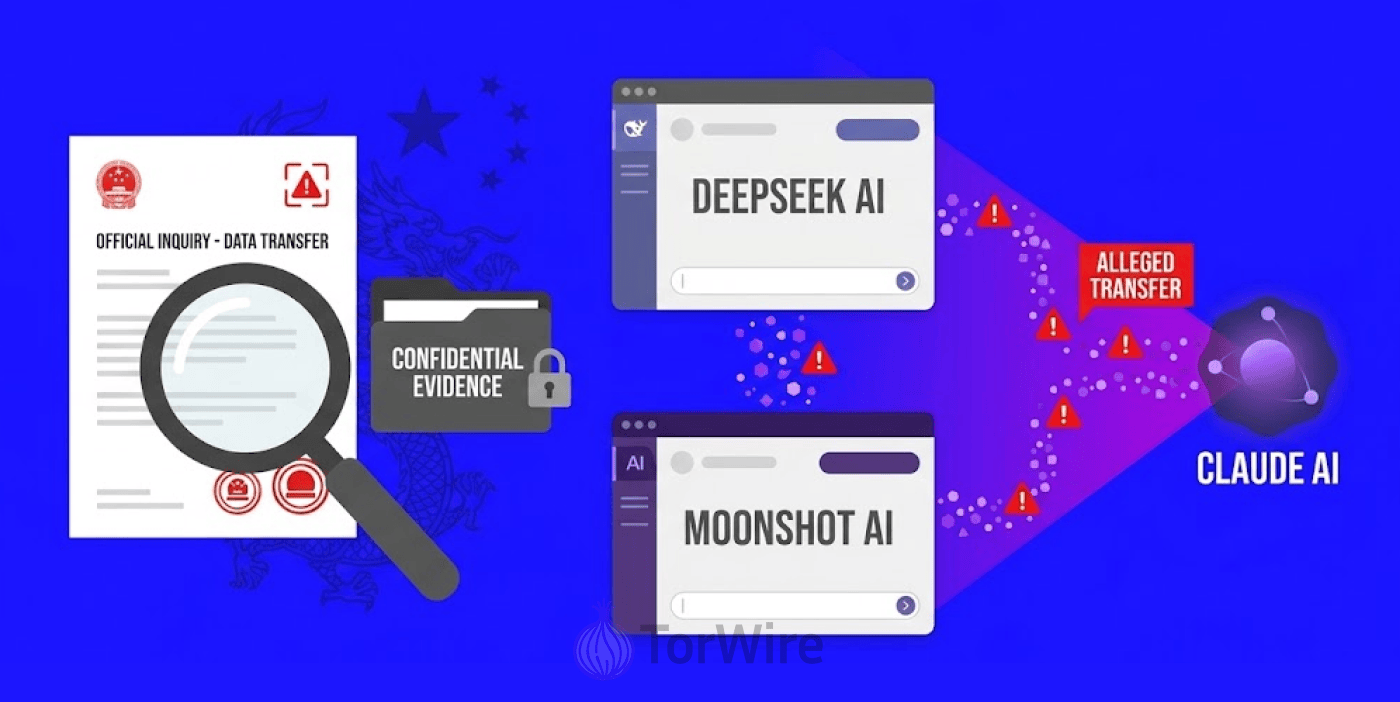
China’s cyberspace regulator is reportedly checking whether DeepSeek and Moonshot secretly sent user data to Anthropic’s Claude models.
-
The probe follows Anthropic’s claims that these firms ran millions of exchanges with Claude to copy its skills.
-
Investigators are reportedly checking if sensitive police and military data crossed into US-based AI systems.
China’s internet watchdog is reportedly looking into two of the country’s top AI companies. The Cyberspace Administration of China (CAC) wants to know if DeepSeek and Moonshot AI quietly sent Chinese user data to Anthropic’s Claude models. If true, sensitive information may have left the country without anyone knowing.
The report comes from The Information, which spoke to people close to the matter. This story raises fresh questions about how far AI firms will go to catch up with rivals, and who ends up paying the price when they do.
Why China Started Looking Into the Two Firms
The CAC first questioned seven companies named in an Anthropic report. Officials later narrowed their focus to just DeepSeek and Moonshot. According to The Information, CAC staff visited both companies’ offices in person. They reportedly interviewed executives and workers as part of the inquiry.
This all traces back to a report Anthropic published on September 10. In it, Anthropic accused several Chinese AI firms of trying to copy Claude’s abilities on a large scale. The method is called AI distillation. It works by feeding a rival model millions of questions, then studying its answers to build a similar system.
Anthropic said DeepSeek, Moonshot, and other firms generated huge volumes of exchanges with Claude. The company believes this data helped the firms sharpen their own AI tools. That claim alone sparked plenty of debate in the AI industry, but the story didn’t stop there.
How the Alleged Data Routing Worked
Anthropic also claimed that Moonshot and DeepSeek didn’t always rely on their own models. Instead, some customer requests were reportedly sent straight to Claude without users ever finding out.
Between May and July, Moonshot allegedly routed more than 23 million exchanges through Claude, based on figures from The Information. DeepSeek reportedly sent over 12 million exchanges through Claude during a 14-day stretch in July. In both cases, the report said users had no idea their requests left the companies’ own systems.
That detail changes the whole shape of this story. This is not just a fight over stolen AI skills anymore. It has turned into a question about data leaving Chinese servers and landing on foreign ones.
Investigators are now reportedly checking whether sensitive material slipped through this process. According to The Information, the CAC wants to know if information belonging to Chinese police, the military, or state-linked companies was exposed to Claude.
One case stands out. Anthropic says a request tied to Moonshot’s Kimi model involved police surveillance footage from Chengdu. The footage reportedly came from cameras near military and defense-related sites. Anthropic claims this request was passed along to Claude. Chinese authorities have not confirmed this allegation on their own.
A similar claim appeared earlier in a Bloomberg report. It said Anthropic accused Moonshot of covertly sending customer requests to Claude, including traffic from thousands of accounts that seemed to be based outside China. Anthropic reportedly views this as part of a broader push to improve Moonshot’s models through distillation.
What Comes Next for DeepSeek and Moonshot
This case sits at the center of a bigger clash between US and Chinese AI companies, but each side sees a different threat. American firms worry that Chinese competitors are copying their models without permission. Chinese regulators appear more focused on whether private domestic data crossed national borders during that process.
The CAC investigation is still active. According to The Information, officials haven’t decided whether to punish DeepSeek or Moonshot yet. They are still figuring out how serious any data-security violations might be. Neither company has responded to requests for comment from The Information. Their silence leaves plenty of open questions, and for now, nobody outside the investigation knows exactly what happened.
This dispute points to a wider issue across the AI industry. Companies increasingly test their systems against rival models during development. That habit is now colliding with growing concerns over who owns AI-generated data, who controls access to powerful models, and where sensitive information is allowed to travel.
AI security concerns are also growing beyond data transfers and model distillation. Anthropic has separately introduced an Anthropic launches AI security tool to find software vulnerabilities, highlighting the company’s broader focus on using AI to identify security weaknesses in software.
As AI competition heats up between the US and China, cases like this one may become far more common. Regulators on both sides are watching closely, and the rules around cross-border AI data are still being written in real time.