-
Hackers targeted water systems in at least 12 US states, but officials have not confirmed Iran’s role in every case.
-
The FBI says attackers changed settings and passwords on internet-connected control devices.
-
France blamed an Iranian cyber unit for attacks on about 700 retail refrigeration systems.
There have been cyber-attack attempts on water facilities in approximately 12 states in the US. Such moves have raised concerns regarding the security and reliability of public utilities. The US authorities suspect hackers from the Iranian regime. However, investigations are incomplete and have not confirmed anyone responsible for each incident.
There is also concern due to the claims by France about Iranian military cyber units making hacking attempts on refrigerators in supermarkets. Both incidents demonstrate the possibility of hackers invading the normal provision of services by taking control of Internet-linked devices.
Water Systems in Several States Face Cyberattacks
Reports of attacks on US water systems emerged in late July 2026. Minnesota recorded more than 30 affected community water systems. Michigan reported nine incidents, while New Jersey confirmed attacks on two town water systems. The Clayton County Water Authority of Georgia also faced an attack.
By early August, reports linked incidents in at least 12 states to the wider campaign. However, officials have not confirmed that one group carried out every attack.
In Minnesota, hackers targeted equipment used to monitor and control water operations. Some towns lost remote access and had to manage equipment by hand. Georgia’s Clayton County Water Authority reported low water pressure and issued a boil-water advisory. It restored service within hours, with no evidence that drinking water had become unsafe.
New Jersey officials confirmed two affected systems but did not name the towns. Michigan officials said all nine systems remained safe.
Hackers Exploited Internet-Connected Control Devices
The FBI and the Environmental Protection Agency issued a warning on July 30. They said water and wastewater utilities in at least seven states had reported incidents since July 27. Some attacks disrupted normal operations.
The attackers reached programmable logic controllers, or PLCs; these devices control pumps, valves, pressure, and other equipment at water facilities.
Hackers changed device settings, passwords, & network addresses. This stopped workers from seeing or controlling some equipment through their usual screens. Some attackers also changed the programs that guide the devices.
As a result, some utilities lost water pressure, while others faced flooding – the FBI warned that low pressure could let untreated groundwater flow into pipes. The hackers exploited devices with direct internet access or weak security. However, US authorities have not confirmed Iran’s role in every reported attack.
This is not the first time Iranian-linked groups have targeted water equipment. In 2023, US agencies warned that an Iran-linked group had accessed control devices used by water and wastewater facilities. The earlier cases also involved weak passwords and internet-facing equipment. The latest warning shows that these security gaps remain a concern.
FBI Urges Water Utilities to Strengthen their Defenses
The FBI and EPA advised water providers to remove control devices from direct public internet access. The agencies urged utilities to implement strong and unique passwords & restrict the types of devices that can connect to control equipment.
In addition, there was an emphasis on having a manual backup plan. This is very essential if the digital controls fail and workers should know how to operate the equipment effectively. Moreover, operators need to examine the records of systems and be vigilant when it comes to unauthorized alterations. Also, they should keep safe copies of control programs.
The warning highlights a problem for smaller water providers, which often lack staff & money for cybersecurity. Some also use old equipment that can no longer receive updates. Officials did not state that there is any widespread contamination of drinking water. Nevertheless, if the pumps or treatment equipment get out of control, it can cause severe risks as well.
France Links Supermarket Fridge Attacks to Iran
France’s announcement on November 9 added a new concern. French authorities named Shahid Kaveh, the hacking agency affiliated with the Islamic Revolutionary Guard Corps in Iran, as responsible for infiltration of the refrigeration systems of around 700 retail platforms.
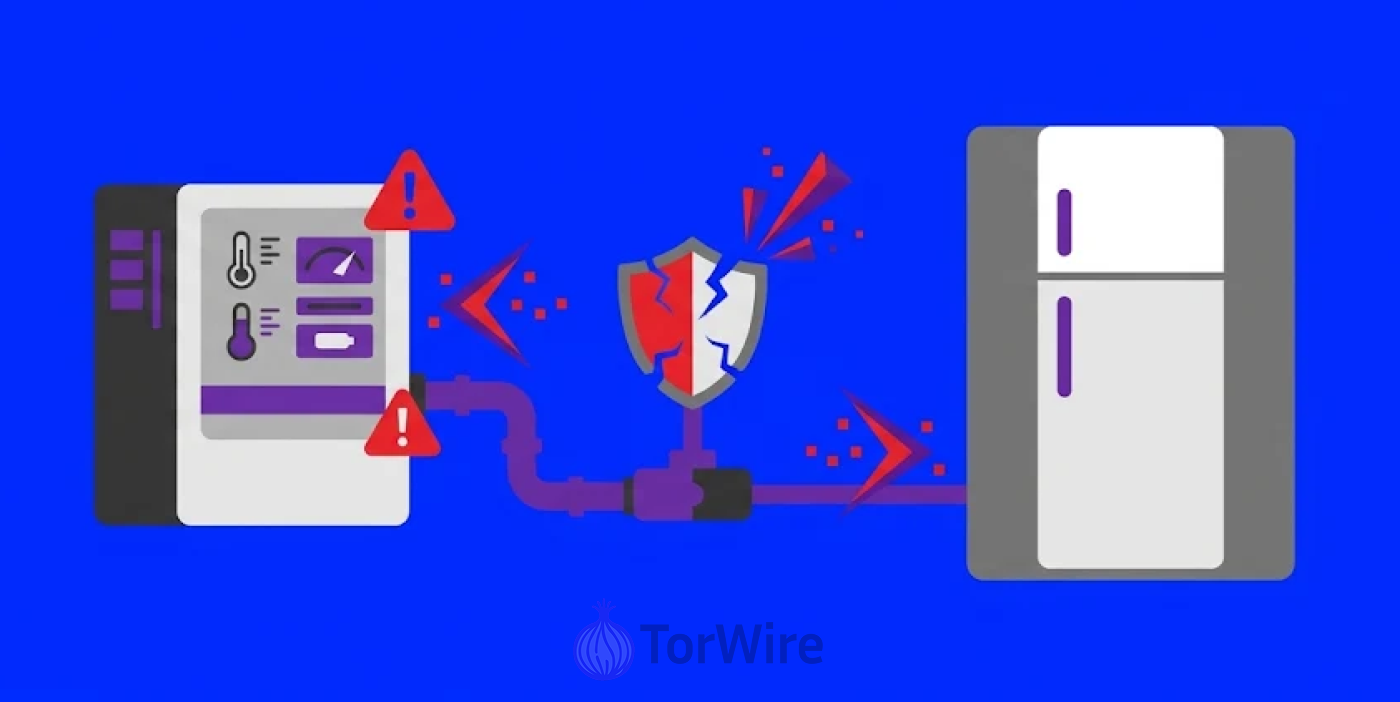
The actual attacks took place on October 11 and 12. The intruders hacked into the servers and manipulated the refrigeration control system by altering the temperature settings as well as disabling the alerts that warn the store employees when the refrigeration systems are overheated.
The attack lasted for approximately six hours. Moreover, the temperature exceeded 50 degrees Celsius and the retail outlets were forced to throw away all the fresh and frozen products. According to the French Authorities, the attacks led to 15-20 fires and millions of euros in losses.
French investigators cited Persian-language traces and internet addresses linked to Iran. This prompted France to launch a criminal investigation & call for the Iranian ambassador, Also, France said it will seek possible sanctions from Europe as a whole.
Separately, cybersecurity concerns have also affected France’s water sector, with a French water utility facing claims of a data leak involving 55,000 customers, as reported in our news on the alleged French water utility data leak.
The French incident resembles the American water-related attacks in that both cases featured hacking of machines, controlling processes in the physical world. However, officials have not said that the French operation and every US water attack formed one campaign. The connection between the cases needs to receive a cautious treatment.
Moreover, these incidents demonstrate the need for public bodies and companies to protect their Internet-connected devices. Hackers taking control over a water managing device can alter the process of treatment. On the other hand, a hacked refrigerator can either waste food or cause a fire.
The warning from the FBI makes clear that water providers should act before another incident occurs. Meanwhile, the findings of France show that attacks on ordinary equipment can cause serious physical and financial damage.