-
A Russian man was extradited to the US for allegedly running a bank fraud scheme that stole millions of dollars.
-
Sergei Anatolyevich Filimonov, 36, allegedly built fake bank websites to steal login details from real customers.
-
He faces up to 175 years in prison if the court finds him guilty on every charge.
A Russian web developer now faces serious fraud charges in the United States. Sergei Anatolyevich Filimonov, 36, was extradited from the Republic of Georgia last week. He appeared in federal court in Atlanta on September 4 and pleaded not guilty.
Prosecutors say he helped run a large scheme that stole money from bank customers across the country. A federal grand jury had already indicted him back in November 2025.
How the Alleged Scheme Worked
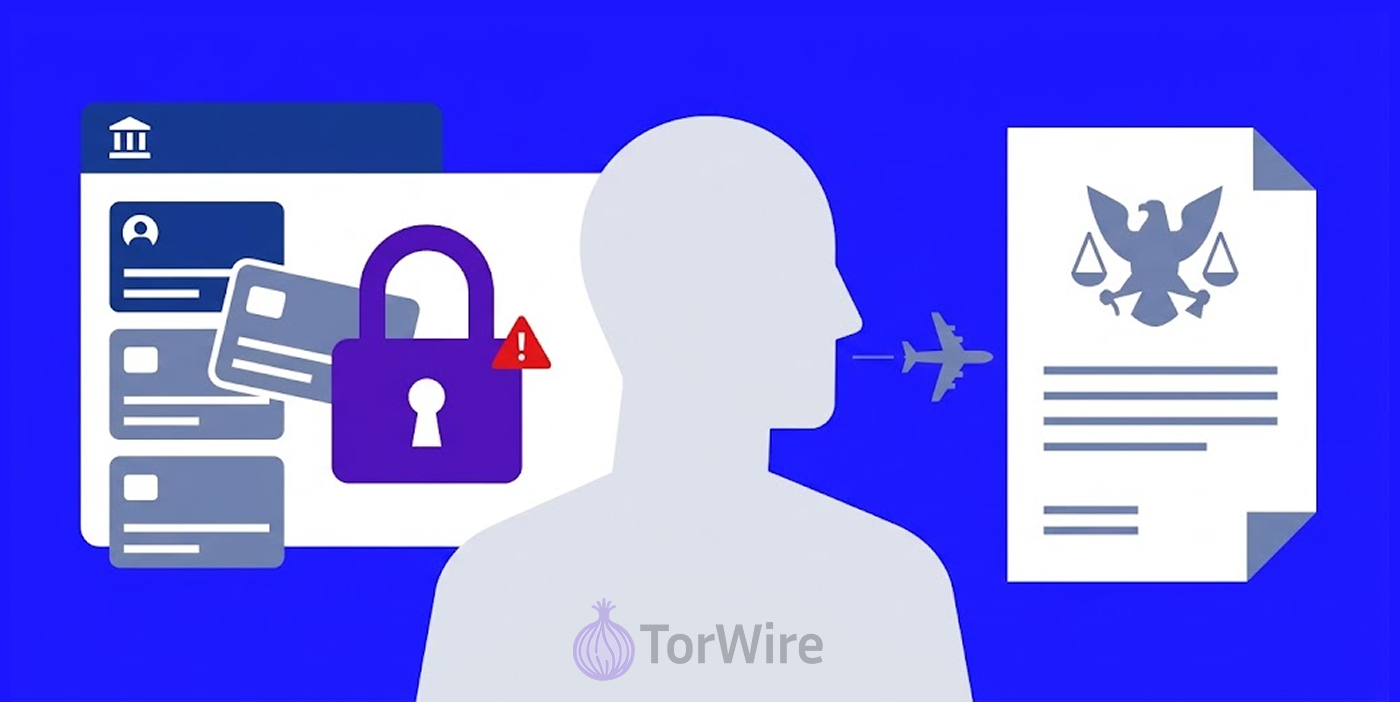
According to court documents, Filimonov and his partners built fake websites. These sites looked just like real bank login pages. The group then paid for search engine ads to push people toward these fake pages. Customers searching for their bank online would click the ad, land on the fake site, and enter their username and password.
Once someone typed in their details, the fraud ring collected them right away. The group then used those stolen logins to break into real bank accounts. They checked account balances first. After that, they allegedly moved money out through unauthorized wire transfers.
Court filings claim Filimonov did more than just help plan the scheme. He allegedly built and ran the technical side of the whole operation too. Also he is accused of creating databases that stored more than 5,000 stolen login details. He is also accused of writing programs that grabbed and sent private login data straight to the group.
Officials say the scheme ran for about two years, from November 2023 through October 2025. During that stretch, the group allegedly went after banking customers across the United States, including businesses based in Georgia.
The Money, the Data, and the Seized Website
Investigators have already taken action against one part of this network. Back in December 2025, the Department of Justice seized a website called web3adspanels.org. This site worked as a storage hub for stolen bank logins. Investigators found thousands of stolen credentials sitting on its servers when they took it down.
Officials linked that seized site directly to this case. At the time of the seizure, the FBI said the fraud ring had targeted at least 19 victims, including two companies. Reports connected to that seizure put attempted losses at around $28 million. Confirmed losses from those victims reached close to $14.6 million.
The FBI’s Internet Crime Complaint Center (IC3), known as IC3, has tracked this type of fraud closely. Since January 2025, the center has received more than 5,100 complaints about bank account takeovers like this one.
Together, those complaints add up to reported losses beyond $262 million nationwide. That number shows this is not just one isolated case. It points to a much bigger pattern of fraud spreading across the country.
Filimonov now faces a long list of charges. These include conspiracy to commit bank and wire fraud, access device fraud conspiracy, and multiple counts of bank and wire fraud. He also faces charges for possessing unauthorized access devices and device-making equipment.
Aggravated identity theft rounds out the list. If a jury convicts him on every count, he could spend anywhere from two years to 175 years behind bars. It is important to remember that an indictment is only a set of accusations. Filimonov remains innocent unless prosecutors prove his guilt in court.
Officials Praise the International Effort
Several officials spoke out after Filimonov’s arraignment. US Attorney Theodore S. Hertzberg said the case shows a strong commitment to stopping large-scale cyber theft. He added that his office will keep chasing people who misuse technology for personal profit, no matter where they hide, and will hold them accountable in an American courtroom.
FBI Atlanta’s Special Agent in Charge, Marlo Graham, spoke about the methods behind the scheme. Graham explained that Filimonov allegedly used fake websites and fraudulent login pages to target everyday online banking customers, pulling in millions of dollars from victims along the way.
This case did not come together through US effort alone. Investigators from Georgia and Estonia played a key role in tracking Filimonov down and helping secure his arrest. The Justice Department’s Office of International Affairs also assisted, alongside prosecutors and police from both countries. The FBI’s legal attaché office in Tbilisi supported the extradition process too.
An extradition case involving Scattered Spider highlights international efforts against cybercrime. Peter Stokes, 19, was arrested in Finland in April 2026 and extradited to the U.S. over alleged involvement in a 2025 attack that demanded $8 million in cryptocurrency. The group has been linked to over 100 intrusions and $100 million in ransom payments.
The FBI Atlanta Field Office is leading the ongoing investigation. Prosecutors from the Justice Department’s Computer Crime and Intellectual Property Section, along with the US Attorney’s Office in Georgia, are handling the courtroom side of the case.
This case adds to a growing list of wins against cybercrime. Since 2020, the Computer Crime and Intellectual Property Section has helped convict more than 180 people tied to cyber and intellectual property crimes. That same unit has also helped courts order the return of over $350 million to fraud victims.
Officials are urging bank customers to stay alert. Simple habits can help avoid falling for scams like this one. Check your account activity often instead of waiting for a monthly statement. Save your bank’s real website as a bookmark instead of searching for it each time. Watch out for sponsored ads that claim to lead to your bank, since scammers can buy those spots too.
The main case source is the U.S. Department of Justice’s September 8, 2026 announcement, while the seizure and $28 million/$14.6 million figures come from the DOJ’s December 2025 announcement.