-
The European Commission opened a formal probe on October 21 into Booking.com to see whether it does enough to stop fake listings and phishing scams.
-
A senior EU official called the company’s risk work from 2023 “absolutely substandard.” Booking.com says it is cooperating fully.
-
Fines could reach 6% of global yearly revenue. However, the probe has no deadline, and regulators have made no finding yet.
The European Union launched an investigation into Booking.com, an online travel agency and marketplace. The goal is to find out whether the travel site does enough to protect users.
Scammers have listed homes on the site that don’t belong to them. In other cases, scammers take over host accounts and ask guests for more money.
The European Commission announced the probe on Wednesday. It is the first formal case against the Amsterdam-based company under the Digital Services Act, the EU’s platform safety law. Importantly, the Commission has not found any violation yet.
What Investigators will Examine
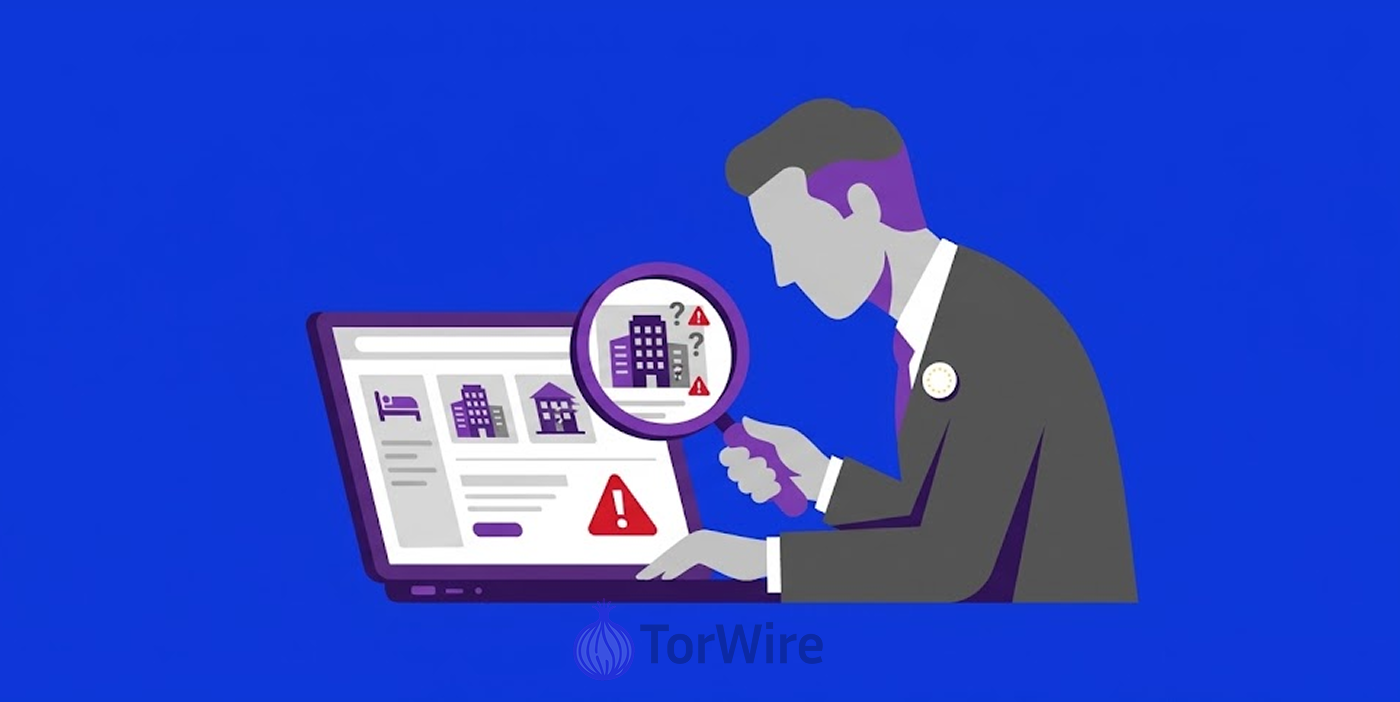
The Commission is looking at three areas. First, it will check for fake and rule-breaking listings. These include homes that do not exist and scammers who pose as real hosts. On top of that, some listings break local rules.
Second, regulators will study phishing scams. In these cases, fraudsters use a guest’s reservation details to pose as the host. Then they ask for payment, sometimes through Booking.com’s own messaging service. Some reports also describe scammers who take over a host’s account to do this.
Third, the Commission will examine paid rankings. Hosts can pay for a higher spot in search results. The EU wants to know whether the site clearly labels those listings as ads. In fact, the law requires that.
A senior EU official did not hold back. “We feel that what they have done is absolutely substandard,” the official said. The official was talking about how Booking.com has assessed its risks since 2023. Notably, reports did not name the official.
Still, the official said Booking.com does take some steps. However, the official said its risk checks fall short. Going forward, the Commission expects a more careful review.
Henna Virkkunen, the Commission’s tech chief, took a similar line. She leads its work on tech sovereignty, security and democracy. She said Europeans should be able to book holidays without fear of scams. Moreover, she said the leading booking platform in Europe must take its duties seriously.
The Rapid Rise in Scams has Kept Regulators on Their Toes
Clearly, scams have grown fast. Booking.com informed the BBC in 2024 that the number of scam cases increased from 500% to 900% over a period of 18 months. The company said artificial intelligence technology allows fraudsters to create convincing emails and websites with fake booking links.
Consumer groups report the same trend. For example, the Dutch group Consumentenbond received 200 scam reports tied to Booking.com in 2025, with losses of 65,000 euros. By comparison, the group got only 89 reports in 2024. Still, reports say the true number is likely higher.
Additionally, the UK consumer organization Which? created a fake listing for 10 Downing Street and managed to get paid for it. According to a separate Which? report, quoted by Euronews, Booking.com was lagging behind in introducing two-factor authentication for hosts.
Meanwhile, the European consumers’ organization BEUC positively reacted to the investigation. Agustín Reyna, its Director General, recently said that scammers were contacting millions of Europeans daily.
He also said that hundreds or even thousands of euros were at stake for those victims. Booking.com also introduced alerts on its website about phishing and fake emails.
Booking.com’s Response
The company says it is cooperating fully. A spokesperson said it is engaging constructively on the Commission’s questions. The company also said security, trust and protection of personal data are top priorities. Besides that, it promised to keep working with governments, regulators and police against online fraud.
The stakes are high because of Booking.com’s size. For scale, the company says it has more than 28 million listings. It also reports more than 45 million monthly users in the EU. Because of that reach, the EU named it a very large online platform in April 2023. That label brings the law’s strictest rules.
What’s Next
At the moment, the Commission is gathering evidence. Filing a case gives the possibility to order temporary measures even before the investigation is completed.
Further on, the Commission will decide whether Booking.com violated the law. Alternatively, Booking.com can offer commitments to fix the problems and avoid a ruling. If the Commission finds a breach, the fine can reach 6% of global annual revenue.
However, the case has no legal deadline. Nevertheless, the Commission emphasized that opening a case doesn’t determine the outcome. Also, the case does not stop other authorities from acting under different laws. Meanwhile, Booking.com continues its normal operations.
The probe did not come out of nowhere. In September 2025, the Commission sent information requests to Booking.com, Apple, Google and Microsoft about financial fraud. As a result, Booking.com faced formal scrutiny a year later. The Commission also works with the Dutch consumer and market authority, since Booking.com is based in the Netherlands.
Separately, European governments are developing their own messaging apps amid security concerns, reflecting broader efforts to strengthen digital security and trust in online services.