-
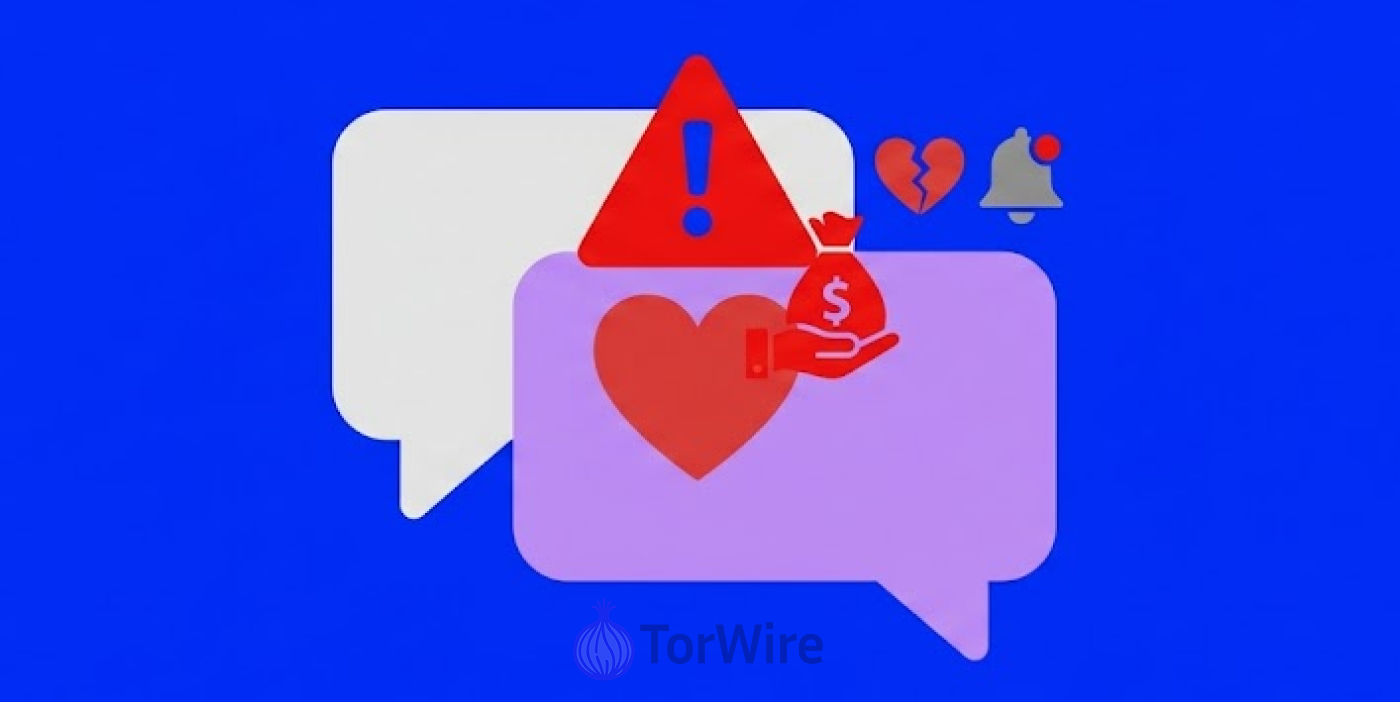
A warning from the FBI notes that criminals use fraudulent profiles and information from social media to deceive individuals.
-
Criminals constantly come up with reasons not to meet in person while still attempting to ask for money in pretext of a fake emergency.
-
Victims need to end all communication immediately and report incidents of romance fraud to the FBI Internet Crime Complaint Center.
Recently, federal law enforcement authorities presided over a nationwide alert regarding the increase in online romance scams. Criminal organizations now arise with more sophisticated online profiles to trap unsuspecting internet users in search of companionship. The tricksters normally interact with the victims for several months to create emotional bonds and manipulate them into helping financially.
Federal authorities insist that such scams lead to great financial distress and mental suffering for thousands of victims every year. Digital security experts advise people to stay vigilant when communicating with unknown profiles in social networks. In turn, law enforcement agents insist on the need to report the fraud as soon as possible to start the criminal investigations.
Deceptive Manipulations and Fake Online Personas
Romance scammers create fake online accounts to get the trust of their victims & to show them that they have feelings. Scammers observe every piece of information available on public social media accounts so they can create customized messages using the details.
Usually, they vary things in their communication with the targets. This helps them to provide some ideas of what their potential victims like and what they are interested in.
In addition, these people use emotional manipulation processes to simulate deep feelings towards their partner. The moment they succeed in creating strong emotional ties, the scammers start inventing some emergency situations or making problems that are not real.
Subsequently, the scammers will request emergency money transfers, gift cards, & cryptocurrency to handle the fake problems. This way people sometimes lose all their money – especially if they do not realize that it was a staged relationship.
Behavioral Patterns and Red Flags of Digital Impersonation
Agents from the government uncovered unambiguous behavioral patterns that point to an ongoing online romance scam. The fraudsters tend to make impossible promises to meet their victims in person. However, they continuously give an excuse for cancellation at the last moment.
The criminals usually say that they work in remote places, including military bases abroad, or on oil rigs to justify the delay. Furthermore, the suspicious persons usually avoid talking over a video call or meeting with the person in real life.
If a person one met online does not agree to meet for several months after the first conversation, that is a good reason to suspect him or her of fraudulent intentions. In addition, scammers usually persuade their targets to transfer their conversation out of the open social platforms and into private communication means.
Therefore, it is advisable for all individuals to avoid any money transfers, bank details, or personal finances information sharing with their online contacts. Setting strict personal limitations when interacting with others on the internet would allow avoiding the attempts of manipulators.
Protective Action Steps and Public Reporting Protocols
Experts in digital security recommend people to be cautious with the information they place on public online pages. Fraudsters gather information they need from shared images, location tags, and information about family. Stolen images can also expose users to other forms of cybercrime, as the FBI has warned that hackers are stealing private images from social media accounts. People should perform a reverse image search of profile pictures to find out if their contacts use stolen photos online.
Moreover, any person who thinks their partner could be committing fraud needs to cut all communication with him or her. The victim needs to keep all chat messages, emails, and confirmations of financial transactions for the authorities.
People need to inform the FBI Internet Crime Complaint Center about the fraud as soon as possible. Timely reporting curbs some damages; it helps federal agents track criminal groups, block illicit payment networks, & protect potential future victims.
Industry Responses and Protective Measures Across Financial Institutions
Nowadays, financial institutions educate their customer support representatives on how to recognize suspicious wire transfers related to romance scams. Bank workers are becoming more vigilant when older clients want to wire a large sum of money abroad. Before processing any transactions involving considerable amounts of money, bank tellers ask their clients general questions.
Also, social media sites are developing automatic scanning solutions which will help eliminate fake accounts that contact users. In addition, teams responsible for internet security are finding suspicious log-in points and duplicate photos of profiles across user accounts.
Further, public education campaigns help citizens to recognize emotional manipulating tactics before financial losses occur. Family members should also bring up online security issues with older relatives that frequently use social networks.
Wider Effect on the Digital Society and Promotion of Cyber Security Awareness
The continuously increasing incidents of romance fraud indicate that a great deal of cyber security training is crucial in communities. Some organized crime groups that operate around the world manage such schemes. Thus, they make millions of dollars from their victims every year.
To carry out their plans, criminals frequently provide fake job offers to find new workers who are responsible for processing so-called money transfers.
As a result, the law enforcement services work together with foreign partners to eliminate the scam call centers functioning abroad. Working groups exchange data and strive to trace virtual currency transactions from such criminal groups.
With the efficacy of public education programs, it has become possible to successfully deal with various psychological schemes. Also, some issues are next to impossible with public vigilance plus constant awareness about potential online risks.