-
The FBI Director, Kash Patel, says AI usage at the bureau has increased by 605 percent, but the precise details of the data have no external confirmation.
-
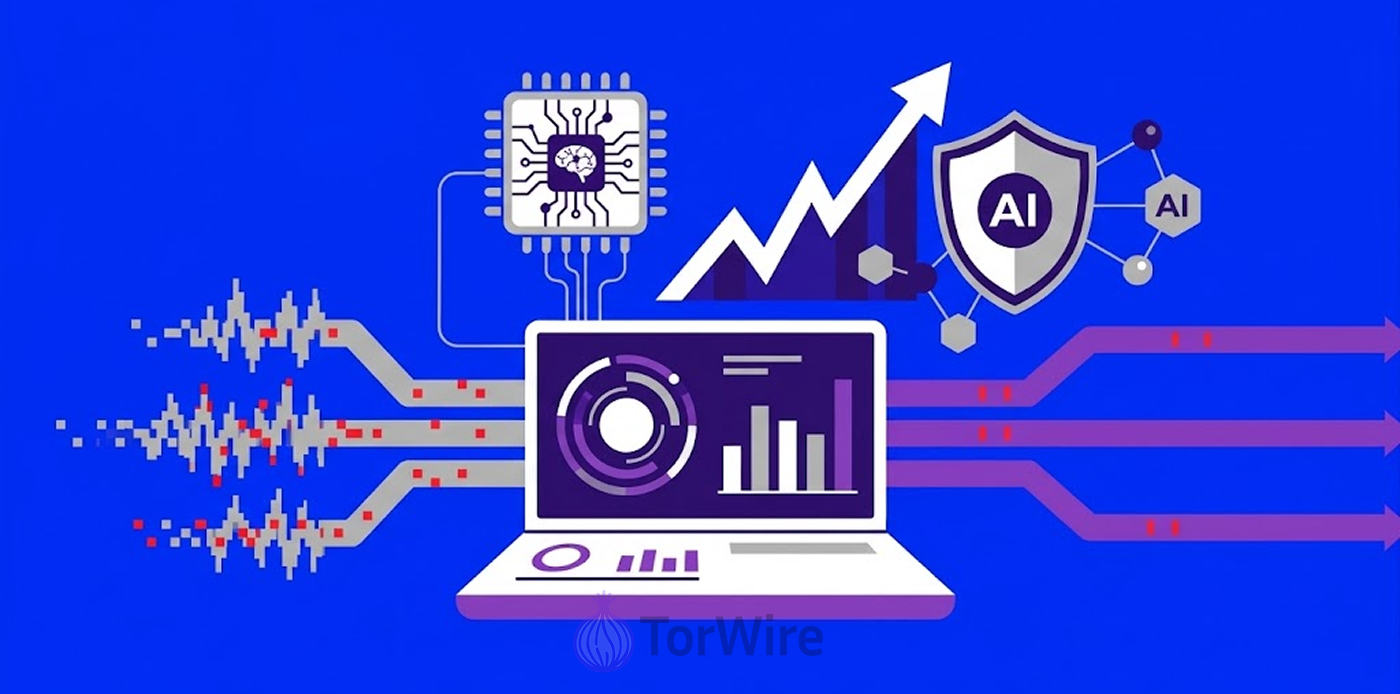
The agency has formed a Chief AI Officer, a Working Group, plus an AI Review Board to monitor the expansion.
-
These AI mechanisms aid in sorting tips, searching fingerprints, converting letters, & identifying frauds, but there are still unresolved questions about privacy and accuracy.
The director of the FBI, Kash Patel, says his agency now uses artificial intelligence far more than before. He puts the increase at 605 percent since he took office. Patel says the tools help agents sort tips and stop attacks faster.
Patel shared the figure in a social media post and in a Fox News interview. He also listed three new structures the FBI created, namely; an AI Working Group, a Chief AI Officer, & an AI Review Board.
What the 605 Percent Figure Means
The place of the 605 percent is just a statement from the director. No independent organization has verified either the available data or its calculation. The Bureau has not disclosed what factors contributed to the increase. The figure could cover more tools, more users, or more cases.
Public records show real growth, though the scale is smaller. A Justice Department inventory from early this year listed 50 FBI AI use cases. By August, the AI lead of the FBI said the number had reached 139. That is nearly triple, not six times as many.
Patel related the increase to the threat triage process. He indicated that artificial intelligence aids the FBI in categorizing vast numbers of leads they receive on a daily basis. Also, the system is able to identify higher-priority threats & send them to the field offices. Further, Patel claimed that due to this method the FBI was able to prevent a school shooting plot in North Carolina and approximately five other incidents as well.
The 605% statistic depends on the initial point within the agency. Patel assumed his position in February last year. Therefore, the FBI may have only included in its count a small number of tools back then, which makes the sharp increase more justifiable. However, the agency did not provide any clarification on what tools it included in the report.
The New AI Oversight Structure
The post from Patel names three pieces of the new system. The AI Working Group gathers field leaders to find ways to speed up modernization. The Chief AI Officer leads the effort at headquarters. The AI Review Board checks tools before agents use them.
The FBI says the review board looks at accountability and safety. The agency has not released its standards or meeting records. It has also not said how many tools the board has rejected.
The structure is important in light of the fact that the use of AI in law enforcement attracts some critics. Civil rights advocates also raise concerns regarding the use of face recognition and data management since innocent people may suffer from it. They point to the access of the FBI to hundreds of millions of photos for face matching. But the agency says it uses these tools within the law.
Congress has also taken interest. Lawmakers have asked for details on how the FBI tests AI tools for bias. The agency has promised to answer but has not set a date. Until then, the review board’s work stays largely opaque.
What the Tools Do in Practice
The FBI uses AI for several concrete tasks. One is called transcription at the National Threat Operations Center, representing the tip line of the bureau. The system writes transcripts and drafts summaries. It then scans other open cases for links. Agents use the results to decide which tips need action first.
Another use is fingerprint matching. The FBI added an AI layer that detects altered prints. Some suspects burn or cut their fingertips to avoid identification; the AI also flags these cases in real time. The FBI says this led to arrests last year.
The agency additionally relies on artificial intelligence technology for translations. Agents deal with dozens of sound recordings and written documents throughout their casework. Existing technological models attain roughly 80 percent level of accuracy. The remaining part of a translation is verified by human linguists. Patel noted that this technology aims to increase the efficiency of work rather than eliminating people from the process.
AI also aids in the process of fraud investigation. The recently created National Fraud Detection Center of the FBI enables the sharing of information across several agencies. By using AI, it became possible to discover connections between such programs as Medicaid and student loans. This approach has already resulted in more than 40 cases across 27 field offices.
Field agents stated a more practical issue. The tools provide an excessive number of leads such that some field offices are not capable of processing them all. Every possible lead has to receive verification before the organization can do something about it. This human component limits the impact of AI on the saved working time.
The Concerns that Remain
The rapid expansion raises questions the FBI has not answered. One is how agents check AI output for errors. A wrong match or a missed threat can cause serious harm. The agency says humans review key results, but it has not published error rates.
Another question is privacy. The AI inventory of the FBI lists facial recognition and biometric tools. Many of these systems come from outside vendors. The descriptions in the inventory are vague, and some tools skipped required risk reviews. Privacy advocates say this leaves the public with little insight into how the FBI uses personal data.
Kash Patel has also faced scrutiny over a separate cybersecurity incident involving an apparel website linked to him, where researchers reportedly found malware.
Cost is another open issue. The FBI has not disclosed what it pays for these systems. It has also not said whether it plans to expand further. The post from Patel suggests more growth is coming, but it gives no timeline. Further, the post presents the change as simple progress. The record shows a real shift in how the FBI works. It also shows that independent checks on that shift remain limited.