-
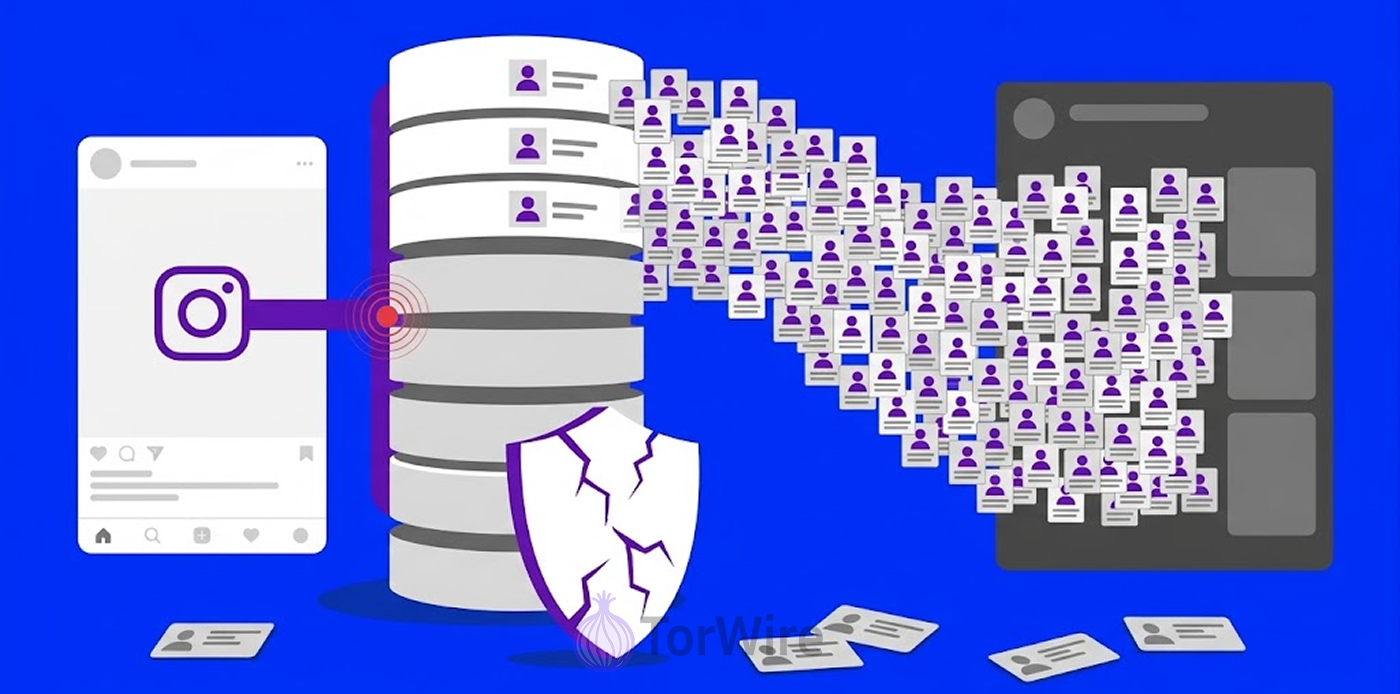
A threat actor named UNC6783 claims to sell data from 50 million Instagram profiles for $500.
-
The seller also advertises a separate set of about 800,000 Russian Instagram accounts.
-
No sample, forum listing, or outside proof backs the claim, and no Meta breach is confirmed.
A threat actor using the name UNC6783 says it is selling a database of 50 million Instagram profiles. The asking price is $500. The offer has raised fresh worries about how criminals misuse public social media details.
Dark Web Intelligence shared a post that describes the sale. According to the post, the seller calls the main set “global Instagram data.” A second collection, with about 800,000 Russian Instagram accounts, is also on offer. The seller keeps this smaller set apart from the main archive.
Seller Lists Millions of Profiles at a Low Price
The seller names many details for each profile. These include user IDs, usernames, follower counts and post counts. The list also covers profile bios, cities, languages, gender and age. Together, these details could paint a clear picture of each account owner, if the data is real.
The seller also shared file sizes for the main archive. The main archive is about 2.9GB when compressed. It grows to more than 8.5GB once opened. The report does not say how the seller measured these numbers.
The report leaves out several key items. It shows no sample of the records. It links to no forum listing that anyone can check. It also gives no independent proof that the seller holds this data. Right now, the post from Dark Web Intelligence is the only description of the offer.
For these reasons, the claims remain unverified. Nobody has shown that Instagram or its parent company, Meta, suffered a breach tied to this sale. The price, the record counts and the data types all come from the seller, not from Meta. The same lack of proof applies to the 800,000 Russian accounts in the advertisement.
Scraped Data Claim Puts Public Profile Details in Focus
The listed details look like public Instagram profile information. Scraping means using software to copy public details from web pages automatically. The seller did not claim to hold passwords, private messages, email addresses or phone numbers.
This difference matters. Scraping public pages is not the same as breaking into a company’s internal systems. A single public detail may look harmless on its own. However, millions of records in one place can give criminals new tools.
They can build profiles, pretend to be real people and send targeted phishing messages. Profiling means gathering details to learn about a person. Impersonation means posing as someone else. Phishing means sending fake messages that trick people into sharing private information.
Meta has fought scraping before. Its 2022 actions came years before this new claim appeared. In July 2022, the company announced lawsuits against scraping services and one person. The person allegedly collected profile data from more than 350,000 Instagram users. This shows that Meta has taken scraping disputes to court.
Meta also explained how these scraping services work. According to the company, they can gather usernames, profile URLs, locations and engagement details. These cases show that large-scale Instagram data collection is not a new problem. Still, they do not prove that the new 50 million record offer is real.
Earlier Instagram Leak Gives Background to the Claim
The new claim follows another widely reported Instagram data exposure in January 2026. Have I Been Pwned reported that about 17 million rows of Instagram data appeared on a hacking forum. The data was allegedly scraped through an API, which is a tool that lets programs request data from a service.
Meta has also fixed a separate Instagram account recovery flaw that allegedly allowed attackers to take over user accounts, highlighting another security risk for the platform’s users.
That set reportedly held usernames, display names, account IDs and location details. Have I Been Pwned also found email addresses in about 6.2 million records. Some records held phone numbers as well. That means about one in three rows in that set carried an email address.
Reports say Meta denied a breach of its systems at that time. The company explained that a flaw let an outside party request password reset emails for some users. Meta said it had fixed the issue.
The January case shows the risks that come with scraped Instagram data. The two sets also differ in size, since the earlier one held about 17 million rows and the new offer claims 50 million profiles. No link has been established between that earlier set and the new UNC6783 advertisement.
For now, the 50 million profile offer is only a claim from a threat actor. It does not confirm another Instagram breach. Sample records or a listing that anyone can check would be needed to test it. The seller’s identity, the data’s authenticity and the number of affected accounts are all unknown.
Users should stay careful with unexpected Instagram messages, odd links, and requests for account details. Turning on two-factor authentication adds a second step when someone logs in. Unique passwords for each account give extra protection against attempts to misuse personal information.