-
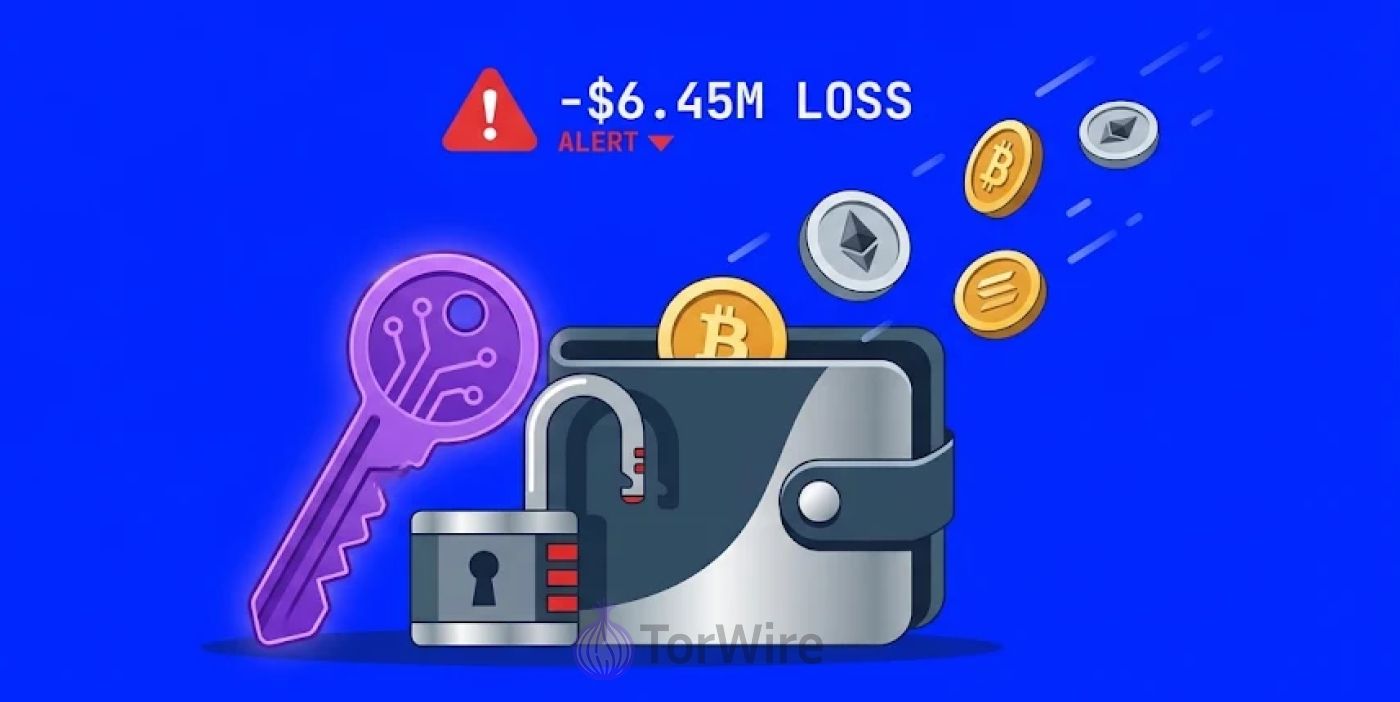
A shared Safe crypto wallet reportedly lost about $6.45 million on November 16 after a suspected key theft.
-
Safe says only one wallet was hit, and its own contracts and app stayed unaffected.
-
Zodiac says its module has no flaw and blames a likely stolen role member key.
A shared Safe wallet has reportedly lost about $6.45 million. A multisig wallet like this normally needs several owners to approve a payment. The theft happened on November 16, and reports say a third-party permissions module played a role.
On-chain analyst Specter tracks activity recorded openly on the blockchain. Specter and security firm PeckShield followed the strange transfers. Both tracked the incident on November 16. The thieves took about 4.39 million USDC and 1.72 million syrupUSDC.
Blockchain data firm Bitquery later valued the transfers at about $6.44 million. The headline loss is $6.45 million, so Bitquery’s count sits slightly lower. Its analysis came afterward, and it added more detail.
Safe Says Only One Wallet Lost Funds
The money left through Zodiac’s Roles Modifier. This tool lets approved wallet addresses make some payments without fresh signatures from the wallet owners. The module comes from a third party, not from Safe. Worries about a wider breach spread quickly, so Safe moved fast to calm them.
In a post on X, Safe confirmed that only one multisig wallet was affected. The company said its smart contracts and the Safe{Wallet} app stayed unaffected. Safe also explained that the owners had installed the Zodiac module outside Safe{Wallet}. According to the company, no owner signed the transaction.
Zodiac Points to a Likely Stolen Role Key
Zodiac also replied to X. Its team said its own check found no flaw in the module’s contracts. The team believes someone likely stole the private key of an existing role member. A private key works like a secret password that proves who controls a wallet address.
That key reportedly let the attacker send a payment that passed the wallet’s custom permission rules. In other words, the wallet’s own rules accepted the request. The money left because an allowed key asked for it, not because the owners signed.
The Roles Modifier gives chosen addresses the power to take set actions on a Safe wallet. Teams use these permissions to handle routine payments without asking every owner each time. A role member is an address that holds one of these permissions. The wallet’s custom rules decide what that member can do. Loose limits can cause trouble when a trusted key lands in the wrong hands.
Bitquery’s investigation shows how the money moved. The attacker used the roll wallet to pull funds out of a Morpho vault. Then the attacker sent the assets through ParaSwap. The affected Safe had also given ParaSwap unlimited spending approval for both stolen tokens. That means no cap limits how much ParaSwap could spend.
The findings suggest the payment passed through existing permissions. It did not exploit a flaw in Safe’s core contracts. Investigators have not yet found out how the role member’s key was stolen.
Stolen Funds Reach Hyperliquid as Users React
Attention has now turned to where the money went. PeckShield reported that about $813,000 bought Monero-linked tokens on Hyperliquid. Bitquery later found 12 related orders worth about $1.89 million. That count is higher than PeckShield’s first figure. These orders involved 3,657 XMR1 tokens.
Bitquery linked the transactions to a Monero swap service. Analysts Specter and tanuki42 named that service Wagyu. Bitquery said it could not confirm the service’s identity on its own. It also clarified that XMR1 is a Hyperliquid token named after Monero. It is not the real Monero coin.
Other reports say about $3.3 million in ETH remained across three wallets as of November 17, one day after the drain. The wallet’s owners replaced one signer after the theft. They also moved 13 other tokens into another Safe within 63 minutes of the drain. That is just over one hour.
The case sparked reactions across X. Users asked how a wallet known for safety could lose millions through permissions already turned on. Joe (@realtraderjoe1) called the event a warning about approved permissions. He said the scariest attack is the one you approved yourself.
SmellyPineapple (@smellypinappl92) and WallStreetX (@WallStreetXHQ) both pointed to the irony. They joked that the hit wallet carried the name Safe. Vi (@AmredAthran) asked whether people can really buy XMR on Hyperliquid. The posts ranged from warnings to jokes to a request for clearer wording.
Rahul Rumalla (@rsquare) pushed back on how some reports framed the case. He argued that calling it a Safe hack misled readers. In his view, the problem involved a likely stolen role key and a third-party module. His comments matched Safe’s statement that neither its core contracts nor its app were hit.
Safe’s statement, Zodiac’s review, and Bitquery’s findings all point away from a flaw in the contracts. Instead, they focus on a key and the permissions attached to it.
The case shows the risk of giving third-party modules wide power over shared crypto wallets. Smart contracts can work as planned. Even so, stolen keys and loose approvals can still expose funds to theft.
Crypto wallet theft can also happen through scams that trick users into handing over access to their funds. In a separate case, scammers used fake AI trading tutorials to steal $517,000 from crypto wallets. The incident highlights how criminals can exploit users’ trust and interest in AI-powered trading to target their digital assets.